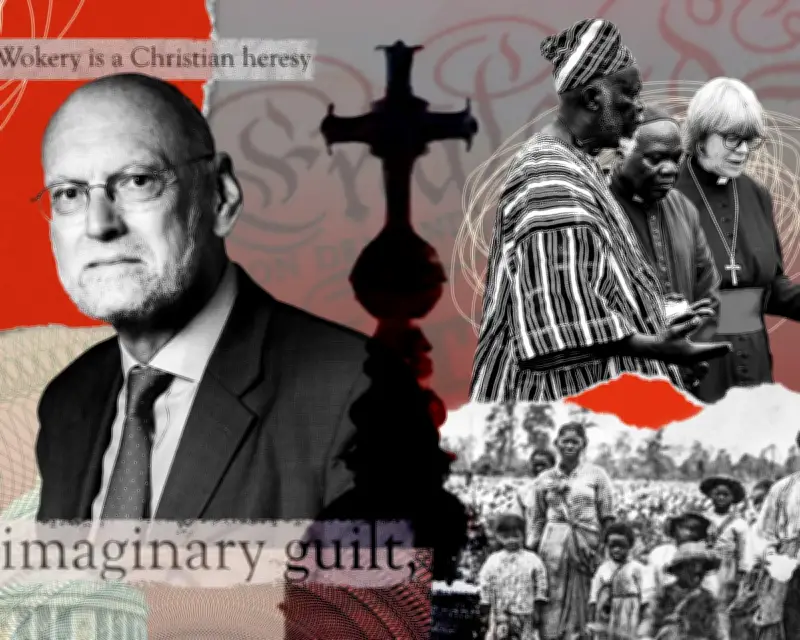
The Church of England's £100m slavery compensation fund has been stalled by a lobbying campaign led by Lord Biggar, with links to some of Britain's wealthiest financiers, including Sir Paul Marshall, according to a Guardian investigation.
Biggar, a retired professor, Conservative peer and Anglican priest, has led the backlash since the church's commissioners announced in 2023 that they would set up the Fund for Healing, Repair and Justice to atone for the church's involvement in the transatlantic slave trade. Dozens of articles have been published against Project Spire, as the fund is known, in publications including the Spectator, the Daily Telegraph, the Daily Mail and the Times.
Media blitz and political opposition
Katie Lam, a Conservative MP, has led opposition in the House of Commons, coordinating a letter from 27 MPs and peers to the incoming archbishop of Canterbury, Sarah Mullally, accusing the church of "legally dubious vanity projects". The media campaign has paralysed the church and stalled the fund beyond its planned 2024 launch date. The church admitted in July it faces a legal challenge that could add years more delay.
The Guardian can reveal how some of Britain's wealthiest financiers, including Sir Paul Marshall, are linked to the campaign. Marshall, co-founder of the hedge fund Marshall Wace, has given Biggar a platform via his media outlets, including the Spectator, GB News and UnHerd. He has also funded several rightwing lobbying groups and organisations linked to Biggar.
Historical context and fund details
In 2007, then archbishop of Canterbury Rowan Williams said the church should consider slavery reparations. His successor, Justin Welby, reaffirmed that commitment in 2020, saying: "I'm ashamed of our history and I'm ashamed of our failure." In 2019, the church commissioners ordered research into the endowment fund's origins, revealing funds partly originated in Queen Anne's Bounty, which invested in the South Sea Company, trafficking about 34,000 enslaved Africans.
In January 2023, the commissioners published a report declaring intent to set up a £100m fund, with money from the church's endowment, now valued at £11.6bn. An independent oversight group was formed, hoping to grow the fund to £1bn. Bishop Rosemarie Mallett said: "We believe that, like the mustard seed of the parable, the fund will grow from small beginnings towards an expansive future."
Financial links and opposition
Marshall, who has given at least £13m to Holy Trinity Brompton and the Church Revitalisation Trust, also supports organisations where Biggar is involved, including the Pharos Foundation, which received £700,000 from Sequoia Trust in 2024 and 2025. George Robinson, co-founder of hedge fund Sloane Robinson, is also a trustee of Pharos, with trusts linked to him giving at least £500,000.
Biggar was involved in a similar storm in 2020 when the National Trust published a report on slavery links. He has links to the hard-right party Restore Britain, though he says he has "no formal relationship" with it. The church has said money for Project Spire will not be diverted from parishes, with funding for churches and clergy rising by 36% to £1.6bn.
Biggar said: "Project Spire tears the Church of England's role out of its historical context, exaggerates its guilt, and ignores its abolitionist leadership." Marshall said: "I am not funding the anti-Spire campaign but I would be happy to do so." A C of E spokesperson said: "Addressing our historic links to African chattel enslavement is an act of Christian repentance, responsible investment and credible witness."