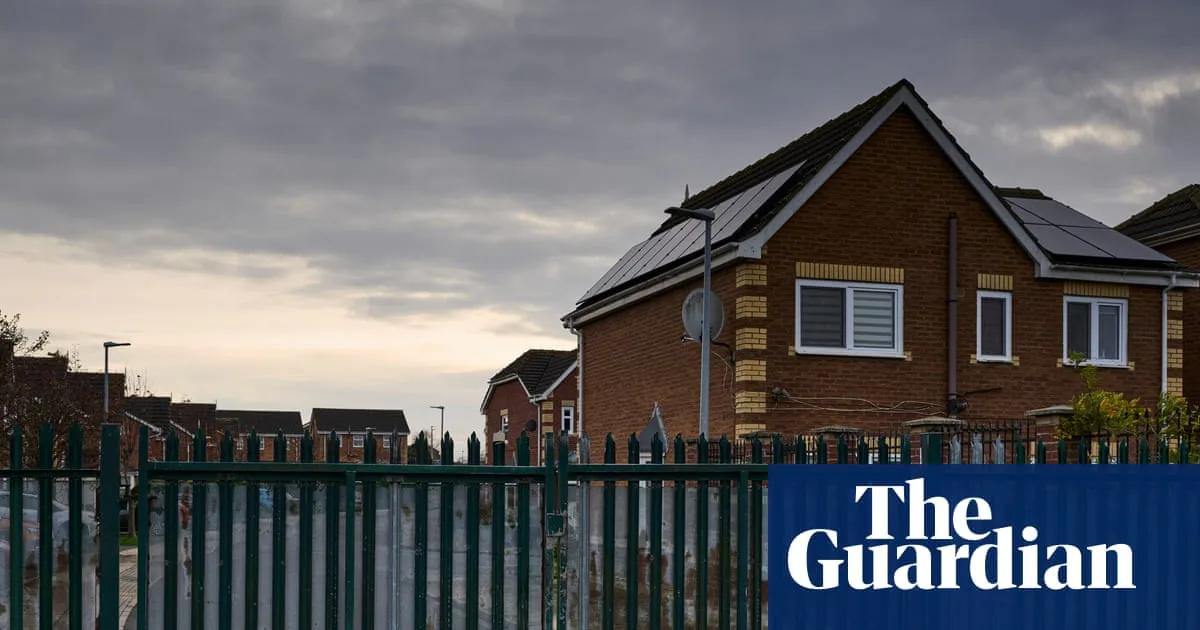
A stark physical barrier in Grimsby has come to symbolise a deepening national trend: the rise of the 'posh-poor divide' across England. New data reveals a near-doubling in the number of neighbourhoods where some of the country's most deprived communities live directly alongside its most affluent, separated by nothing more than a wall, a hedge, or a few metres of road.
A Wall That Divides a Community
In Grimsby, Lincolnshire, the reality of this divide is a 1.8-metre-high (6ft) metal barricade. It separates the postwar Nunsthorpe estate, known locally as "The Nunny", from the newer, wealthier homes of Scartho. The wall blocks off roads and walkways, turning what should be a short stroll into a 25-minute detour.
"It's the posh-poor divide," said Serenity Colley, 37, a resident of Nunsthorpe. "It has been there for as long as I've known... I don't think they'll bring it down because I don't think they'll want to mix with us." For Colley, the wall has a direct impact on daily life: her school run takes an hour, a journey that would be slashed to 20 minutes if the barrier were removed.
The wall also becomes a focal point for antisocial behaviour, with reports of rubbish being thrown over and drug deals taking place in its shadow. While residents on the Nunsthorpe side feel its presence acutely, those in Scartho often seem unaware or reluctant to discuss the divide.
The Data Behind the Divide
A Guardian analysis of official government deprivation data paints a concerning picture. The study compared the most and least deprived 10% of areas in England. It found that in 2019, just 65 of the most deprived neighbourhoods bordered one of the least deprived. By the latest data release in October, that figure had risen sharply to 119.
This increase is partly due to methodological changes, such as factoring in high housing costs, which better reveals deprivation near affluent areas. However, it also reflects years of austerity and underinvestment. Today, almost two-thirds of councils contain a neighbourhood ranked among the most deprived in the country, up from just under half in 2004.
Dr Mark Fransham, from the University of Oxford, pointed out that the creation of new housing estates next to existing social housing is one driver of this side-by-side inequality.
Loyalty Amidst Deprivation
Despite its challenges, a strong sense of community persists in places like Nunsthorpe. Tracey Good, chief executive of the local Centre4 community hub, stresses that struggle exists on both sides of the wall. "Your postcode doesn't necessarily indicate your level of challenge," she said.
Nevertheless, the data is stark. Nunsthorpe ranks in the most deprived 10% of areas for income, employment, education, health, and crime. Just metres away, Scartho ranks among the least deprived 10% nationally and is in the top 20% for employment, health, and low crime.
This pattern is repeated elsewhere. On the Stanhope estate in Ashford, Kent—another area in the most deprived 10%—a similar divide exists with newer, spacious detached homes. The price gap is telling: an average three-bedroom house costs around £275,000 on the estate, but £410,000 across the divide.
"They might have bigger houses, but here there's more community," said Stanhope resident Phil Hockley, 63. Susan Riley-Nevers, another resident, highlighted tangible inequalities: oversubscribed GP surgeries on the estate side and the gradual removal of local amenities.
The rise of these deprivation divides, particularly concentrated in the north of England but appearing across the country, presents a clear challenge. They are more than just lines on a map or walls in a street; they represent deep social fractures that affect access to services, opportunity, and a sense of shared community.