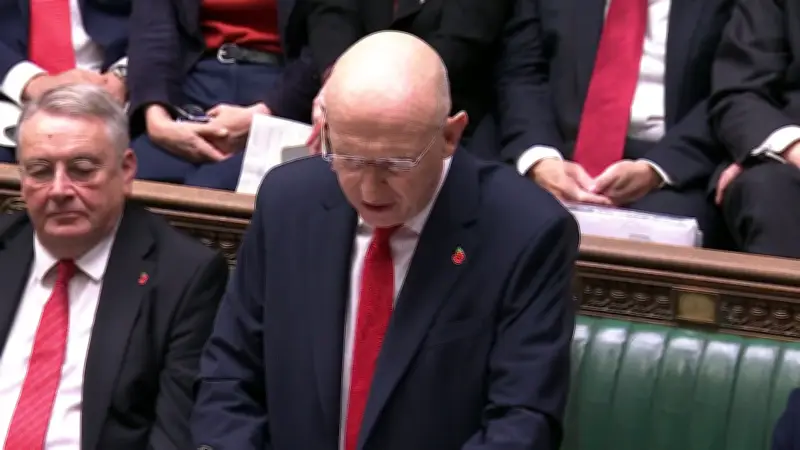
Experts warn that energy bills are set to rise higher than they did after Russia invaded Ukraine in 2022, with disposable income expected to drop by over £1,000 a year, according to analysis by the Resolution Foundation.
The left-leaning think-tank said the "scattergun" Budget unveiled by Chancellor John Healey will not stop households facing higher bills than they did during the 2022 crisis. Economists believe typical annual energy bills will reach £1,750 despite government support by next year, compared with £1,685 after prices soared following the invasion.
Budget measures and warnings
Healey announced a raft of measures to give "breathing space" to struggling families, funded by extra taxes on banks and gambling. These include £100 payments to 20 million households to help with rising energy costs, scrapping controversial standing charges on gas bills, and pledging to look at doing the same for electricity. Tax breaks were also offered to high street companies, with 70,000 - including cafes, shops and pubs - set to be removed from paying business rates, while vape shops and online retailers will be asked to pay more.
He told BBC Radio 4's Today Programme: "I do want to be honest with people, government can never remove completely the cost of living pressures that people feel. We can help where we can, and that's what I'm doing with creating a bit of breathing space for these households with this new household energy payment. I'm asking the banks to help fund that, and that's a political choice."
Impact on households
The Resolution Foundation found that the gap in support between the poorest and wealthiest households is expected to be just £14. Its analysis found the poorest half of households will gain £158 on average from cost of living support this year and next - just £14 more than the £144 received by the richest half. This highlights a "complete failure to target help at those who need it most", the Foundation said.
Ruth Curtice, chief executive of the Resolution Foundation, said: "Faced with a tough backdrop amid global economic turmoil, the Chancellor delivered a scattergun Budget that did little to address the sharp challenges facing Britain. Cost of living support is being spread far too thinly and will leave even those families receiving help facing higher energy bills than they did during the last energy price shock."
The think-tank's economists predicted typical disposable income would drop by £1,050 between now and 2029. Curtice continued: "A more dramatic change of tactics may be needed, and we did not learn how the Government will choose between public service ambitions and household incomes. Next year the choices will unavoidably get starker."
Global factors and political response
Healey told the BBC he had limited wriggle room because of the tough global situation driving up the cost of government debt. He said: "Global economic storms, the Iran war, trade tensions, Russia's invasion of Ukraine now nearly into its final part of the fifth year, these are economic storms and economic shocks. They're hitting countries worldwide but they are hitting us here at home and people are feeling it, they're seeing it in the prices at the pumps, they're seeing it on their energy bills, they're seeing it in the cost of new mortgages."
He added: "And whilst it's hitting household loans, it's hitting business loans, it's also hitting government costs as well. And what I confirmed yesterday was the Office of Budget Responsibility said the conflicts are largely driving this, and the cost of servicing the government debt has gone up by £14billion this year because of those factors."
Andy Burnham defended the measures, telling broadcasters that the Budget was bold. He said: "It's pretty bold to help 20 million households with energy costs through the council tax cut this winter. It's bold to lift 70,000 businesses out of business rates altogether, and that will give a real lift to high streets up and down the country." He also said there are "strong signs that the economy will improve over the coming years".