Navigating the Economic Fallout from the Middle East Conflict
As the war in Iran continues to generate widespread problems far beyond the region, policymakers and economists are grappling with how governments can effectively mitigate the inevitable consequences for the global cost of living. The conflict presents an unprecedented challenge in scale, though historical experiences from previous wars and energy crises offer valuable lessons. The reliance of world economies on hydrocarbons and other commodities that transit through the Middle East underscores the severity of this disruption.
Immediate Effects on Energy and Commodity Prices
The most visible impact of the conflict is the sharp increase in gas and oil prices, which directly affects household bills and business costs. Wholesale prices have already surged, leading to higher costs for consumers. For instance, the average price of a litre of petrol now exceeds 150p, while diesel is above 170p, with the gap widening due to diesel's import dependency and sensitivity to global trends. Filling up a petrol VW Golf for an Easter getaway costs approximately £8 more than last year, and £19 more for diesel.
This inflation disproportionately impacts businesses, particularly those in haulage, compared to households with more discretionary spending. Beyond fuel, oil and its by-products permeate the entire economy, influencing the cost of transported goods and plastic-based products. Rural communities off the gas network face doubled prices for fuel oil, exacerbating financial strain.

Broader Economic Ripples and Supply Chain Disruptions
The increased price of gas hits energy-intensive industries like ceramics, chemicals, steel, and concrete hardest, with higher domestic gas bills reflecting this trend. Electricity costs are also affected due to gas-fired generation, creating pervasive economic effects. Even electric vehicle charging becomes more expensive unless supported by home solar panels. Aviation fuel has roughly doubled in a year, impacting travellers, airlines, and holiday companies.
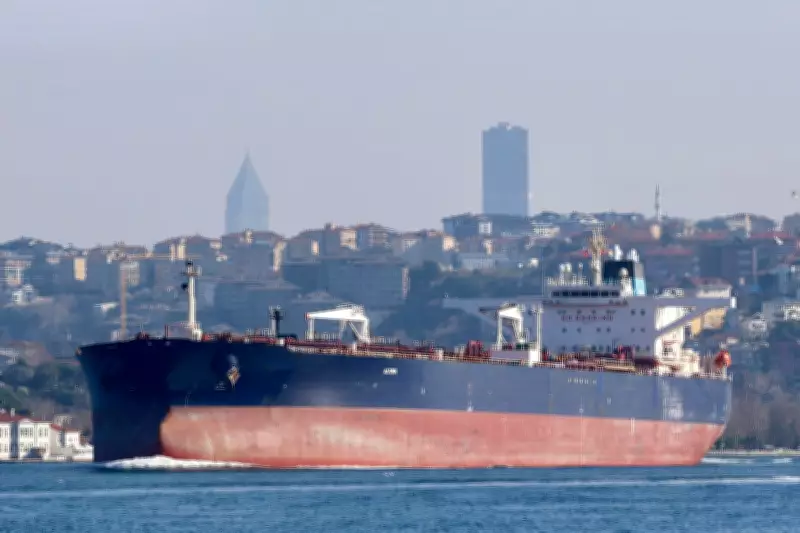
Furthermore, the conflict disrupts globalised supply chains, with chokeholds on tanker transportation in the Red Sea and Persian Gulf affecting commodities such as fertiliser, aluminium, helium, wheat, tyres, and smartphones. This disruption is particularly severe between Europe, Asia, and Africa, threatening global trade and GDP growth.
Potential Long-Term Consequences and Policy Responses
Central banks may need to adjust interest rates to restrain medium-term price inflation, though short-term shocks are unavoidable. This could lead to more expensive mortgages and increased business finance charges. A deep recession cannot be ruled out, given the reduction in purchasing power, consumption, and investment. Most Western governments have limited fiscal space to borrow more for subsidies, risking a slide from recession into depression as confidence wanes.
However, there is some good news. Past energy-price spikes have subsided relatively quickly as conflicts end and adaptation occurs. Economies have become less oil-intensive over decades, and high prices often stimulate exploration and innovation, such as fracking, nuclear power, electric vehicles, solar panels, and heat pumps. Market economies traditionally use price signals to drive behavioural change.
Historical Context and Political Implications
The current disruption may be the largest since the Suez Canal closure in the 1960s, exacerbated by globalisation's vulnerabilities, as seen after Russia's invasion of Ukraine. Protectionist trends and onshoring efforts may enhance supply certainty but reduce competitiveness. A free-trading, peaceful world is ideal, but current conditions are far from that.
Governments can implement short-term measures like fuel rationing, energy-saving promotions, public transport incentives, bill subsidies, and heavy industry protection, but these are not sustainable long-term solutions. Voters often blame incumbent governments for economic woes, especially from unwinnable wars, potentially making figures like Donald Trump significant political losers.