

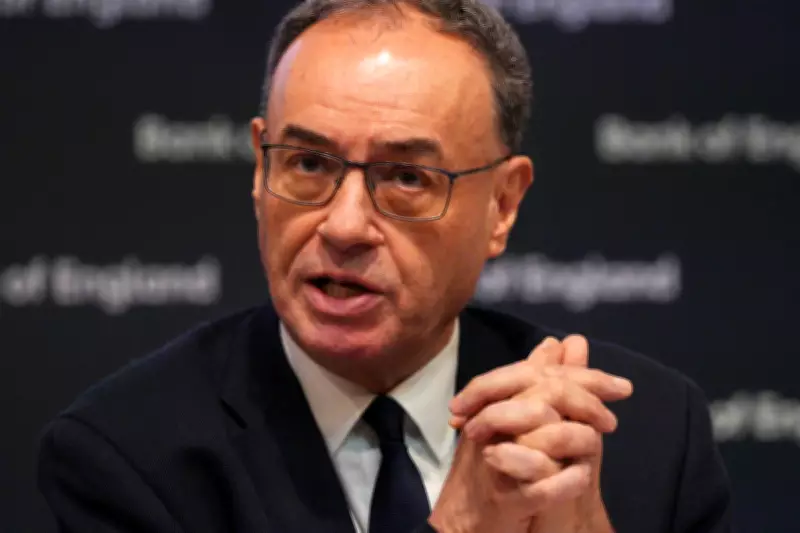
Bank of England Governor Bailey Calls March Rate Cut a 'Genuinely Open Question'
The Governor of the Bank of England, Andrew Bailey, has declared that the possibility of an interest rate reduction next month remains a 'genuinely open question'. Speaking to Members of Parliament on Tuesday, Bailey emphasised that he would need to be confident of seeing 'enough further evidence' before supporting any further cut to the base rate.
Monetary Policy Committee's Upcoming Vote
The central bank's nine-member Monetary Policy Committee (MPC) is scheduled to vote on March 19th on whether to maintain UK interest rates at their current level of 3.75% or potentially reduce them. This follows their previous meeting earlier this month, where the committee voted by a narrow margin of five-to-four in favour of keeping the rate steady at 3.75%, despite a recent slowdown in inflationary pressures.
Mr Bailey, who has served as the Bank's Governor since 2020, voted to maintain the base rate at the latest meeting and has been a decisive voter on numerous occasions throughout the past year. When questioned about the potential for voting in favour of an interest rate cut in March, he stated: 'The question for me is whether I have seen enough further evidence to feel that I'm confident to take that step. It's a genuinely open question at the moment.'

Inflation Projections and Economic Outlook
During his appearance before Parliament's Treasury Select Committee, the Bank Governor also provided updated inflation projections. He indicated that inflation is expected to drop to the Bank's 2% target in the spring. The Consumer Prices Index (CPI) inflation was reported at 3% in January, down from 3.4% a month earlier.
Mr Bailey elaborated: 'We expect inflation to be there or thereabouts 2% in the spring and it is pretty much baked in given the things we know are coming through.' Energy bill support measures announced in last November's autumn budget are anticipated to contribute significantly to this expected decline in inflation.
Caution from the Bank's Chief Economist
However, Huw Pill, the Chief Economist at the Bank of England, struck a more cautious note, highlighting that the 'disinflation process towards the 2% target is incomplete'. This underscores the ongoing uncertainty and the need for careful assessment of economic data before any monetary policy adjustments are made.
The Bank's leadership continues to monitor key indicators closely, balancing the goals of controlling inflation with supporting economic growth. The upcoming MPC meeting in March will be a critical moment for determining the future direction of UK interest rates, with market participants and economists eagerly awaiting the committee's decision.






