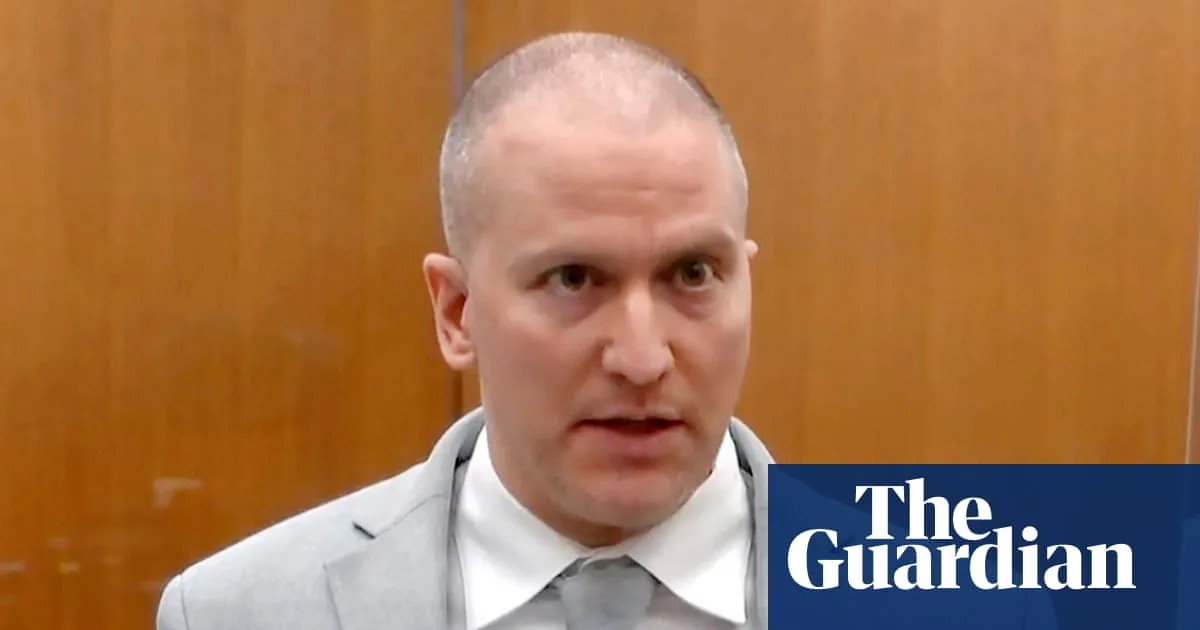
The Minnesota Republican party has faced strong rebukes after opening its annual convention with a moment of silence for Derek Chauvin, the former police officer convicted of murdering George Floyd. Attorney general Keith Ellison, who led the prosecution, described the gesture as “an act of profound cruelty” to Floyd’s family and “disrespectful” to law enforcement.
Speaking on Sunday, Ellison said the decision dishonoured Floyd’s memory and wounded his loved ones. He noted that the tribute came days after the anniversary of Floyd’s murder in Minneapolis on 25 May 2020. “To honour a man who disgraced his oath to uphold the law and his badge is disturbing,” he said.
Chauvin was sentenced to 22 and a half years in prison in 2021 for the second-degree murder of Floyd, who was Black. He later received a separate 21-year federal sentence for violating Floyd’s civil rights. The encounter, in which Chauvin knelt on Floyd’s neck for more than nine minutes, sparked nationwide protests and a reckoning over racial injustice.
In recent years, Chauvin has become a cause célèbre among some right-wing figures, including Ben Shapiro and Elon Musk, who have called for a presidential pardon. Analysts suggest such a pardon would not secure his release but would transfer him to a state facility.
Ellison expressed deep concern about what the tribute said about the state of politics, offering an apology to Floyd’s family and to officers who serve honourably. The Minnesota Republican party did not respond to requests for comment, while Democratic lawmaker Jamie Long condemned the act as “disgusting” on social media.