Australia's Fuel Crisis Exposed: Seven Charts Reveal Critical Shortfalls
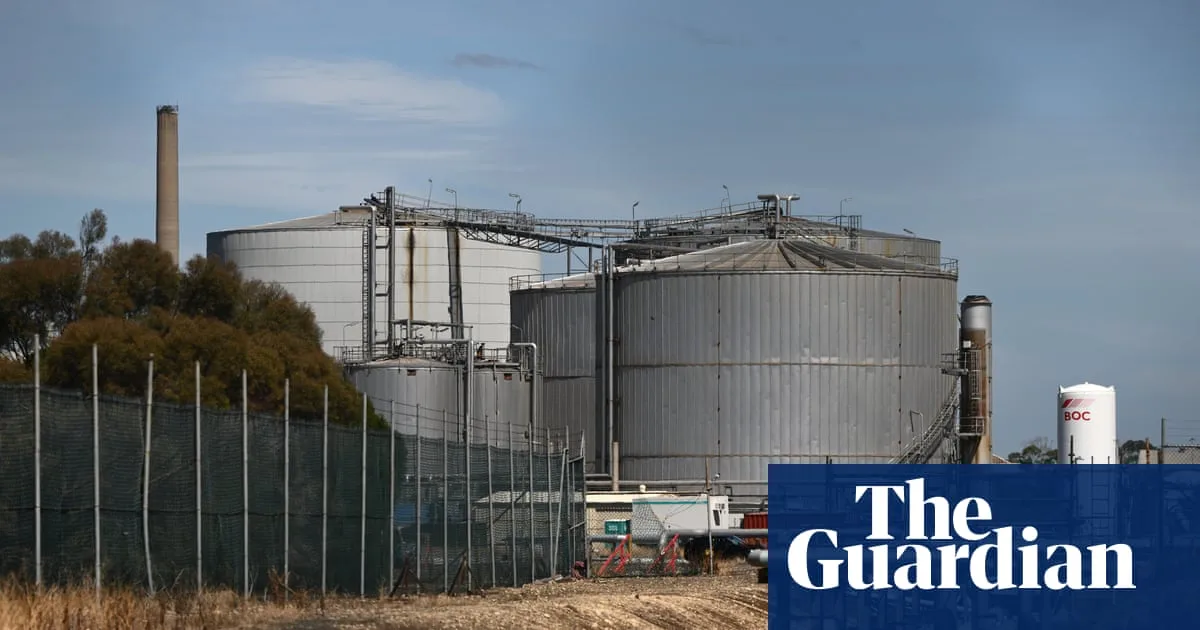
Viva Energy's Geelong oil refinery stands as one of only two refineries still operating in Australia, with both facilities dependent on government support to remain open. This precarious situation underscores a broader vulnerability in the nation's energy security, as global disruptions ripple through supply chains.
How Did We Reach This Point?
At the turn of the century, Australia produced 563,000 barrels of oil daily, with eight refineries meeting 98% of domestic petroleum needs. Since then, production has plummeted, leaving the country reliant on imports for 90% of its liquid fuel requirements, with oil output at its lowest since the late 1960s.
Over the past 25 years, refinery closures have accelerated:
- Mobil's Port Stanvac refinery in South Australia was mothballed in 2003 and permanently closed in 2009.
- Shell's Clyde refinery ceased operations in November 2013.
- Caltex closed its Kurnell refinery in Sydney in October 2014.
- BP shut its Brisbane plant in mid-2015.
- BP then closed its Kwinana refinery south of Fremantle in March 2021.
- ExxonMobil's Altona refinery in Melbourne was shuttered in August of the same year.
This leaves only Ampol's Lytton refinery in Brisbane and Viva Energy's Geelong facility operational, both sustained by government assistance.
Where Does Australia Source Its Fuel Now?
Singapore and South Korea supply approximately half of Australia's refined petroleum products, with Malaysia contributing 13%. India and Taiwan each provide 8%, rounding out the top five suppliers. In 2025, 55% of petrol imports came from Singapore, while nearly 30% of diesel originated from South Korea. China, though supplying only 7% of refined petroleum imports, is crucial for jet fuel, accounting for a third of international purchases last year.
For crude oil, Malaysia provides nearly 40% of imports, with the United States at 21%. Reports indicate that ExxonMobil, BP, and Vitol are shipping record volumes of oil products from the US to fill gaps caused by regional supply disruptions.
Global Ripples and Regional Dependencies
Fatih Birol, head of the International Energy Agency, warned that Asia faces an energy crisis of historic proportions due to its reliance on Middle Eastern oil. Singapore, which supplies much of Australia's fuel, sources two-thirds of its crude from the Middle East, all passing through the Strait of Hormuz. Disruptions there cascade along the world's longest supply chain to Australia.
Impact on Petrol Prices and Availability
Petrol prices have surged rapidly, with diesel jumping from about A$1.80 per litre to nearly $3, a 67% increase since late February. Regular unleaded has risen by nearly 40%, reaching around $2.50 per litre. Fuel shortages are emerging, with 289 stations in New South Wales lacking at least one fuel type and 164 without diesel.
Household Strain and Economic Fallout
Consumer confidence has hit a record low, exacerbated by interest rate hikes and inflation concerns. A typical family using 35 litres of petrol weekly now faces bills of nearly $86, up $27 from last month and higher than during the 2022 Ukraine crisis. Despite costs, driving habits have not yet changed significantly.
What Lies Ahead?
The conflict shows no signs of ending soon, with analysts predicting hostilities could last months. The IEA recommends demand-reduction measures like remote work or lower speed limits. Australia's fuel reserves stand at 38 days for petrol, 30 for diesel, and 30 for jet fuel, far below the IEA's 90-day requirement for net importers, highlighting a critical preparedness gap.