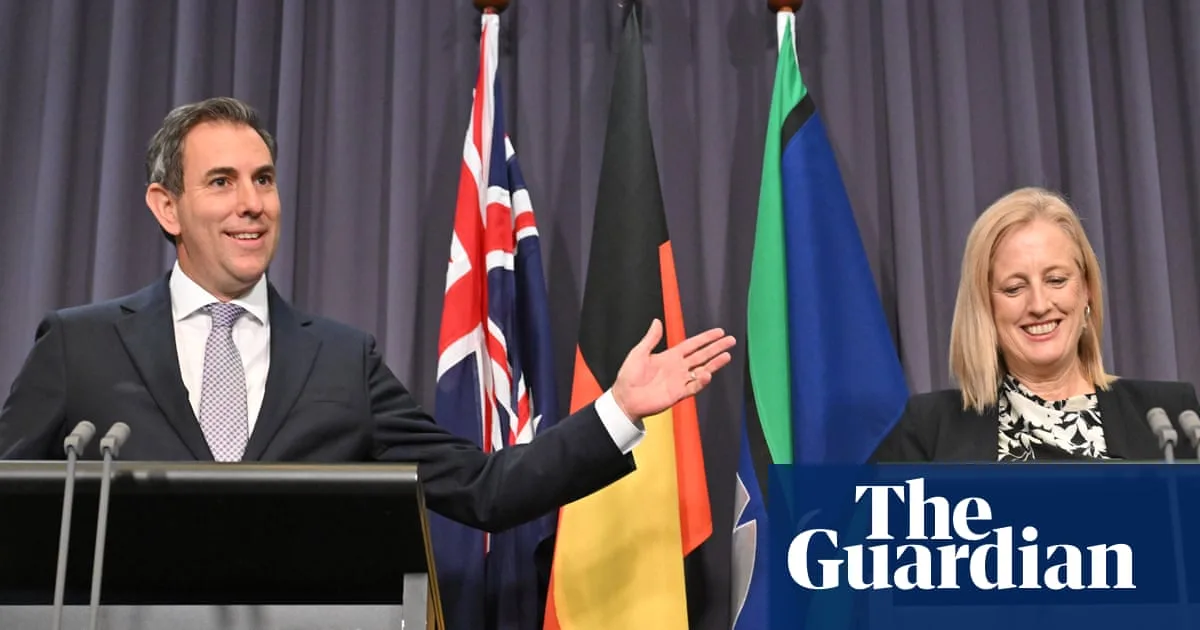
Treasurer Jim Chalmers has hailed the final budget outcome for 2024-25, which showed a deficit of A$10 billion, significantly better than the A$27.9 billion forecast in the pre-election economic and fiscal outlook. The improvement, driven by higher-than-expected tax revenues from workers and companies, has been presented as evidence of responsible economic management.
However, critics argue that the government's celebration masks a deteriorating fiscal position. The budget has shifted from two consecutive surpluses to a deficit, with an even wider shortfall predicted for the current financial year. Moreover, gross debt continues to rise, and interest payments on that debt are growing at an average of 9.5% per year over the next decade, making them the fastest-growing major budget item.
Finance Minister Katy Gallagher claimed the budget is 'getting in better shape' and that the government is 'able to lower the debt'. But debt is actually climbing, not falling. The government's spin contrasts with the reality that the budget's structural challenges remain unaddressed, with future generations likely to bear the burden.

Despite these concerns, Australia's fiscal position remains strong by international standards. The deficit is just 0.4% of GDP, compared to 6.4% in the United States. Public debt, including states and territories, stands at around 50% of GDP, well below the G20 average of over 100%. Luke Yeaman, CBA's chief economist, notes that Australia has a AAA credit rating and a 'reasonably small deficit', but warns that the international comparison should serve as both comfort and warning.
The budget's projected path to near-zero deficit over the next decade relies heavily on 'bracket creep', where workers pay an increasing share of their income in tax. According to the Parliamentary Budget Office, the average worker's tax rate will rise from 25% to 27% by the mid-2030s, and personal income tax as a share of government revenue will climb from 48% to 53%. Yeaman says future governments will have to confront voters with the choice of higher taxes or reduced spending on services.