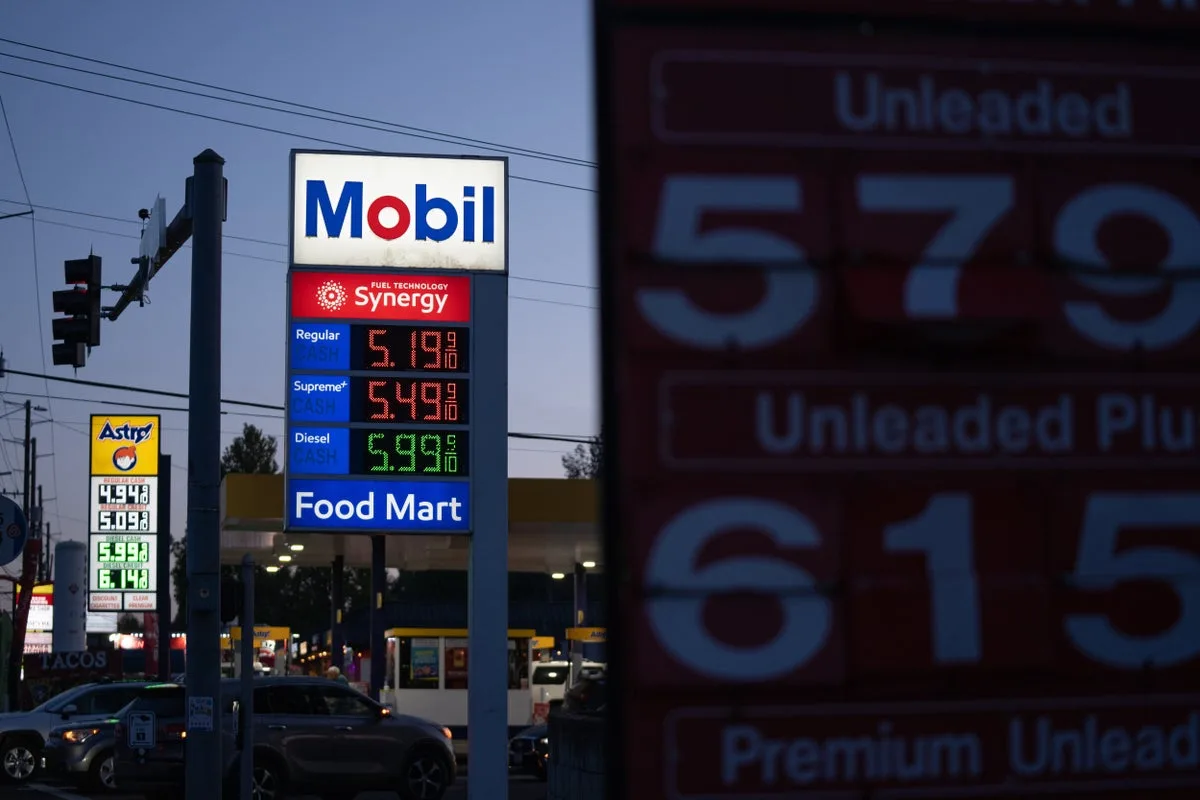
Rising petrol prices caused by the war in Iran are taking a toll on American motorists, but the wider US economy has so far been shielded by generous tax refunds and an investment surge driven by artificial intelligence.
New data released on Thursday showed the Federal Reserve's preferred inflation gauge, the Personal Consumption Expenditures price index, rose 0.7% from February to March and 3.5% on a year earlier – the fastest annual pace since May 2023. Petrol prices jumped 21% in March from February after Iran closed the Strait of Hormuz, creating what analysts described as the biggest disruption to oil supplies in history. Incomes, meanwhile, failed to keep pace with prices for a second consecutive month.
The Commerce Department reported that gross domestic product grew at a steady annual pace of 2% in the first quarter, slower than economists had expected but a rebound from the 0.5% expansion in the final three months of 2025, when a 43-day federal government shutdown shaved more than a percentage point off growth. Business investment, excluding housing, surged 10.4% in the quarter – the biggest jump in nearly three years – bolstered by the AI boom.
Consumer spending, which accounts for about 70% of US economic activity, expanded at a 1.6% annual pace in the first three months of the year, helped by large tax refunds resulting from President Donald Trump's 2025 tax cuts. But that boost may be short-lived. "Rising tax refunds were outpacing the increased burden of gasoline spending two to one in March and most of April," said Michael Pearce, chief US economist at Oxford Economics. "With tax refund season winding down and gas prices still climbing, the hit to consumer spending will become more evident from May." The average price of a gallon of regular petrol jumped another 7 cents overnight to $4.30, up from $3.18 a year ago, and has set multi-year highs for three consecutive days.
The combination of rising prices and the threat to growth has left central banks in a bind. The Bank of England kept its main interest rate on hold at 3.75% on Thursday and hinted at possible hikes, while the Federal Reserve, Bank of Japan and European Central Bank all opted for no change. Economists are already trimming their forecasts: Joe Brusuelas, chief economist at RSM, downgraded his US growth outlook for the year to 1.7% from 2.4%, saying "a year that was set to benefit from tail winds associated with a large tax cut and boom in artificial intelligence-led investment has been partially derailed" by the Iran war's supply shock.
The labour market, however, remains tight. The number of Americans filing new claims for unemployment benefits tumbled last week to its lowest level in more than 50 years, according to the Labor Department. Yet job creation has been uneven: strong in January and March but weak in February, when employers cut 133,000 jobs. Economists describe a "no-hire, no-fire" scenario that locks young applicants out of the job market, while there are growing concerns that AI is replacing entry-level positions.