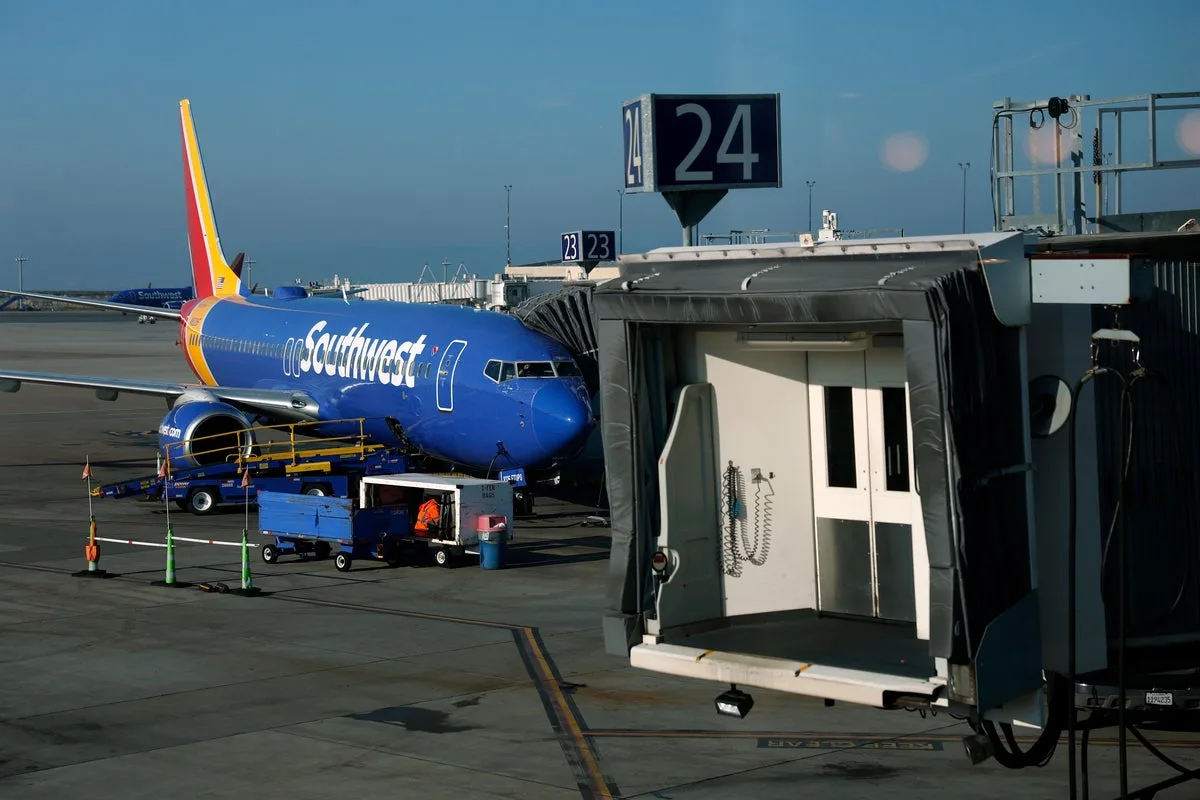
A Southwest Airlines passenger with debilitating anxiety and panic disorder is suing the carrier after an employee meant to be escorting her to a connecting flight instead stranded her in an airport bathroom, touching off an “immediate and severe” mental health crisis that continues to persist roughly two years later, according to a federal lawsuit reviewed by The Independent.
The episode caused Mary Lynn Ellison, 64, dire “emotional distress, including panic symptoms and physical manifestations of panic,” the suit contends. “Plaintiff’s disabilities, and the known risk of panic attacks and acute distress made Southwest’s conduct especially dangerous,” it says.
Ellison’s complaint, which was filed February 11, says the airline “attempted to minimize and deflect responsibility, including by claiming [Ellison] ‘stayed in the restroom too long.’” “Southwest’s conduct was extreme and outrageous, going beyond all possible bounds of decency, including the conscious abandonment of a known disabled passenger mid-connection after repeated requests for help,” the complaint states.
Since then, it says Ellison has suffered “sleep disruption, ongoing hypervigilance and worsening avoidance of air travel, consistent with trauma responses.” She has also “required additional clinical care and therapeutic support,” the complaint continues, in order for her doctors to address “the incident-related worsening of symptoms.” As an apology, the airline offered Ellison a $150 travel voucher, which, the complaint maintains, “did not address [her] damages and did not constitute a reasonable resolution.”
Southwest declined to comment on Ellison’s allegations, citing pending litigation. In the U.S., individual carriers are responsible for providing disability assistance at airports, while in Europe, the responsibility generally falls on airport authorities. In 2019, Southwest was sued by a wheelchair-bound traveler who soiled herself after a gate agent refused to help her to the bathroom, telling the woman it was “too far” away. The case was eventually settled out of court.
Ellison, a Seneca, South Carolina resident, “has lived and worked with serious anxiety and panic disorder, among other conditions, requiring prescription medication and clinical care,” her complaint states. It says these conditions “substantially limit major life activities” for Ellison, “including safe navigation of crowded terminals, tolerating prolonged stress and regulating panic symptoms without reasonable assistance… Acute stress and uncertainty can trigger panic attacks, physical symptoms, and loss of functional capacity.”