Residents of a Georgia suburb were left infuriated after discovering that a massive data center had been consuming nearly 30 million gallons of water without paying for it, as the state grapples with drought conditions.
The Discovery
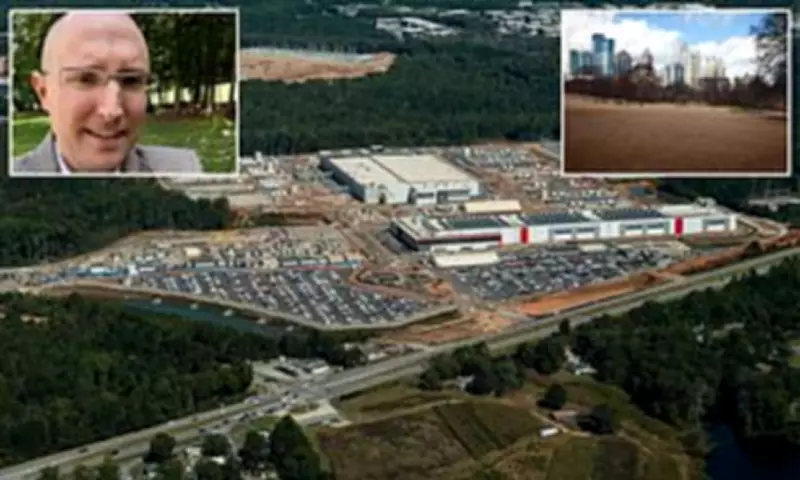
The issue came to light last year when homeowners in the affluent Annelise Park subdivision in Fayetteville noticed unusually low water pressure, according to Politico. Upon investigation, county officials found that developer Quality Technology Services (QTS) had installed two industrial-scale water connections to its approximately 6.2 million square foot data center campus, located about 20 miles south of downtown Atlanta. One connection appeared to have been installed without the water utility's knowledge, while the other was not linked to the company's account, resulting in no billing.
Unpaid Bill
By May 15, 2025, the Fayette County Water System sent QTS a letter demanding nearly $150,000 for more than 29 million gallons of water—equivalent to 44 Olympic-sized swimming pools—far exceeding the limit agreed upon during planning. QTS, owned by private equity firm Blackstone, eventually paid the $147,474 debt but faced no additional fines. The matter only became public last week when resident James Clifton obtained the letter via a public records request and posted it on Facebook.

Drought and Frustration
Meanwhile, Georgia is experiencing moderate to high drought levels, with Governor Brian Kemp declaring a state of emergency due to severe wildfires. Residents were asked to reduce water usage, sparking anger. Clifton, a local attorney running for county office, said: "We get this notification saying stop watering your lawns to conserve water. The first thing they do is lean on individuals, when QTS is just absolutely draining us—most months it's the number one consumer of water in the county." He also noted that the data center had been watering its landscape nearly continuously for four days, despite the drought.
No Penalty
Gregory Pierce, director of UCLA Water Resources Group, called it unusual that the utility did not fine QTS. "I don't know exactly what's happening here, but they probably don't want to upset one of their new and largest customers," he said. Vanessa Tigert, director of the Fayette County water system, acknowledged this: "They're our largest customer and we have to be partners. It's called customer service." She blamed the billing mix-up on a transition to a cloud-based system and staff shortages, adding that the utility may have known about the connections but could not locate the inspection report.
Company Response
A QTS spokesperson said the bills went unpaid while the county converted to smart meters, and the company has paid all retroactive charges. The high water usage was attributed to temporary construction activities, such as laying concrete and dust control, as QTS adds 16 more buildings to the site, expected to be completed in three to five years. Once fully operational, the data center will use water only for domestic needs, equivalent to four US households per month, thanks to a closed-loop cooling system.
Broader Concerns
This incident highlights growing concerns about data centers' energy and water consumption. A January 2026 report by Bloom Energy predicts US data centers' energy demand will nearly double from 80 to 150 gigawatts between 2025 and 2028, equivalent to adding Spain's energy needs. Residential electricity prices have jumped 7.1 percent, topping 20 percent in some states. Georgia, home to over 200 data center facilities, is taking action: the Public Service Commission froze Georgia Power's base rates through 2028 to prevent cost shifting, and the Fayetteville City Council voted last month to ban new data centers in all zoning districts.