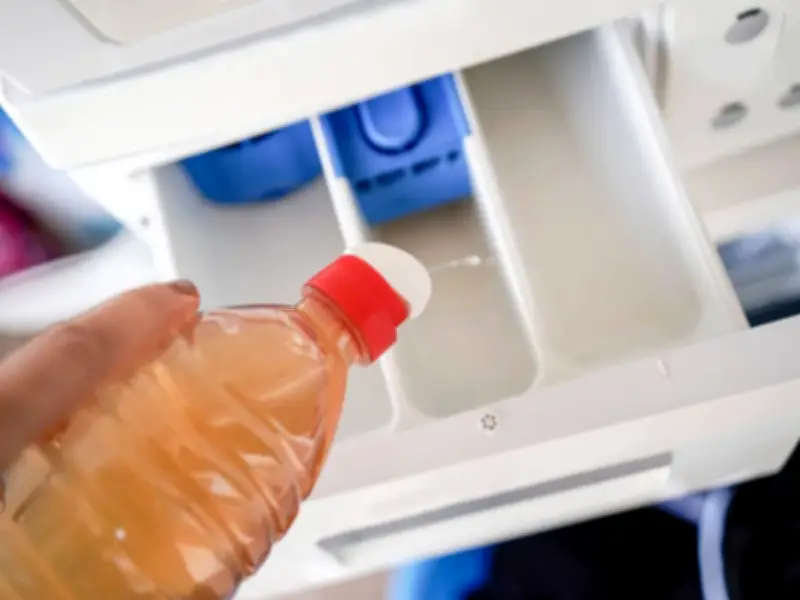
An appliance repair engineer has confirmed that using vinegar in a washing machine is safe, provided it is added to the correct compartment rather than poured directly into the drum.
Engineer's Verdict on Vinegar Use
Ryan, engineer and founder of EZY Appliance Repairs, addressed the question in a TikTok video after a user asked whether vinegar's acidity could damage rubber or rust metal. He explained that while vinegar "can cause corrosion" scientifically, this is unlikely in a washing machine if the vinegar goes into the detergent drawer.
Ryan demonstrated that vinegar should be poured into the drawer, noting that by the time it reaches the drum, it gets washed away by the end of the cycle. He said, "When it goes from here (the washing machine drawer) to the drum, it gets washed up by the end of the cycle. The drum is stainless steel, which withstands corrosion. You need to soak it in vinegar to get it corroded."
Potential Risks and Long-Term Use
The engineer acknowledged that repeated spills on the exterior could cause corrosion, but stressed that he and his customers have used vinegar "for years" without issues. Cleaning enthusiast Wendy Graham, who runs the UK-based eco-blog Moral Fibres, also supports vinegar use, saying it softens clothes without coating them, leaving them fresher and preventing machine clogging.
Graham added, "Personally, given that most washing machine brands say you can use vinegar and the ones that say you can't sell more expensive products that contain citric acid, I'm going to continue using vinegar in my washing machine. I've been using vinegar in my laundry for about 18 years now. So far, I've never had a problem related to the seals, hoses or gaskets." She argued that fabric softener, not vinegar, is more likely to cause harm by encouraging bacteria and mould growth.
Alternative Natural Cleaner
For those still hesitant, soda crystals offer a natural alternative. Adding them to the drum and running a hot wash at 60 degrees or higher helps remove grease, detergent build-up, and mould from the drum, door seal, and internal components. This is particularly useful for machines frequently used on low-temperature cycles or with liquid detergent, which tend to leave more residue over time.