

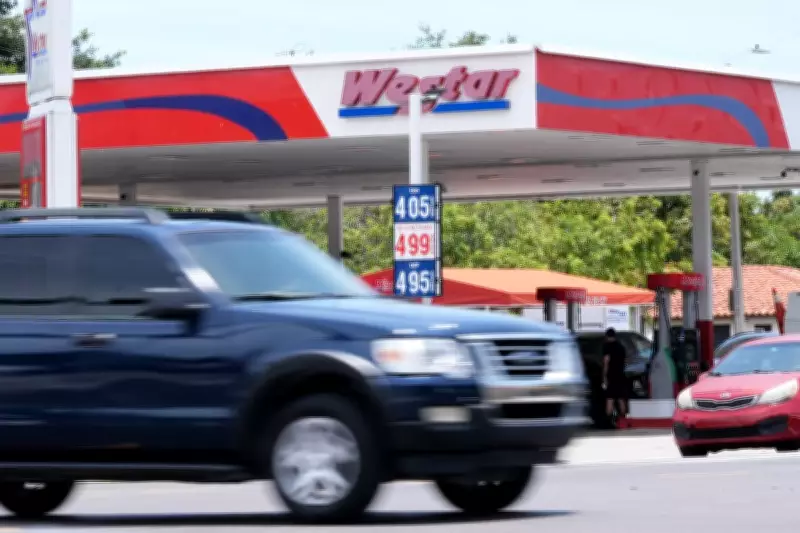
President Donald Trump has proposed suspending the federal gas tax to alleviate financial strain from soaring fuel prices during the ongoing war with Iran. However, this move cannot be enacted unilaterally by the president, and he has not specified the duration of such a suspension. Lawmakers from both parties have already advocated for a temporary halt, with some legislation in Congress proposing a suspension through October 1.
Impact on Pump Prices
The federal gas tax is currently 18.4 cents per gallon. However, drivers would not immediately see a full reduction of that amount. The tax is collected at the wholesale level, not at the pump. Experts suggest that the savings might trickle down slowly, if at all, during temporary holidays. Suppliers may retain part of the savings to boost profit margins. According to the Penn Wharton Budget Model, approximately 72% of the tax cut would reach consumers, equating to about 13.2 cents per gallon. For an average household filling a 15-gallon tank weekly from June 1 to October 1, total savings would be around $35. Meanwhile, the national average gas price stands at $4.50 per gallon, significantly higher than the pre-war level of $2.98 in late February.
Government Funding Concerns
The federal gas tax is the primary revenue source for highway and public transit programs. A four-month suspension could result in a loss of $8.35 billion in revenue, or up to $11.5 billion if the diesel tax is also paused. Proposed legislation aims to offset these losses with general funds, but critics warn this could increase the federal deficit and jeopardize infrastructure projects. The tax has remained unchanged since 1993, and its purchasing power has eroded due to inflation.

State-Level Gas Tax Suspensions
States also impose their own gas taxes, ranging from 9 cents per gallon in Alaska to nearly 71 cents in California. Several states, including Indiana and Georgia, have implemented temporary suspensions, while Kentucky and Utah have reduced levies. However, states must balance their budgets annually, making it challenging for others to follow suit. Some states rely on fuel tax revenues for education and environmental programs.
Factors Influencing Gas Prices
Crude oil costs account for the largest portion of gas prices. Despite efforts to boost supply, oil prices remain above $100 per barrel, up from $70 months ago. The standoff over the Strait of Hormuz, through which a fifth of the world's oil once passed, continues to disrupt supply chains. Analysts warn that prolonged conflict could lead to further price increases for gas and other goods.






