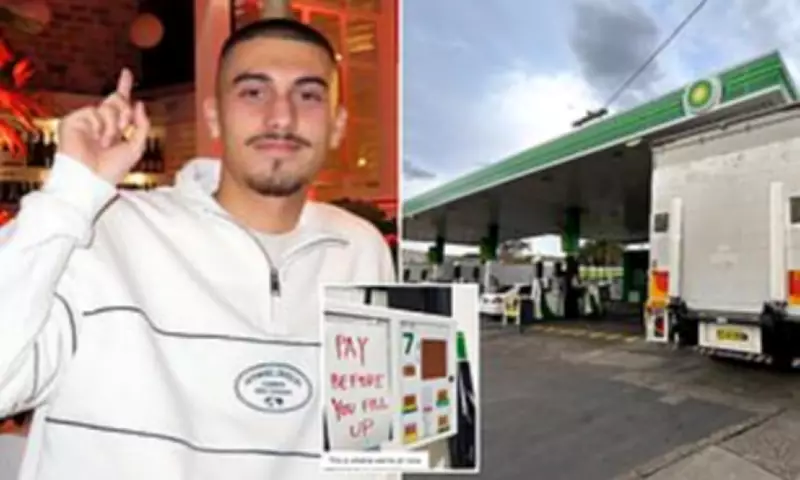
A young Sydney driver has expressed his astonishment after encountering new security measures at a local petrol station, where he was instructed to either pay for fuel upfront or hand over his mobile phone as collateral. This drastic change comes as fuel theft surges across the area, exacerbated by escalating prices linked to the Middle East conflict.
Strict Measures Implemented at Fairfield East BP
At a BP service station in Fairfield East, a sign taped to a petrol pump explicitly warned motorists: 'PAY BEFORE YOU FILL UP.' Dennis Suro, the driver involved, recounted his experience to Daily Mail, stating, 'This is where we're at now.' Staff members explained to Mr Suro that the station had been targeted by a severe wave of thefts, leaving them with no alternative but to enforce these stringent precautions.
Daily Theft Losses Revealed
When Mr Suro inquired about the reasoning behind the new policy, employees disclosed that between $800 and $1,000 worth of petrol is being stolen every single day. This significant financial loss has compelled the business to adopt a more cautious approach, fundamentally altering the traditional customer experience.

Practical Challenges of Prepayment
Mr Suro highlighted immediate practical issues with the prepayment system. 'I wanted a full tank, but with fuel prices constantly changing, I had no idea what that would cost before I even started filling up,' he explained. In response, station staff suggested an alternative: leaving his phone at the counter as a form of security while he refuelled.
A Surreal and Unsettling Experience
Describing the situation as 'surreal,' Mr Suro emphasised that being asked to surrender his phone as collateral underscores a profound breakdown of trust in the community. 'This isn't something I associate with Australia. We've always had a simple system, you fill up, then you pay,' he remarked. The incident left him feeling that the once straightforward process has become fraught with conditions and risks.
Impact on a Diverse Community
Mr Suro pointed out that the shift away from the conventional 'fill up, then pay' model poses particular difficulties in Fairfield, one of Australia's most culturally diverse regions. 'For many residents here, English isn't their first language,' he noted. 'Moving away from a simple system makes everyday interactions harder and exposes communication barriers that didn't exist before.'
Broader Implications for Trust and Society
The experience has highlighted a wider erosion of trust between businesses and customers. 'There's now a clear sense of distrust between the business and customers, and it makes the whole situation uncomfortable,' Mr Suro said. He added that leaving his phone behind felt abnormal and served as a stark indicator of how much societal norms have shifted. 'What was once built on trust now comes with conditions, risks and a level of caution that didn't exist before - and that's going to have a real impact on the community.'