Social Media's Recipe for Disaster: How Viral Cooking Fails Our Kitchens
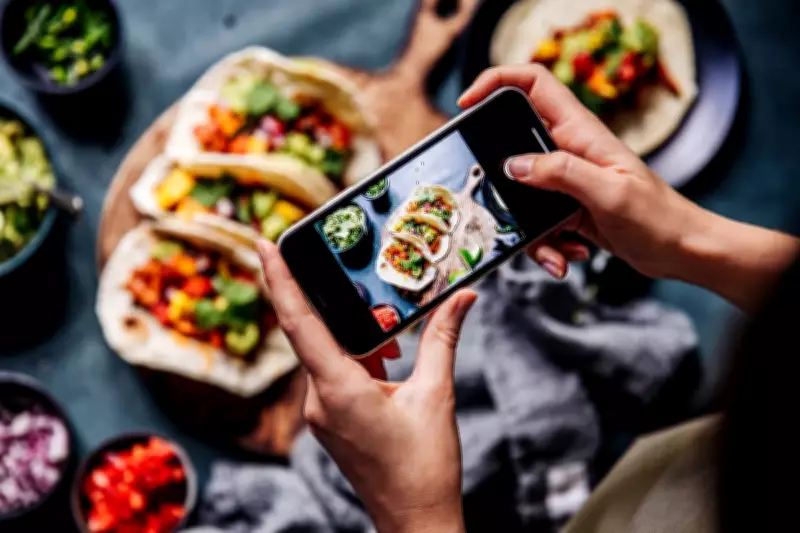
A very specific type of cooking video now dominates the internet. You recognise it instantly: an overhead camera, fast-moving hands, towering ingredients, and cheese stretching endlessly. It promises dinner in minutes, looks irresistible, and you save it or share it with a friend. Yet, when you attempt to cook it, something quietly falls apart—often while you frantically pause and rewind because written instructions are absent. "Comment 'LUSH!' for the recipe!" Instead, you swipe up.
This growing disconnect between what we watch online and what actually works in our kitchens deeply troubles John Gregory-Smith. He is a bestselling cookbook author, a regular on BBC's Morning Live, and, by his own admission, "90 per cent" a content creator with over a million followers. "They look really cool, especially on camera," he says of viral recipes. "But they often don't really work and don't taste very nice."
The Spectacle Over Substance
Gregory-Smith is not a cynic on the sidelines; social media built his career, and he develops recipes daily. From inside the system, he has witnessed a shift in what gets rewarded—and what gets lost. "What I've noticed in the last couple of years is [Instagram] pushing the same stuff over and over and over," he explains. "If that one went viral, just copy it again and again and again." The result is a feed dominated by repeatable spectacle, not good cooking—recipes engineered to perform rather than to be cooked.

When these recipes go viral, they rarely withstand scrutiny. "With the viral recipes, the ones that go insane, the only one that is any good is the feta pasta bake," he notes, referencing the lockdown trend that sold out feta in shops. "That is so good." Everything else, he suggests, is less convincing. A yoghurt cheesecake that is essentially frozen yoghurt with biscuits, or a watermelon "sandwich" that feels "just a bit Atkins." "It might look cool, but there's a strong chance it probably won't work and there's a very strong chance that it'll taste absolutely gross."
Spend enough time on social media, and the effect compounds. "You get stuck in a doomscroll, where you've clicked on it once and then it serves you 10,000 of them." This loop feeds itself: more clicks, more spectacle, less substance.
Misleading Budgets and Techniques
Even recipes that appear more grounded can be misleading. Budget cooking videos often promise to feed a family for a fixed sum but rarely reflect actual shopping habits. "Cost is very hard," Gregory-Smith admits. He recently developed a Szechuan chilli beef recipe that was "so yum" but relied on Chinese condiments not typically stocked at home. On paper, it might seem inexpensive per portion; in reality, a home cook must stock up first. "It can be quite misleading," he says.
The same disconnect applies to technique. While researching his new cookbook, The Greatest Traybake Cookbook Ever, Gregory-Smith spent "an unhealthy amount of time" watching traybake videos online. Many followed a familiar formula: throw everything into a tin, roast for 40 minutes, dinner done. "Immediately, you're like, well, it wouldn't be nice, would it?" he says. "The potato won't be cooked, the chicken will be like bullets, and the broccoli would have just burnt."
What Actually Works in Real Kitchens
If much of what we see doesn't work, then what does? For Gregory-Smith, the answer is disarmingly simple. "It's the slow and steady that people really, really love," he emphasises. "It might just be a one-pot or a traybake or a lovely pasta dish… that's real cooking and real food and really what people are making at home."
This philosophy underpins his new book, which aims not for showstoppers but staples. "When I started writing it, I read a stat about cookbooks that for the majority of them, people cook like two or three recipes from them, then just put them back on the shelf," he shares. "So I wanted to try and do something that people would genuinely be able to use on a Monday or Tuesday night."

The choice of traybakes was deliberate—a direct response to online trends and audience preferences. "It was always things like a really solid chicken traybake everybody loves. It's not always like the sexiest thing ever, but it's the one that you will actually cook every week because you know you absolutely love it."
Rigour Behind the Simplicity
Behind this simplicity lies a level of rigour rarely seen online. Every recipe is written, tested, adjusted, and tested again before publication. "If somebody who I've never met before takes the time and effort and money to go and cook one of my recipes, it has to work," Gregory-Smith asserts.
His cooking, while simple, is far from dull, driven by a lifelong fascination with global flavours. Growing up in Surrey with a standard British diet, family trips to Africa and Southeast Asia opened new culinary worlds. A formative moment was tasting tom yum goong soup in Thailand. "It was sweet, spicy, sour, tangy, hot, all at once," he recalls. "I remember thinking it was one of those things that has changed my palate forever… how can I go back to boiled ham and pie?"
Television also played a role, from Delia Smith's functional cooking to Madhur Jaffrey and Ken Hom's expansive dishes. Later, Anthony Bourdain and Keith Floyd shaped his outlook—less about perfection, more about chasing deliciousness wherever it's found.
Social Media: Villain or Catalyst?
Social media is not entirely the villain. It can flatten cuisines and strip context, but it can also spark curiosity. "You can totally see something on social media and be like, oh that looks really nice… and you might have no idea where it's come from," he says. "What I would hope is, if somebody's really interested in something, they might go that step further." He points to debates around Jamie Oliver's adaptations, like jerk chicken or paella, as examples of this tension. Altering traditional dishes can spark backlash but also open doors. A non-traditional paella might not pass muster in Valencia, but it has introduced the dish to a wider audience. "What he's done is introduce the UK to a Spanish dish," Gregory-Smith notes. Now, tapas restaurants are as common on British high streets as pubs.
Still, he is realistic about modern food engagement. Where cookery shows once filled TV schedules, they've been replaced by competitions, and cooking watching has migrated online. "People are consuming more and more and more food content online," he observes. "But what would be the conversion rate to dishes you've actually cooked?"
That is the crux: we watch more than ever but cook less of what we watch. The gap between inspiration and action has widened, filled with recipes that look good, travel fast, and rarely last.
A Radical Approach in a Click-Driven World
Gregory-Smith remains part of that world, filming, posting, and playing the game, but with a clear sense of what matters. "I'd rather be known as the guy you can go to if you want that nice, easy, midweek or easy entertaining meal that actually works." In a landscape built on clicks, this feels almost radical. The recipes worth holding onto are not those that stop the scroll but those that make it to the table—again and again.
Sample Recipes: Traybakes That Deliver
Cumin-Spiced Lamb Chops with Roasted Squash
When short on time but craving something fancy, this Indian-style traybake is a lifesaver. Tiny cubes of butternut squash roast quickly with chickpeas, while spiced lamb chops and cherry tomatoes create a mellow sauce. Finish with lime pickle yoghurt for a satisfying meal.
- Serves: 4
- Prep time: 15 minutes | Cook time: 30 minutes
Ingredients:
- 1 squash, cut into 0.5–1cm cubes (about 550g)
- 4 tbsp olive oil
- 1 x 400g tin of chickpeas, drained and rinsed
- 300g cherry tomatoes, halved
- 2½ tsp garam masala
- 4 cloves of garlic, crushed
- ½ tsp ground cumin
- ¼ tsp ground fenugreek
- 8 lamb chops (about 700g)
- 300g Greek yoghurt
- 2 tbsp lime pickle
- A handful of coriander leaves
- Salt and pepper
Method:
- Preheat oven to 220C/200C fan/gas 7. Toss squash with 1 tbsp oil, salt, and pepper in a roasting tin. Roast for 10 minutes.
- Mix chickpeas, tomatoes, 1 tbsp oil, 1 tsp garam masala, salt, and pepper. Add to tin, mix, and roast for 10 minutes.
- Mix remaining oil, garlic, 1½ tsp garam masala, cumin, fenugreek, salt, and pepper. Coat lamb chops.
- Arrange chops on squash and roast for 8–10 minutes until lamb is pink inside.
- Mix yoghurt with lime pickle, salt, and pepper.
- Scatter coriander, serve with yoghurt.
Saffron and Preserved Lemon Tagine Traybake
This easy chicken traybake features Moroccan flavours like saffron, preserved lemons, and ginger, creating a comforting, complex sauce perfect with couscous.
- Serves: 4
- Prep time: 15 minutes | Cook time: 1 hour 25 minutes
Ingredients:
- A pinch of saffron
- 2 tbsp just-boiled water
- 2 preserved lemons, deseeded and chopped
- Large handful of coriander
- 4 cloves of garlic
- 2 tsp paprika
- 1 tsp ground ginger
- 2 tbsp olive oil
- 1 kg chicken thighs, skin on
- 2 onions, finely sliced
- 300ml hot chicken stock
- 100g pitted green olives
- Salt and pepper
Method:
- Preheat oven to 200C/180C fan/gas 6. Infuse saffron in water.
- Blitz lemons, coriander, garlic, paprika, ginger, oil, salt, pepper, and saffron water into a paste.
- Coat chicken with paste in a roasting tin, add onions, pour stock, cover with foil, and roast for 1 hour.
- Remove foil, scatter olives, roast for 20–25 minutes until golden.
- Garnish with coriander and serve.
Creamy Harissa Sausage Casserole
This speedy traybake blends British bangers with Moroccan-inspired butter-bean stew, flavoured with ras el hanout and rose harissa for a comforting dish.
- Serves: 4
- Prep time: 5 minutes | Cook time: 35 minutes
Ingredients:
- 8 pork sausages (about 500g)
- 1 onion, finely chopped
- 1 tbsp olive oil
- 2 x 400g tins of butter beans
- 1 x 400g tin of chopped tomatoes
- 100g pitted Kalamata olives
- 2 cloves of garlic, crushed
- 1 tbsp rose harissa
- 1 tsp ras el hanout
- Optional: 50ml double cream
- Salt and pepper
Method:
- Preheat oven to 240C/220C fan/gas 9. Roast sausages, onion, oil, salt, and pepper for 15 minutes.
- Reduce oven to 220C/200C fan/gas 7. Add beans, tomatoes, olives, garlic, harissa, ras el hanout, salt, and pepper. Mix and roast for 20 minutes.
- Stir in cream if using and serve.
The Greatest Traybake Cookbook Ever by John Gregory-Smith is published by Penguin Michael Joseph, offering recipes built for repeat cooking, not one-hit wonders.