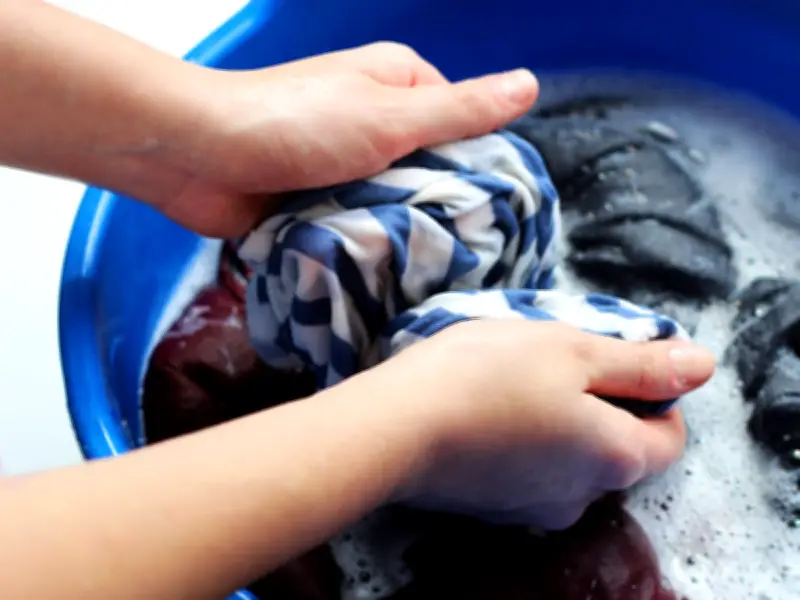
A woman was left gobsmacked after handwashing a charity shop dress turned the water a "disgusting" brown shade, prompting her to warn other thrift shoppers online.
Olivia Sablan, who posts on TikTok as @oliviasab_, filmed herself reacting in shock with her hand over her mouth before turning the camera to show the murky water. She was glad she had washed the dress on its own.
Social media reaction
Olivia captioned the video: "Your reminder to wash thrifted clothes thoroughly!" She added: "To be honest, it could be some dye from the dress, but it looks so bad."
In the comments, viewers were divided. One wrote: "I can never thrift because of this, like I'm sorry, I just can't." Another asked if she did not have a washing machine, and Olivia explained that clothes would "never feel clean enough" once they had been in that state.
Some suggested the brown water was simply dye from the garment. But another TikToker disagreed: "No, the cloth is black. If it's the dye, it would be grey, not like this colour."
Why you should always wash second-hand clothes
Even if a pre-loved item looks spotless on the rack, you do not know its history. It may hold traces of sweat, body oils, bacteria and lingering odours from previous wear, as well as dirt and germs picked up during donation, transport, sorting and in-store try-ons.
A normal wash removes much of that residue and helps the item feel fresher straight away. It also reduces the risk of skin irritation. Perfume, deodorant, smoke, detergents and fabric softeners left in the fabric can trigger itching or flare-ups for people with sensitive skin, eczema or allergies.
There is also a practical pest angle. Clothing stored for long periods can occasionally harbour moth eggs or larvae, and in rarer cases other unwanted hitchhikers in seams and folds. Washing and thoroughly drying the item, or dry cleaning when the label calls for it, lowers that risk and stops anything from spreading to the rest of your wardrobe.
A first wash is also a useful "stress test". Some items may shrink, dyes can run, and faint stains can become more noticeable in daylight. Washing before wearing helps spot problems early and prevents colour transfer onto other clothes, upholstery or bedding.
None of this means you cannot find immaculate items at charity shops - it is simply advised to wash second-hand clothes before wearing them.