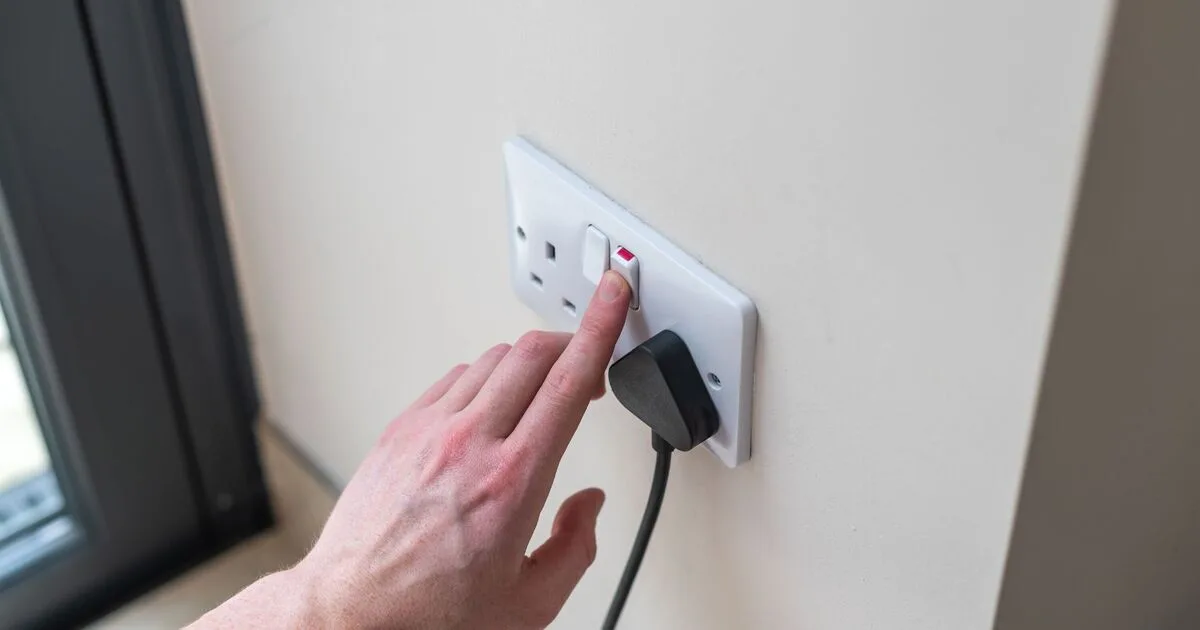
Households are being urged to never leave five common appliances on standby to avoid higher energy bills, as energy watchdog Ofgem prepares to announce the household energy price cap for July on 27 May. The decision will be based on wholesale energy prices from March, April, and May. Forecasts from energy consultancy Cornwall Insight suggest that, under Ofgem's price cap for July to September, a typical dual-fuel household would face an annual bill of £1,973. This represents a significant jump from the current £1,641, a £332 increase. However, the figure could shift as we edge closer to 27 May.
Simple Changes Can Make a Real Difference
With energy costs rising, households will be keen to cut their energy usage wherever possible. Simple changes can make a real difference, including something as straightforward as switching home appliances off at the plug. Energy and appliance experts have revealed which household gadgets guzzle the most electricity when left on standby.
Game Consoles
Not everyone owns one, but if you are a dedicated gamer or have children at home, the chances are you have got one or even two consoles, be it a PlayStation or an Xbox. When left on standby, they behave much like a television, drawing a steady supply of power for similar functions. Energy expert Mitchell Wray from National Insulation Supplies advises that you should "flick them off at the switch, as leaving your console on standby could be costing you around £30.13 annually". TV and gaming appliance expert at AO, Nick Bunce, cautioned that game consoles "often consume substantial standby power to remain ready for updates or remote activation". He instructed: "Switch yours off at the wall when you are not using it, and if you are charging controllers, turn your console off as soon as they are back up to full power."
Desktop Computers
While leaving a desktop computer in standby mode might mean faster log-ins, it can "drive up your energy costs", cautioned energy experts at Free Heating Scheme. They said: "Even in standby, desktop computers continue to use electricity, which can be costly over time. Typically, a desktop computer left in standby can add about £10 to £15 annually to your electricity bill." While this might appear modest, switching off your desktop entirely when not in use can result in "significant savings". Minor adjustments like this can make a substantial difference to your overall energy bill.
Microwaves
Microwaves have a modest standby drain, as they require power to keep their digital clock ticking, according to Mitchell. The energy experts estimated that a microwave left on standby can cost between £3 and £6 annually. Switching it off at the wall when not required can accumulate and "create large savings". Combined with other energy-saving habits, this minor tweak can contribute to a long-term decrease in your energy costs.
Televisions
Leaving your TV on standby can lead to needless energy consumption that builds up over time. Mitchell said: "It may seem unnecessary, but the extra little bit of effort it takes to turn your TV off at the switch can save you a lot of money." For TVs, the continuous power trickle might be used to power features like clock displays and sensor lights and to keep components warm for faster restarts.
Older Appliances
Ageing appliances frequently lag behind their modern equivalents when it comes to energy efficiency. When these devices, such as an elderly fridge, have deteriorated components, they can require considerably more energy to function properly. For example, fridges exceeding 10 to 15 years old are generally far less energy-efficient than contemporary models. They can use between 100 to 200 kWh monthly, totalling roughly 1,200 to 2,400 kWh annually, depending on their age, brand, and state. If your fridge has passed the decade mark, switching to a modern, energy-efficient model might prove a sensible investment, as it could deliver substantial savings over time.