A routine lunch order in Melbourne has dramatically reignited public frustration over Australia's escalating cost-of-living crisis, after a diner was left shocked by a cascade of surcharges that propelled the price of three burritos to nearly one hundred dollars.
The Staggering Receipt Breakdown
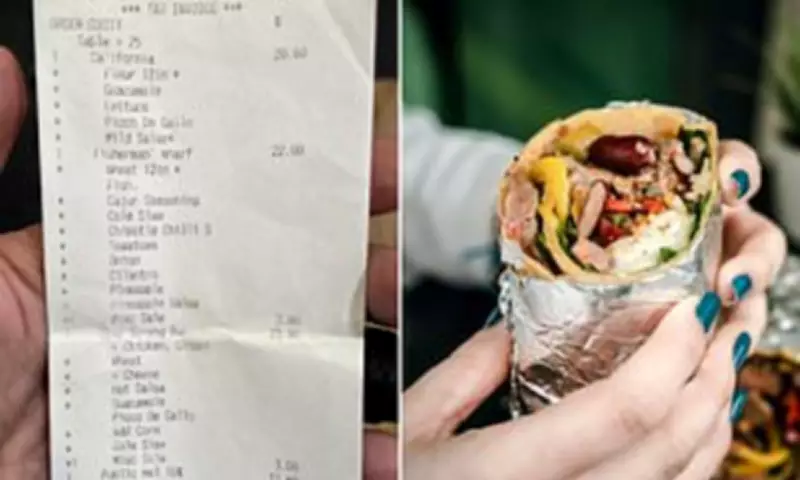
The customer recounted ordering three burritos, immediately sensing something was amiss when the total displayed was far higher than anticipated. "I'm wondering how common this is around Melbourne," he posted on Reddit, explaining that after seeing a total of $97, he requested an itemised receipt.
The detailed bill provided a stark illustration of what many Australians describe as the creeping, often hidden, cost of eating out. The burritos themselves carried premium price tags: a California burrito at $20.60, a fish burrito at $22, and a chicken burrito at $23.90. Two of the meals also incurred an additional "misc sale" charge of $3 each.

The Surcharge Shock
However, it was the add-on fees that truly stunned the diner and online commentators. The bill included a 16% public holiday surcharge amounting to $11.60, a 10% Saturday/Sunday surcharge of $8.57, and a card payment surcharge of $1.60. These extra fees alone stacked up to nearly $22.
In total, the various surcharges constituted approximately 26% of the overall bill, driving the final total to $94.27. "Is this normal?" the customer questioned, expressing his disbelief at the compounded charges.
Questioning the Charges
The diner stated he challenged the fees at the counter, particularly querying the public holiday surcharge. The group had eaten at the restaurant on December 27th, a date the customer believed was not widely recognised as a public holiday in Victoria. "The guy at the register insisted that's the way it's done. They also layered the surcharges together, which seemed odd," he reported.
This experience resonated deeply with Australians who argue that dining out, especially for what was once considered affordable comfort food like burritos, has become borderline unattainable for many. "Three burritos for $100? Absolute madness. To think they started out as poverty food," one person remarked online.
A Generational Shift in Affordability
Another commenter reflected on the drastic changes over a single generation: "I'm a '90s-'00s kid. Chinese takeaway, pizza and tacos were staple foods for students and young people. Even if you were broke, you could afford them. Now a single takeaway meal costs an hour's pay."
Several online respondents took specific issue with the practice of stacking multiple surcharges. "I've never seen weekend and public holiday surcharges applied together. It has to be one or the other," one noted. Another added pointedly, "Are the staff getting both loadings? Obviously not. That's double dipping."
Others highlighted that the customer paid more in combined surcharges than the cost of one entire burrito. "You paid over $27 in charges on top of the food," one observer wrote.
Broader Implications for Australian Dining
This frustration mirrors a wider transformation in Australian dining culture. Soaring wages, escalating rents, increased insurance premiums, and rising ingredient costs have compelled hospitality venues to push prices higher, frequently through surcharges that customers often only notice upon receiving the final bill.
While weekend and public holiday surcharges are legal and becoming increasingly commonplace, consumer advocates have consistently argued that such fees must be clearly disclosed upfront and applied reasonably. They warn that excessive or layered charges risk significantly eroding consumer trust and goodwill.
Changing Consumer Behaviour
For a growing number of Australians, experiences like this are fundamentally altering behaviour. "I'll make my own burritos at home now, thank you very much," declared one individual. Another shared a parallel experience: "I had a $400 birthday dinner bill with a $72 weekend surcharge. It's out of control."
As grocery prices, rental costs, and energy bills continue their upward climb, Australians are becoming acutely more sensitive to the true expense of small luxuries and indulgences. The era when "cheap eats" genuinely felt affordable appears to be fading rapidly.

For this Melbourne diner, what was intended as a simple, casual meal instead became a jarring reminder of how swiftly a basic day out can devastate a household budget. It also underscores precisely why more Australians are increasingly opting to stay home, foregoing restaurant visits altogether in the face of relentless financial pressures.