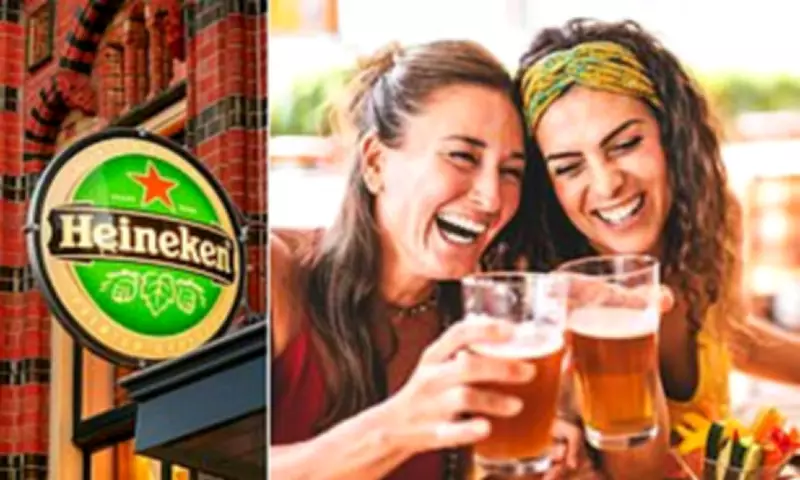
If a beverage contains zero alcohol, zero sugar, and zero calories, can it still legitimately be called beer? This is the perplexing question drinkers across the United States are grappling with following the launch of Heineken's latest innovation. The Dutch brewing giant has introduced Heineken 0.0 Ultimate, an alcohol-free beer that also boasts zero sugar and zero calories, leaving many consumers to wonder if it's essentially just flavored water.
The Ultimate Non-Alcoholic Offering
Heineken 0.0 Ultimate, which was first piloted in 2025, is now being rolled out across select US states, including New York, Texas, and Florida. This launch represents a significant push by Heineken into the rapidly expanding non-alcoholic beer market. The company previously pioneered this sector in the US with the 2019 release of Heineken 0.0, which was alcohol-free but still contained sugar and calories. The new Ultimate version, priced at approximately $11 for a six-pack, aims to provide even greater choice for health-conscious consumers.
'Heineken 0.0 Ultimate is for the consumer who wants even more choice: world-class taste, zero alcohol, zero sugar and zero calories,' the brewer stated in a recent announcement. However, this bold claim has raised eyebrows within the industry and among beer enthusiasts.

Brewing a True Zero-Calorie Beer
Creating a genuine zero-calorie beer presents considerable technical challenges. Traditional beer is brewed from grains like barley, which naturally produce calories and carbohydrates during fermentation. Even most rival non-alcoholic options still retain some caloric content. For instance, Budweiser Zero contains 50 calories per serving, while Michelob Ultra Zero has 29 calories and 6 grams of carbohydrates. Heineken's achievement in eliminating all calories and sugar while maintaining what it describes as a 'great tasting' brew is therefore notable, if controversial.
Mixed Reactions from Consumers
When Heineken announced the US rollout on Instagram last Friday, customer responses were sharply divided. Some early adopters in the US expressed approval, while others were openly skeptical about how a beer could contain zero alcohol, sugar, and calories.
'Is it just water?' one commenter joked on social media, with another simply asking, 'Why?' On Reddit, discussions revealed more nuanced opinions. One user who had already sampled the product wrote, 'I've already had it, it's been out a while. Posted my review here actually. Kinda good in a sense, more so in a 'wow they did it and it's not undrinkable' way than a 'I would love to have this all the time' way.'
Another Reddit user compared the taste and 'mouthfeel' of Heineken 0.0 to Keystone Light, an American light lager known for its affordability. According to Heineken's press release, the Ultimate variant features soft fruity notes and a 'delicate malty body,' achieved through a double-brewing process to remove alcohol—a method also used by other beer alternatives.
Is It Beer or Hop Water?
Some observers have noted that Heineken carefully refers to this new product as a 'brew' rather than strictly a beer, leading to speculation that it might be closer to 'hop water.' Hop water, which has gained popularity in America, is primarily flavored with hops, a key ingredient in traditional beer. One Reddit commenter pointed out, 'Notice they talk a lot about the 0.0 beer and then they always refer to this new product as a 'brew.' So yes, basically Heineken hop water, which is not a bad thing but it seems like they are being a little coy with it.'
The Booming Non-Alcoholic Market
Heineken, originally founded in Amsterdam, now offers a range of non-alcoholic alternatives in the US, alongside its original 5% ABV beer, Heineken Silver (95 calories per bottle), and Heineken Light. The demand for alcohol-free options is undeniably surging. A Brewers Association study indicates that non-alcoholic beer sales in the US skyrocketed by 159% between 2021 and 2025, with volume growing 111%. This category now represents 2.5% of total beer products, highlighting a significant shift in consumer preferences.

Health Considerations and Debates
While products like Heineken 0.0 Ultimate are marketed toward health-conscious individuals, there is ongoing debate about the long-term effects of alcohol-free beer. Some research suggests that consuming two bottles daily could elevate blood sugar levels, potentially increasing the risk of developing type 2 diabetes. As previously reported, these drinks may lead to a buildup of insulin in the blood, which is a warning sign for diabetes. This adds a layer of complexity to the health claims associated with zero-calorie, non-alcoholic beverages.
Ultimately, Heineken's latest release not only challenges traditional definitions of beer but also reflects broader trends in the beverage industry toward innovation and health-focused alternatives. Whether consumers embrace it as a genuine beer or view it as a cleverly marketed hop-infused drink remains to be seen, but its launch certainly sparks important conversations about what constitutes beer in the modern era.