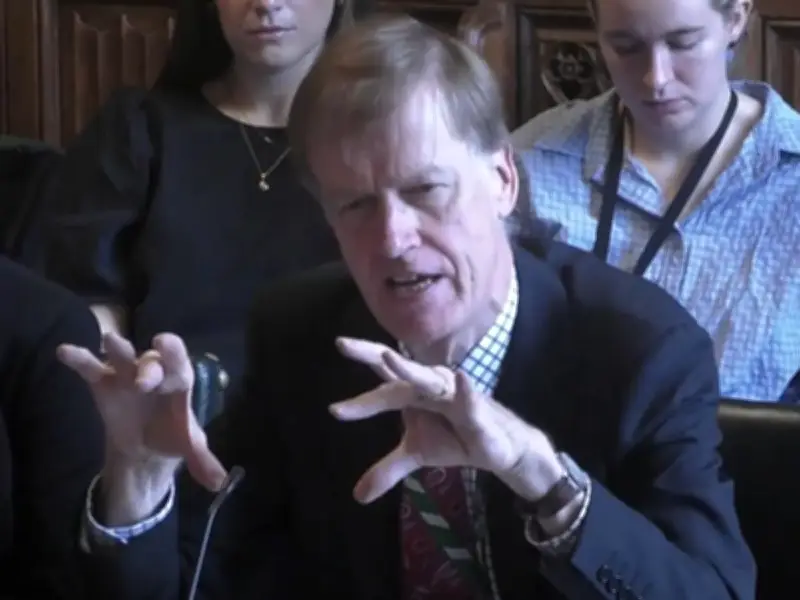
DWP minister Sir Stephen Timms has spoken about future changes to the sanctions that can apply to benefit claimants. Payments can be reduced if claimants fail to comply with the requirements to receive their benefits.
Personalised approach being tested
Speaking to the Work and Pensions Committee, Sir Stephen said: "The department does recognise that taking a a one-size-fits-all approach to people coming into the department is not the right approach. And so our aim is to tailor the requirements that are made of people to their individual circumstances, supporting people to engage with the department, making sure that safeguards are in place for those who are vulnerable or have additional support needs."
He said there is a careful process undertaken before a sanction is applied to a particular claimant, and that there are plans for changes to the system. Sir Stephen explained: "Where sanctions are considered, and sometimes they have to be, as I think the committee will recognize, then there are multiple checks before a sanction is imposed.

"There's independent decision making, and we are looking at testing more personalised approaches still for the future."
How sanctions work on Universal Credit
For Universal Credit claimants, a sanction reduces the amount of the standard allowance received. Any extra amounts on top of this continue to be paid as usual.
If a sanction is imposed, claimants receive a journal message in their Universal Credit account or a letter. This outlines how much the payment will be reduced by, how long the sanction may last, what needs to be done to end it, and what the claimant failed to do.
Payments are reduced by 100 per cent of the Universal Credit standard allowance rate for each day the sanction is in place. For claimants aged 16 or 17, or whose only responsibility is to attend appointments, payments are cut by 40 per cent of the standard allowance rate each day.
Daily sanction rates
If payments are already reduced due to earnings or other income and there is not enough entitlement to take the full sanction amount, payments are reduced to zero and the sanction is regarded as fully applied.
Given current standard allowance rates, daily sanction rates are as follows: single claimants under 25 face a 100 per cent sanction of £11.10 or a 40 per cent sanction of £4.40; single claimants aged 25 or over face £13.90 or £5.50; joint claimants both under 25 face £8.60 or £3.40 per sanctioned claimant; and joint claimants where one or both are 25 or over face £10.90 or £4.30 per sanctioned claimant.
Sir Stephen also told the committee: "I do accept that, inevitably, there are sanctions in the system, and sometimes those sanctions will be imposed on on people who are vulnerable. The department has to do that with great care, and that's what we're aiming to do."