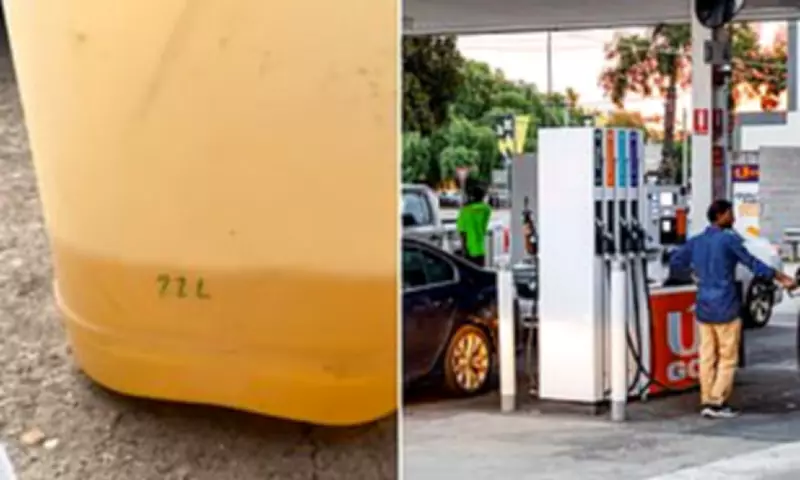
An Australian driver has publicly expressed his outrage after discovering he received significantly less fuel than he paid for on two separate occasions within a fortnight. The customer first purchased 30 litres of petrol at a service station, only to find it barely filled a 20-litre container.
Hospital Appointment Fuel Crisis
The motorist explained his urgent need for the fuel, stating: "Australia is running out of petrol so I went and got some backup. This cost me $65 to fill up, but it's only 20 litres. I need this petrol for my hospital appointment that's coming up."
Two weeks later, the same driver paid for ten litres of petrol at the pump but measured it himself, discovering he had received only 7.2 litres. In a video shared on TikTok, he exclaimed: "Look at that little scabby petrol. I bought ten litres of petrol, but that's not ten litres."

Widespread Consumer Complaints
The man's social media post prompted numerous responses from other drivers who reported similar experiences:
- "Had that yesterday and got ripped bad," one user commented.
- "I filled my tank last week and got 100 kilometres less than usual," another revealed.
- "Yep, happened to me. They blame the bubbles when you're filling up," a third person added.
Many social media users advised the driver to take formal action, with suggestions including:
- "I'd report the place," one commenter urged.
- "Take them to court," another recommended.
Nationwide Fuel Audit Underway
The National Measurement Institute (NMI) has launched a comprehensive nationwide fuel audit this month to ensure customers are receiving the correct amount of fuel they pay for. Service stations found to be overcharging customers face fines of up to $220,000.
A spokesperson for the Department of Industry, Science and Resources (DISR) confirmed that 350 random service stations will be inspected during the audit. "It is important Australians feel confident they are getting what they pay for at the petrol bowser," the spokesperson emphasized.
Comprehensive Inspection Protocol
According to DISR officials, inspectors will conduct thorough examinations including:
- Verifying that equipment operates within allowed error limits
- Reviewing operators' maintenance, calibration, and staff training records
- Collecting fuel samples for the Fuel Quality Standard monitoring program
The audit will primarily target high-risk and new traders, while stations with previous compliance issues will also receive special attention. The NMI conducts these fuel quality checks on behalf of the Department of Climate Change, Energy, the Environment and Water.
Broader Fuel Supply Crisis
These consumer complaints emerge amid a severe fuel shortage affecting Australia, with many petrol stations running dry and others significantly increasing prices. Diesel has reached $3 per litre in some locations.
The pressure on fuel supplies has intensified following Iran's closure of the Strait of Hormuz, a critical waterway between the Persian Gulf and the Gulf of Oman through which approximately one-fifth of the world's oil supply passes.
Australia's current fuel reserves are estimated to cover only about 38 days of petrol consumption and approximately 30 days each for diesel and jet fuel. The Middle East conflict has already resulted in six tankers bound for Australia being cancelled or delayed, exacerbating the supply chain disruption.