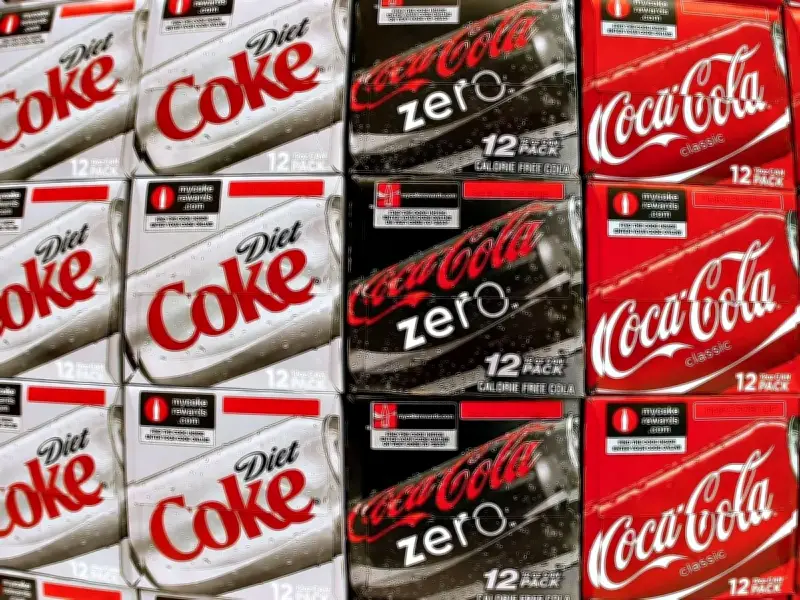
Diet Coke and Coke Zero are among the world's most popular no-sugar fizzy drinks, but they are not the same product. The main difference, according to the Coca-Cola Company, is taste: Coca-Cola Zero Sugar is designed to taste more like original Coca-Cola, while Diet Coke has a different blend of flavours that gives it a lighter taste.
Sales and Market Performance
Both drinks rank among the world's best-selling soft drinks. According to the Coca-Cola Company, Coke Zero sales grew by 14% in 2025, while Diet Coke sales held steady. The company brought in $47.9 billion in revenue that year, with both drinks accounting for a huge number of bottles and cans sold globally.
Diet Coke was Coca-Cola's first sugar-free cola, launched in 1983. Coca-Cola Zero followed in 2006 and was later reformulated as Coca-Cola Zero Sugar in 2016.
Do Diet Fizzy Drinks Help You Lose Weight?
On the surface, it seems unlikely that Diet Coke or Coke Zero could cause weight gain. Both contain zero fat, carbohydrates and sugar, and the Coca-Cola Company confirms that "both drinks are sugar free and calorie free". Regular Coca-Cola, by contrast, contains 10.6g of sugar per 330ml can.
But the reality may be more complicated. Writing on the Harvard Medical School website, Dr Robert H Shmerling warns: "Research suggests that none of these choices may actually help with weight loss. Worse, they might even lead to weight gain." He explains that artificially sweetened drinks may increase cravings for sweet, high-calorie foods. Studies in rodents have also suggested that aspartame, an artificial sweetener found in both drinks, may affect the part of the brain that signals fullness. Some human studies have similarly found a link between diet drinks and weight gain.
That said, Dr Shmerling notes that the evidence is not clear-cut and that other studies have found that diet drinks can support weight loss. He also points to "reverse causation" as a complicating factor — people already at risk of obesity may be more likely to choose low-calorie drinks, which can create the false impression that the drinks themselves cause weight gain.
Are Diet Coke and Coke Zero Bad for You?
While both drinks contain no fat, sugar or carbohydrates, that does not necessarily make them healthy. The Zoe Science and Nutrition website notes that "just because something has no calories doesn't mean it's healthy." Both drinks contain manufactured ingredients rather than natural ones, and there is growing concern about the potential health effects of ultra-processed food and drink, including impacts on gut health and metabolism.
Dr William Li, a physician, scientist and author, told the Zoe podcast: "The preponderance of clinical evidence, public health evidence, shows that high consumption of soda is associated with everything from metabolic disease to cardiovascular disease to cancer risk." He was not referring to any specific brand. However, as both Zoe and Harvard Medical School acknowledge, the full picture is still unclear, and "scientists continue to look into the issue".
Ingredient Differences
The ingredient lists also differ slightly. Diet Coke contains: carbonated water, colour (caramel E150d), sweeteners (aspartame, acesulfame K), natural flavourings, caffeine flavouring, and acids (phosphoric acid, citric acid). Coca-Cola Zero Sugar contains: carbonated water, colour (E150d), acid (phosphoric acid), sweeteners (aspartame, acesulfame-K, enzymatically produced steviol glycosides), natural flavourings, caffeine flavouring, and acidity regulator (sodium citrates).
The key difference is that Coke Zero includes an additional sweetener — steviol glycosides — and uses sodium citrate as an acidity regulator rather than citric acid.
A Reddit thread asking about the difference drew hundreds of responses. One user said: "Flavour wise, Coke Zero is supposed to be closer to regular Coke while Diet Coke is much more distinct." Another added: "I'm a life-long Diet Coke drinker and I can definitely taste the difference. Zero is too sweet. I don't want something that tastes like Coca-Cola. I want something that tastes like Diet Coke."