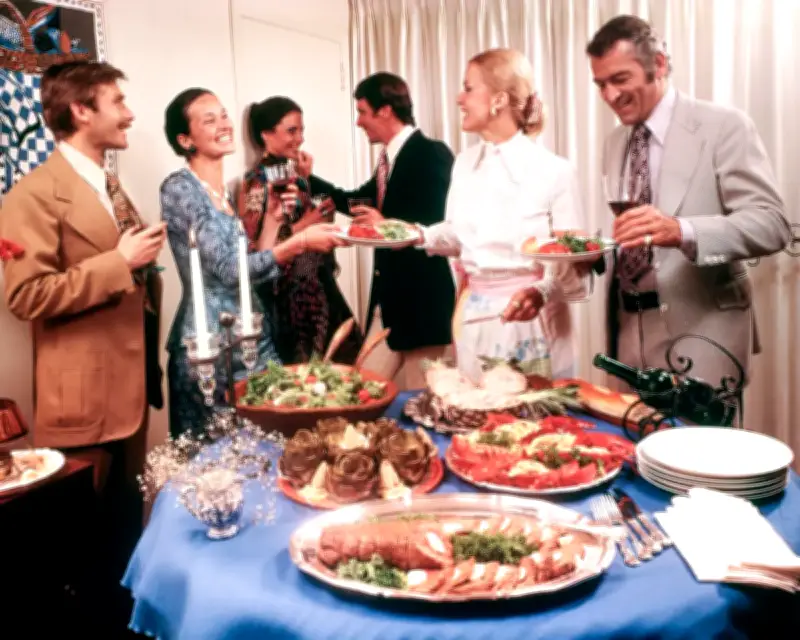
Hosting friends and family at home has declined dramatically, with US figures showing a drop from 42% in 1975 to 12% in 2026 – a 70% fall over 50 years. In the UK, a poll of 2,000 adults last year found more than four in 10 people avoid hosting due to the required clean-up.
Why we stopped hosting
Rehanna, 41, from Birmingham, says she loved hosting before having kids, but now prefers going out. “I can’t host and cook at the same time, so if I have people over it will usually be a cold buffet I have made earlier.” Simon, 37, from Glasgow, finds hosting prevents deep connection: “You’re not fully present because you’re either trying to anticipate their next needs or you’re not even in the same room.”
Anthropologist Robin Dunbar notes that larger cities scatter social networks, making casual visits harder. “There is a thing called the 30-minute rule: if someone lives more than 30 minutes away, we pretty much stop seeing them regularly.”
Pressure and expectations
Psychotherapist Kamalyn Kaur observes that spontaneous visits have become pre-arranged events, losing spontaneity. Social media creates “unrealistic expectations about how a home should look,” she says. Chef Therese Lum adds that TV cooking shows make hosting feel like a “perfectly curated five-course production,” making going out “easier.”
Cost is also a factor: in 2023, Retail Times reported that cooking a three-course dinner for six at home typically cost over £82, compared with just over £30 per head at a restaurant. The Spectator in May claimed dinner parties were being killed by “the modern curse of the ‘dietary requirement’.”
Impact on friendships
Kaur warns that not hosting reveals less of ourselves, affecting friendship depth. “There’s a vulnerability to letting someone see you in your own home.” She encourages people to “do whatever suits their own energy levels and mental health.”
Lum believes hosting builds unique connection: “Because it’s one of the most generous things you can do, it builds a kind of connection that’s hard to get anywhere else.” She concludes, “Guests don’t remember whether the napkins matched; they remember feeling looked after.”