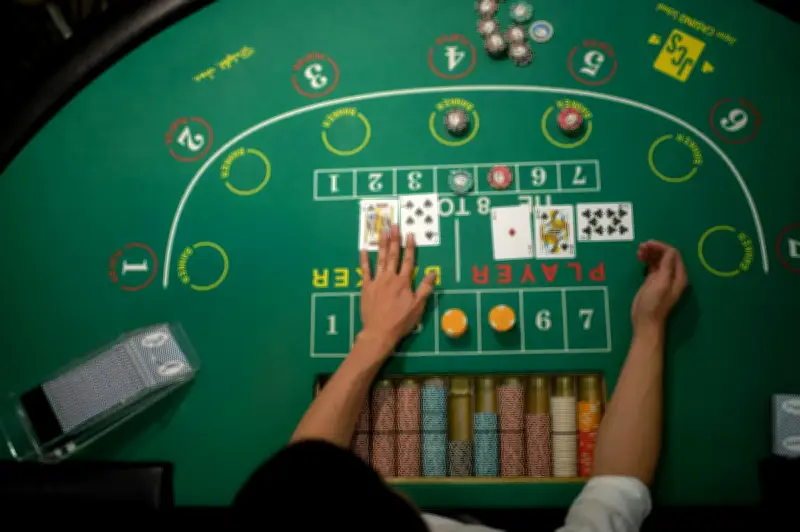
Baccarat is one of the oldest casino games still played, and it has one of the lowest house edges in any casino. Despite this, many players walk past it. The game can seem intimidating with its quick play, large table, and bead plate, but it is actually incredibly simple, with players having to make just one decision.
What is baccarat?
The history of baccarat is somewhat murky, with many different origin stories. What is known is that the game was popularised in France, perhaps after soldiers returned from war in Italy during the 15th century. It is rumoured that the name baccarat stems from an Italian dialect, meaning zero, reflecting a zero-hand, which is the worst in the game.
It has since earned a reputation as James Bond's game, but it has attracted high rollers such as King Edward VII in the late 19th and early 20th century. A recent surge in popularity in Asia and online casino growth mean that baccarat now generates more casino revenue than any other table game globally in both in-person and live casinos. Ironically, the game has gained huge traction in Macau. One of the predecessors of modern baccarat is thought to be Macao, another name for the Chinese region.
The basics: How baccarat works
There are three forms of baccarat, with the standard format offered by UK casino sites being punto banco. The goal is to predict whether the Player (punto) or Banker (banco) hand will score closer to 9. You are not 'the player' - the terms Player and Banker are just the names of the two hands dealt. Both hands are dealt two cards.
Eight standard decks are shuffled in a shoe. The numbered cards between 2 and 9 retain their face value, while the ace counts as one. As you cannot have a hand worth more than 10, the picture cards and 10 are worth 0. This logic continues into the hand value. If the total exceeds nine, you drop the tens digit. For example, if you have a seven and six in your hand, you drop the 10 for a value of 3. A hand of two kings would be worth zero, for example, while an ace and an eight would be worth nine.
How to play baccarat: Step by step
Choose your table - either standard, mini, or live. Place your bet. You must choose between Player, Banker, or Tie before any cards are dealt. This is the only decision the player makes; the rest of the hand is dealt with automatically. The dealer deals two cards face-up to both the Player and Banker positions.
If either hand totals 8 or 9 - called a natural - no more cards are drawn. The highest hand wins. If there is no natural, third card rules apply. The dealer handles this automatically. The highest total wins, with the results announced by the dealer. Winning player bets pay out 1:1. Winning banker bets pay out 0.95:1 - with a 5% commission taken at the end of the shoe. Ties pay out 8:1.
The third card rule explained
The Player hand is drawn a third card if their total is between 0 to 5. Otherwise the hand stands on 6, 7, 8 and 9 - with the last two being a natural. The player’s extra card, if required, is drawn before the banker. That’s because drawing a third card for the Banker hand depends on both their total and the Player's third card.
When the banker’s hand after 2 cards totals 0, 1, or 2, the banker always draws. When it totals 3, the banker draws when the Player’s third card is 1, 2, 3, 4, 5, 6, 7, 9, or 0, and does not draw when it is 8. When it totals 4, the banker draws when the Player’s third card is 2, 3, 4, 5, 6, or 7, and does not draw when it is 1, 8, 9, or 0. When it totals 5, the banker draws when the Player’s third card is 4, 5, 6, or 7, and does not draw when it is 1, 2, 3, 8, 9, or 0. When it totals 6, the banker draws when the Player’s third card is 6 or 7, and does not draw when it is 1, 2, 3, 4, 5, 8, 9, or 0. When it totals 7, the banker stands. When it totals 8 or 9, the banker stands (natural).
Baccarat bet types and house edge
The banker bet in baccarat has a house edge of around 1.06 per cent, with the player bet slightly higher at 1.24 per cent. Overall, this means baccarat on casino apps or in-person has a relatively low house edge, although it doesn’t have the best odds compared to games like single-deck blackjack. The house edge in baccarat comes from two things: the 5% commission the casino takes on winning banker bets, and the game's fixed drawing rules, which leave players no decisions to make and tilt the odds slightly toward the house over time.
Wagering on the tie may look attractive with an 8:1 payout, but the 14.36% house edge makes it too risky and terrible value. There are side bets in baccarat, the two most common being banker pair and player pair. Punters can predict whether either hand’s two cards will form a pair. Both have a house edge of 10.36% with an 11:1 payout. As such, they are high-risk wagers.
You can also bet on the banker winning with a total of six. If it wins with a two-card six, the bet pays 13:1 (a 10.3% house edge); if it wins with a three-card six, it pays 21:1 (a 13.3% house edge). Known as Lucky 6, otherwise called a Banker 6 or Tiger, these side bets are best avoided, especially by newer players, as the house edge is far higher than on the main bets. No commission baccarat is a variant with no 5% commission on banker bets, but the house finds a new edge: a banker win on 6 pays out 50% of the bet instead.
Baccarat strategy: What actually works
Of course, no strategy beats the house long-term. There’s a reason why casinos stay in business, and it's worth remembering that the advantage always lies with them. These tips should only be considered as bankroll management tools. According to statistics, you should always bet on the Banker, which makes baccarat one of the best payout casino games. That’s because it has the highest probability outcome on any given hand. Following that similar logic, punters should avoid the Tie bet at all times thanks to its 14.36% house edge. Skipping side bets - Pairs and Lucky 6 - is prudent, unless you are comfortable with high variance.
Betting systems can help manage how you bet, but not whether you win. Always remember that the house edge applies regardless of strategy. The Martingale system involves doubling your bet after each loss. This means you recover losses on a single win, but it requires a large bankroll and risks exceeding table limits. You could also follow the Fibonacci sequence (1-1-2-3-5-8, etc) as your bet size. This carries less risk than the Martingale system but has a slower recovery. Similarly, the 1-3-2-6 System sees punters follow the pattern on winning streaks, while resetting on losses. This caps losses, but also winnings. Of course you can always keep things simple with flat betting, where you stake a fixed amount every hand. This is the safest approach, as it extends play time and limits variance.
There are several baccarat variants. Standard (Punto Banco) is the classic version with 8 decks and 5% Banker commission, best for beginners. Mini-Baccarat has a smaller table, lower limits, and the dealer handles cards, best for beginners on a budget. No Commission Baccarat has no 5% fee, but Banker on 6 pays 50%, best for players who dislike commission tracking. EZ Baccarat has a Banker push on 3-card 7 and a Dragon 7 side bet available, best for intermediate players. Speed Baccarat has faster rounds (shorter draw window), best for experienced players. Live Baccarat (online) has a real dealer via video stream with the same rules, best for online players wanting a casino feel.
There are many ways you can keep on top of your bankroll and extend your enjoyment of playing Baccarat. Set a session budget before you sit down and make sure to stick to it. A common guideline is to bring at least 20 times your standard bet as your session bankroll. Similarly, setting a win limit can help prevent emotionally charged betting. You may feel that you’re on a hot streak, but if you walk away after doubling your starting amount, that represents a good session. The other side of the coin is to never chase losses. Baccarat hands are completely independent events, as past results have no bearing on future ones. Those players unfamiliar with the game or planning to go to new casinos may want to consider playing free baccarat games online that don’t involve any money before sitting down to play a real-money game.
Common baccarat mistakes to avoid include betting the Tie regularly, as it provides the worst expected value at the table. Ignoring the house edge on side bets is also a mistake, as pair bets carry a 10% edge for the house, meaning they can quickly eat into your bankroll. It is also common to think that streaks predict outcomes. Baccarat uses a fresh shoe and each hand is independent. Some players might misunderstand the scorecard, as the bead plate tracks history, not the probability. Staying too long at the table increases the influence of house edge. The longer a session, the likelier numbers are to settle close to the house edge.
In summary, the safest bet in baccarat is the Banker hand, as it has the lowest house edge at 1.06%. Generally, yes, you should always bet on the Banker, but No commission variants remove the 5% fee taken by the house, with the added disadvantage that a Banker win with 6 is paid out by half. A natural is a score of 8 or 9 on the first two cards for either hand. Each bet type has a different house edge: the lowest is the banker at 1.06%, then the player at 1.24%, and the tie at 14.36%. Typically, eight decks are used in a shoe. Theoretically, you can count cards in baccarat, but the advantage is negligible as it is not practical to do so. Mini-baccarat is characterised by table size, limits, and who deals. Baccarat is a good game for beginners, as there is only one decision to make - which hand to bet on.