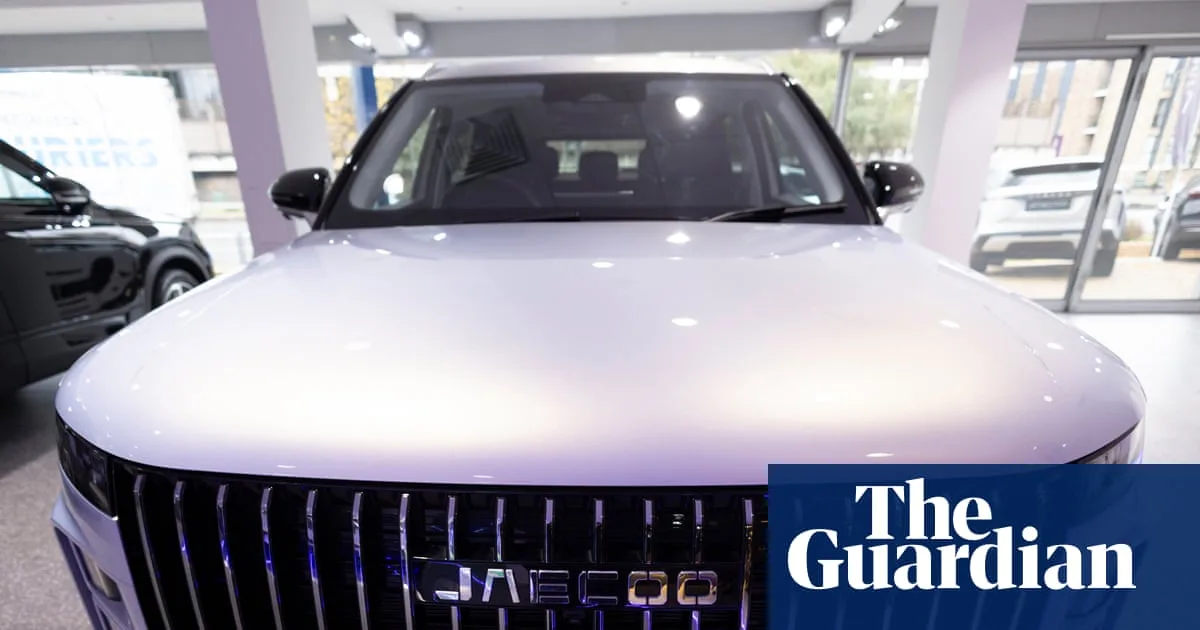
In March, the Chinese-made Jaecoo 7 crossover SUV became the UK's best-selling car, with 10,064 units sold. Produced by Chery, a partly state-owned Chinese manufacturer, the vehicle outpaced established models from Ford, Nissan, Kia, and Tesla. This marks a significant milestone in China's push into the European automotive market.
Chery, China's largest car exporter for 23 years, is aggressively expanding in Europe, selling its Omoda, Lepas, and Chery brands in the UK, Spain, and Italy. The Jaecoo 7's success stems from a brutal price war in China's domestic market, where overcapacity drives manufacturers to seek profits abroad. Chery sold 2.8 million cars globally last year, with 1.3 million exported.
Cost advantages are key. A plug-in hybrid Jaecoo 7 costs about $25,000 (£18,400) to produce, compared with $33,000 for a comparable European SUV, according to consultancy Oliver Wyman. Materials costs are 40% higher in Europe, and labour costs four times higher. Chery's scale allows it to share parts across brands, reducing complexity.
State support also plays a role. China has subsidised 'new energy vehicles' for 25 years, offering grants across the supply chain. European carmakers receive support too, but not at the same level. The quality of Chinese cars has improved dramatically; dealers report that current models match European standards, with no flimsy fittings or tinny doors.
Chery aims to blend Tesla's innovation with Toyota's scale. Its aggressive pricing and quality improvements pose a serious challenge to European rivals, potentially reshaping the global car market.