Social awkwardness is significantly impacting the daily lives of British citizens, even influencing their journeys to work, according to a revealing new study commissioned by the popular snack brand Pringles.
Commute Changes to Avoid Conversation
The research, which surveyed 1,500 adults across the United Kingdom, discovered that more than a quarter of Britons—specifically 28%—admit to altering their commute routes specifically to evade potential conversations with strangers. This includes walking to a different train station or bus stop to dodge an unwanted chat.
Widespread Social Discomfort
A staggering 82% of respondents reported feeling socially awkward on a daily basis, with many employing various tactics to sidestep interactions. Common strategies include:
- Whipping out their phone to avoid eye contact (68%)
- Pretending not to hear someone (34%)
- Even pretending to be asleep (11%)
The study identified lifts (41%), waiting rooms (39%), and public transport (34%) as the most awkward environments for initiating casual conversation.
British Reserve and Unexpected Connections
More than half of those surveyed (56%) believe that British people are inherently more reserved than other nationalities, reinforcing stereotypes of social restraint. Despite this internal battle with shyness, the research uncovered a surprising contradiction.
An overwhelming 81% of participants reported being pleasantly surprised by friendly encounters with strangers that ultimately left them feeling happier. Additionally, nearly seven in ten (69%) admitted they actually enjoy random social moments when they occur.
The Social Snacking Experiment
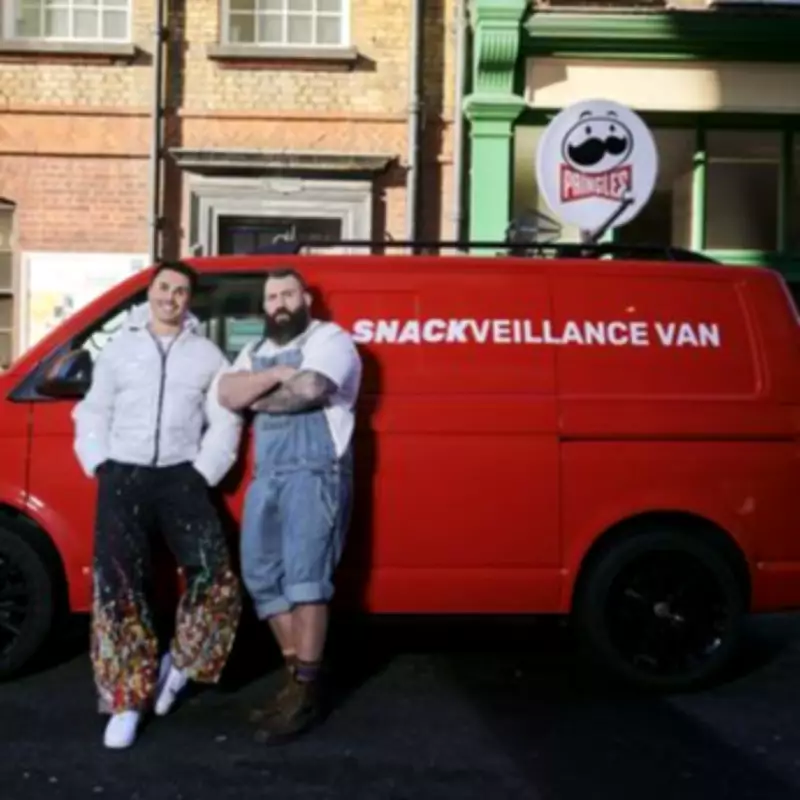
Recognizing that food might serve as a social lubricant, Pringles launched The Social Snacking Experiment to test whether snacks could facilitate easier connections. The brand enlisted rugby player Joe Marler and content creator Joe Baggs to approach commuters and passersby in London's busiest locations.
The experiment involved interrupting people mid-stride and mid-scroll with offers of tasty snacks to see if this could break through Britain's unspoken social rules. The resulting interactions proved unpredictable, chaotic, and surprisingly heartwarming, demonstrating that even a simple gesture like passing a tube of Pringles could spark genuine human connection.
Food as Social Catalyst
The study found strong evidence supporting the theory that food eases social tension. Over half of respondents (65%) stated that food makes conversations easier, while four in ten found chatting with people over snacks to feel more natural and less forced.
This research forms part of Pringles' broader new brand platform, Pass the Pringles, which is currently rolling out across the United Kingdom and Europe. The campaign celebrates the power of sharing snacks to create playful, feel-good connections and transform everyday encounters into meaningful shared moments.
The Social Snacking Experiment video showcases these candid street interactions, revealing how small gestures can overcome social barriers and create unexpected connections among typically reserved Britons.