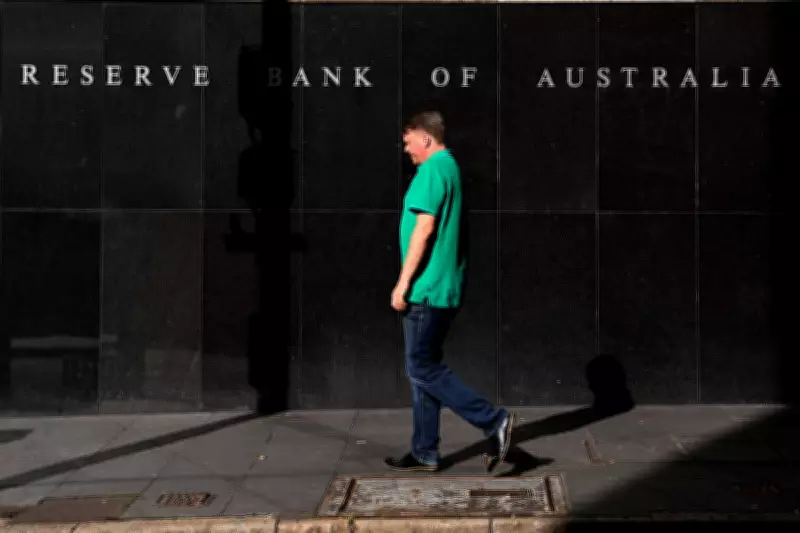
RBA's Unexpected Rate Rise Sparks Debate Over Data Versus Speculation
In a move that has left many economists and mortgage holders perplexed, the Reserve Bank of Australia (RBA) has increased the cash rate to 3.85%, a decision that appears to have been driven more by market expectations than by substantive new economic data. The shift in monetary policy, announced on Tuesday, marks a dramatic reversal from the outlook just weeks earlier, when a rate rise seemed highly unlikely.
A Sudden Shift in Monetary Policy Outlook
Early in January, the prospect of an interest rate increase was virtually non-existent, particularly after October's inflation figures revealed an unexpected dip. Even when RBA Governor Michele Bullock cautioned in December that "the balance of risk to inflation had tilted a bit to the upside," financial markets only assigned about a 20% probability to a rate hike. This cautious stance was understandable given the lack of compelling inflationary pressures.
The landscape changed abruptly on 22 January, not because of new inflation data, but due to the release of December unemployment figures showing a significant drop to 4.1%. This single statistic dramatically altered market expectations, with speculators quickly adjusting their bets on an imminent rate rise. Remarkably, subsequent inflation releases—showing 0% in November and 1% in December, largely attributed to holiday travel—had nowhere near the same impact on market sentiment.

The RBA's Statement Reveals Market Influence
In its Tuesday announcement, the RBA monetary policy board made minimal changes to its December statement, with only slight wording adjustments regarding inflation trends. However, one notable addition stood out: "More recently, the exchange rate, money market interest rates and government bond yields have risen following a rise in market expectations for the cash rate." This phrasing strongly suggests the central bank felt compelled to act because speculators anticipated a move, rather than because economic fundamentals demanded it.
The board further justified its decision by noting that "growth in private demand has strengthened substantially more than expected, driven by both household spending and investment." Yet this assessment warrants scrutiny, as the investment surge has been largely concentrated in AI datacentres—sectors not known for significant employment generation—while broader private demand remains relatively weak.
Unemployment Figures Under the Microscope
The December unemployment drop of 0.2 percentage points represents an unusually large movement, occurring only three times in the past 48 months. Previous instances include pandemic-related fluctuations in 2022 and a temporary dip in February 2024 that quickly reversed by April. The current labour market data provides no clear indication whether low unemployment will persist or bounce back upward in coming months.
Job vacancy numbers, which have been trending downward, suggest that rising unemployment may be the more likely outcome. This uncertainty makes the RBA's reliance on a single month's unemployment data particularly questionable, especially when wage growth shows no signs of accelerating. The most recent wage price data, current only to September, reveals no evidence of wages "galloping upwards" as some economists had feared.
The Wage Growth Paradox
Shadow Treasurer Ted O'Brien correctly noted in December that real wages were falling—meaning wage growth lagged behind inflation. In the September quarter, real wages declined, and over the past year they remained essentially flat. This creates a puzzling scenario where the central bank raises interest rates to suppress wage growth during a period when wages are already struggling to keep pace with inflation.
The RBA's rationale appears rooted in concerns about a "tight" labour market, with economists worrying that low unemployment might force employers to raise wages to attract and retain workers, potentially fueling inflation. However, current data provides little support for this wage-price spiral theory, making the rate rise seem more like a preemptive strike against hypothetical future developments than a response to present economic realities.

Questionable Economic Priorities
Some commentators have suggested the RBA needed to raise rates to restore Governor Bullock's "lost credibility," revealing how perceptions and market psychology can sometimes outweigh economic fundamentals in policy decisions. The central bank's decision effectively prioritises the desires of speculators and those who believe higher unemployment benefits the economy over data-driven analysis.
As mortgage holders face increased financial pressure from the rate rise, questions remain about whether monetary policy is being guided by genuine economic indicators or by market expectations that may not reflect underlying realities. The RBA's latest move highlights the complex interplay between data, speculation, and policy in modern central banking.