Bank of England Maintains Interest Rates Amid Narrow Vote Split
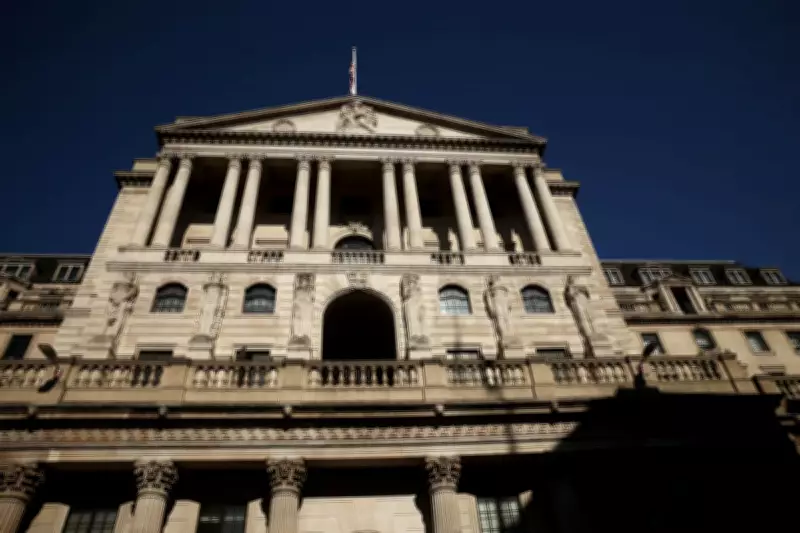
The Bank of England has opted to hold its benchmark interest rate steady at 3.75 per cent following its first Monetary Policy Committee meeting of 2026. This decision comes after a series of six reductions over the preceding eighteen months. While the outcome was widely anticipated by financial markets, the internal division within the nine-member committee proved far tighter than many analysts had forecast.
A Revealing 5-4 Split Points to Shifting Sentiment
The MPC vote resulted in a narrow 5-4 majority in favour of maintaining the current rate. This close margin is being interpreted by economists as a significant signal that the perceived risk from persistent inflation has materially receded. The minutes from the meeting highlighted that inflation dynamics, wage growth trends, and unemployment figures were the pivotal considerations behind the committee's deliberations.
Governor Andrew Bailey struck an optimistic tone, stating, "We now think that inflation will fall back to around 2 per cent by the spring. That's good news." He emphasised the Bank's commitment to ensuring price stability, adding, "We need to make sure that inflation stays there, so we've held interest rates unchanged at 3.75 per cent today. All going well, there should be scope for some further reduction in the bank rate this year."

Market Reactions and Mortgage Implications
The unexpectedly tight vote has prompted a reassessment of the timeline for future monetary easing. Prior to the announcement, markets had largely priced in two rate cuts for 2026, with the first not expected until the summer months. Following the MPC's decision, expectations have now shifted, with many analysts bringing forward their predictions for the initial cut to as early as April.
This shift is already influencing the mortgage market. Peter Stimson of MPowered Mortgages noted, "Rates have started to creep back up over the last couple of weeks. However, the surprise voting pattern behind today's Bank of England decision may mean that a fall in swap rates, which lenders use to determine the fixed rates they offer to customers, could appear in the coming days." He suggested that intense competition among lenders, combined with potentially falling funding costs, could soon translate into more favourable terms for borrowers.
Savings Landscape and Economic Outlook
While borrowers may find relief, the environment for savers remains nuanced. Personal finance experts are urging consumers to actively review their savings arrangements. Alice Haine, a personal finance expert at Bestinvest, cautioned, "Savings rates have been drifting lower since peaking in the Autumn of 2023. With this in mind, savers should avoid sitting on the sidelines waiting for conditions to improve." She stressed the importance of ensuring cash earns a return that outpaces inflation, which stood at 3.4 per cent as of December's data.
The business community has responded positively to the prospect of future rate reductions. David Bharier, Head of Research at the British Chambers of Commerce, commented, "Businesses tell us inflation risks are likely to persist in the short term, but a lower interest rate will be a key part of kickstarting the economy." He welcomed the MPC's more optimistic forecast, which predicts inflation returning to its target by April, noting it provides greater policy certainty for firms across the UK.
Future Trajectory and Expert Predictions
Looking ahead, economists are weighing the path for the remainder of the year. Debapratim De, Director of Economic Research at Deloitte, projected a mixed picture: "We expect the labour market to slacken further, with unemployment rising to 5.7 per cent by autumn, and headline inflation to fall sharply over the summer months. This should create room for two further 25-basis-point rate cuts this year."

Attention now turns to the next MPC meeting scheduled for 19 March. Sanjay Raja, Chief UK Economist at Deutsche Bank, indicated that a rate cut could materialise as soon as that gathering. "We continue to think that further rate cuts are coming," he stated. "We stick to our call for the next Bank Rate cut to come in March and a final rate cut to come in June, taking Bank Rate to 3.25 per cent. Risks are still skewed to a slower pace of rate cuts. But we remain confident that Bank Rate will be cut twice this year."
The narrow vote and the evolving economic data suggest that while the immediate policy stance is one of stability, the door is firmly open for a shift towards monetary easing in the near future, contingent on continued progress in taming inflation.