
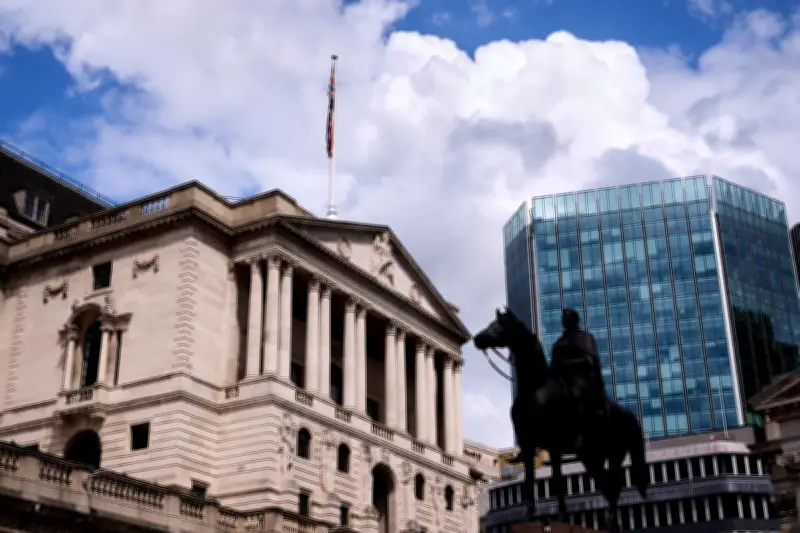
The Bank of England is expected to hold interest rates again next week despite fresh uncertainty in the Middle East. Economists have said they still expect a majority of the Bank’s rate-setting committee to opt to keep the base interest rate at 3.75% despite attacks in the region and US threats reigniting some concerns over inflation.
A number of economists, including experts at Oxford Economics and Nomura, have predicted another seven-to-two vote in favour of holding the current rate. The latest meeting of the Monetary Policy Committee (MPC) on Thursday July 30, which will also see it unveil fresh economic forecasts, comes amid a backdrop of easing inflation in recent months.
Inflation and Oil Prices
The Office for National Statistics (ONS) said earlier this week that UK consumer price index inflation eased back to a 15-month low in June, at 2.6%. A slowdown in food and fuel prices helped provide an early positive signal for new Prime Minister Andy Burnham. The recent decline will have provided some relief to the MPC, which uses interest rates as a tool to control inflation.
However, inflation is now widely expected to swing back higher and further away from the Bank’s 2% inflation target. The Bank has previously predicted that inflation will rise back to 3.25% later this year as higher energy costs feed into household bills from July. Despite this, in recent weeks economists had largely predicted that interest rates would be kept stable at 3.75% for the rest of the year.
But the end of the ceasefire between US-Israeli and Iranian forces has increased uncertainty over the outlook, amid concerns this could drive inflation higher. Oil prices surged above 100 US dollars per barrel last for the first time since May, as attacks on shipping in the Red Sea and threats from US president Donald Trump pointed towards potential supply disruption in the region. Prices have been volatile in recent days, sinking sharply after a fresh pause in attacks, but swung firmly higher again on Wednesday.
Economic Outlook
Governor Andrew Bailey is likely to address how renewed hostilities have influenced the Bank’s outlook for inflation and how the committee is approaching its decisions on rates. Thomas Pugh, chief economist at RSM UK, said he believes oil prices will “largely” steer the path of interest rates for the next year. “If they remain close to 100 dollars per barrel over the summer, a September rate hike would move firmly onto the table, with another in the winter likely,” he said. “However, if there is another peace deal and prices drop back a little, we think a weakening labour market and deteriorating economic outlook will keep the Bank on hold this year, before cutting three times in 2027.”
The intensifying conflict in the Middle East is also likely to impact the Bank’s growth outlook, after GDP rebounded in May, although only rising by 0.1% for the month. Rate-setters could be cautious to hike interest rates amid a backdrop of stagnant growth in the UK economy.




