
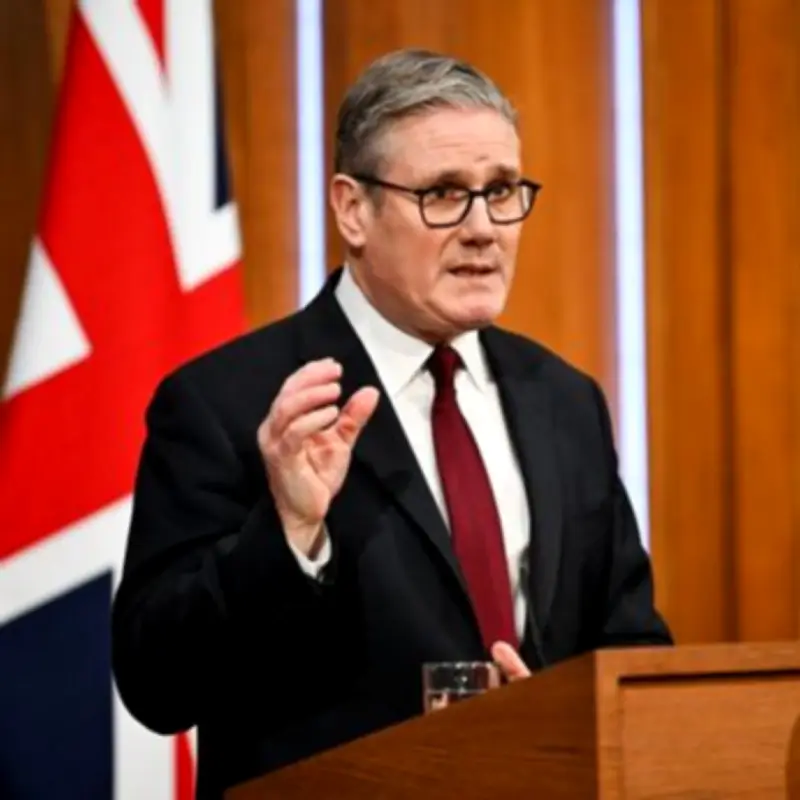
Prime Minister Sir Keir Starmer is expected to confirm a ban on children under 16 accessing social media at a Downing Street press conference, in a move that risks a backlash from Donald Trump's pro-tech US administration.
Starmer's Pledge
Sir Keir Starmer has pledged to "call time on a system that's failing our kids" in anticipation of his proposed ban on social media for under-16s. The Prime Minister is set to unveil comprehensive reforms aimed at safeguarding children online during a Downing Street press conference at 8am on Monday.
He has committed to "bold action" in response to demands for change from parents, following overwhelming support in the Government consultation for a minimum age of 16 before children can use social media platforms.
Details of the Ban
It is anticipated that the UK will follow Australia's lead in raising the minimum age to 16 for platforms such as TikTok, Instagram, Threads, Facebook, X, YouTube, Snapchat and Reddit. However, the UK's ban is expected to go further than Australia's by also including romantic or sexual AI chatbots, and could potentially prevent children from interacting with strangers on gaming platforms, according to The Sunday Times.
The newspaper reported that daily social media usage will be capped for under-18s in an effort to curb late-night scrolling.
Public Consultation Results
The public consultation on the matter, which concluded on May 26, garnered approximately 116,000 responses, making it the second-largest in history. Over 83% of parent respondents agreed that the risks of social media outweigh the benefits for children – with 91% supporting a minimum age of 16 before platforms can offer their services to children. Almost two thirds (62%) of child respondents said that limiting high-risk features would enhance their online safety. But 72% also said they were worried about feeling left out if restrictions came in.
Starmer's Statement
Sir Keir said: "How we keep kids safe online is one of the biggest debates of our time. As a dad, I know every parent wants their child to grow up safe and happy. This is a choice about whose side we're on: families across the country, or a status quo that isn't working. People rightly expect action, and this Government will always stand up for parents and put children first. That's why we will call time on a system that's failing our kids and take bold action to give every child the best possible start in life."
Political Context and Backlash
The announcement follows Sir Keir's three-month ultimatum to Apple and Google last week, demanding they make it technologically impossible for children to capture, distribute or access nude images on their smartphones. The latest proposal threatens to spark a row with Donald Trump's tech-friendly US administration, which has cautioned against blanket restrictions for under-16s. Responding to the consultation, the US embassy in London stated America favoured "narrowly targeted requirements", arguing that "most content should be accessible by default", and warning that age verification demands could "impose disproportionate compliance burdens on American companies".
The Prime Minister's declaration arrives during a challenging period for his leadership, which has faced mounting pressure following Labour's hammering in May's local and devolved elections. His authority suffered another devastating blow last week when both the defence secretary and armed forces minister quit over military funding disputes, and he now faces the prospect of a leadership challenge should Andy Burnham triumph in his attempt to return to Westminster during this week's Makerfield by-election.
Reactions
Tory shadow education secretary Laura Trott declared: "It's shameful that it's taken the Prime Minister's job to be on the line for the Government to finally U-turn and ban social media for under 16s. Three times Labour voted against a ban, failing to stand up to Big Tech and protect children from the extreme content they are exposed to every day. As Conservatives we did not give up, I kept fighting for the brave bereaved parents, health professionals, and campaigners who continued to make the case for change. This victory belongs to them. The Conservatives in opposition can make a difference and this change will finally help parents and protect childhood."
Lord Nash, a former Tory education minister who spearheaded the campaign for an under-16s social media prohibition in the House of Lords, stated: "The Government now has an opportunity to draw a line in the sand and end tech companies' uncontrolled experiment with children's safety. They must deliver in full on their pledge to raise the age limit to 16 for harmful platforms and features, with robust age verification to ensure it is properly enforced. Only by doing this can they begin to end the catastrophic harm being done to a generation. Let's give our children their childhood back."
However, certain groups have contended that a prohibition may not represent the right tool to address the broad spectrum of social media dangers. The Molly Rose Foundation, established in honour of 14 year old Molly Russell, who ended her own life in 2017 following exposure to damaging online material, argued that a social media prohibition "will fail to tackle fundamental product safety risks issues and leaves parents with a false sense of safety". Chief executive Andy Burrows stated: "A majority of children will continue to use high-risk sites that will have no incentive to implement robust protections. This is not what online safety experts believe will work and is necessary. Keir Starmer has chosen to abdicate responsibility for tackling harmful algorithms and his legacy will be setting back children's safety by years."




