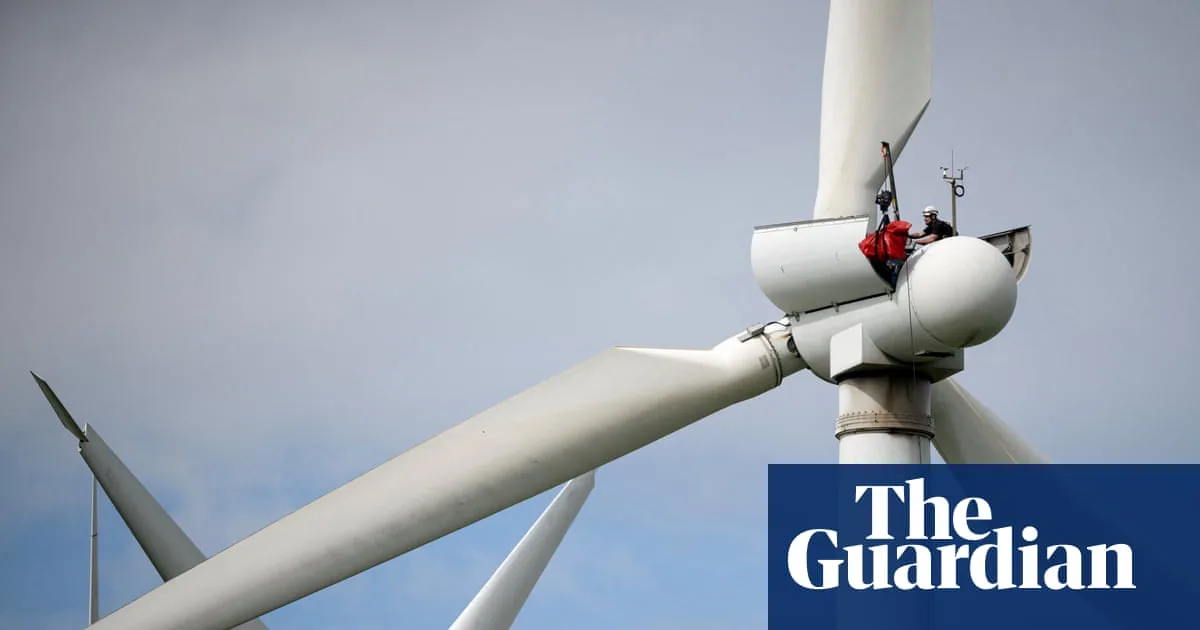
The government has awarded subsidy contracts to 190 renewable energy projects, including the largest onshore windfarm to be built in England in a decade, as part of efforts to achieve a virtually zero-carbon power grid by 2030. The Imerys project near St Austell in Cornwall, developed by Clean Earth Energy, will have a capacity of 20 megawatts, ending an almost decade-long de facto ban on new onshore windfarms that was lifted by Labour in 2024.
In total, contracts were awarded to 157 new solar farms, 28 new onshore windfarms and eight offshore windfarms, along with four tidal power projects. The government doubled the funding available for this auction to support Labour's goal of a clean electricity system by 2030. The winning projects are expected to supply enough electricity to power the equivalent of 16 million UK homes.
Energy Secretary Ed Miliband said the results show that clean British power is the right choice, with new onshore wind and solar prices more than 50% cheaper than building and operating new gas plants. Solar farms will receive £65.23 per megawatt hour (MWh) and onshore windfarms £72.24/MWh, with payments adjusted based on wholesale market prices.
The subsidy prices for solar are slightly lower than last year's auction, while onshore wind prices have increased by over 20% from their record lows in 2022, reflecting changed macroeconomic conditions and supply chain pressures. Simon Virley of KPMG UK noted that onshore wind and solar remain the cheapest large-scale renewables, despite the 'new normal' for costs.
Offshore windfarms will receive higher support prices, with standard projects earning between £89.49/MWh and £91.20/MWh, and floating windfarms £216.49/MWh. Miliband emphasised that backing solar and onshore wind at scale will drive down bills and protect the country from fossil fuel price volatility.