
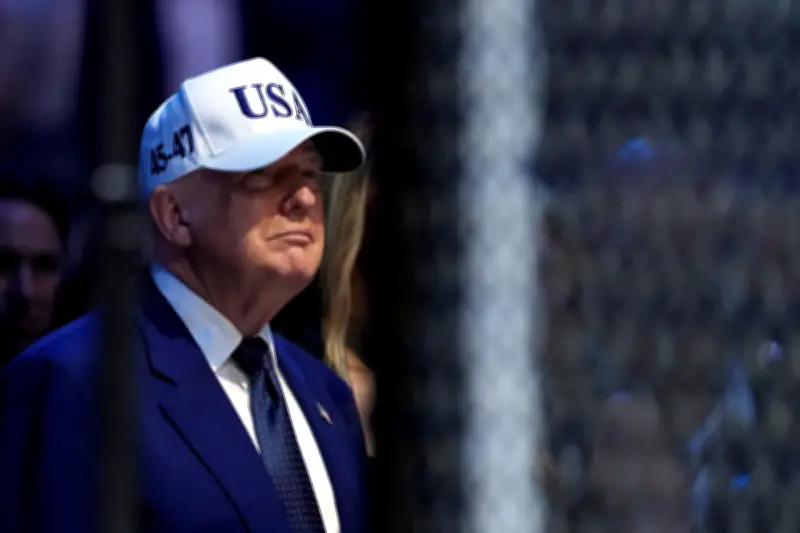
Oil prices have fallen back sharply after US President Donald Trump announced a peace deal with Iran that could see the crucial Strait of Hormuz shipping route reopened.
Benchmark Brent crude dropped more than 5% on Monday to just over 82 US dollars a barrel, marking its lowest level for over three months.
Stock markets also jumped higher in Europe and Asia as investors breathed a sigh of relief.
London’s FTSE 100 Index rose nearly 100 points soon after opening before settling around 0.6% higher, up 64.74 points at 10536.46, while in Europe the Cac 40 and Germany’s Dax both lifted 1.7%.
The deal came as Mr Trump celebrated his 80th birthday at a sports event at the White House, with the US-Iran agreement set to be signed on Friday.
But many of the details of the deal are yet to be agreed and experts fear it will take some time for the Strait of Hormuz – through which a fifth of the world’s oil and gas supplies are normally shipped – to be fully reopened.
A lot of oil infrastructure has also been damaged in the conflict, which will need to be repaired and rebuilt.
The strait has effectively been closed since the US and Israel began their war on Iran on February 28.
Its blockade has sent the cost of crude rocketing – to as much as 120 dollars a barrel at one stage – with wholesale energy costs also sent racing higher leading to fears over soaring inflation in the UK and worldwide.
Susannah Streeter, chief investment strategist at the Wealth Club, said: “With energy prices falling back, inflationary pressures should start to ease off.
“However, prices are still elevated, with crude some 16% higher compared to just before the war broke out and gas prices still more than 30% higher.
“It’s partly because some nervousness remains given that we’ve had plenty of false starts to this peace process.
“It also reflects the expected slower start to the resumption of energy flows, given the damage wreaked to facilities across the Gulf region which will take many months to repair.”
Richard Hunter, head of markets at Interactive Investor, said the peace deal will help allay some inflationary worries at the Bank of England ahead of its next interest rate decision on Thursday.
While it is widely expected to keep rates on hold at 3.75%, the Bank is facing the unpalatable conundrum of setting monetary policy amid stalling economic growth and rising inflation.
Figures on Friday showed gross domestic product (GDP) contracted by 0.1% month-on-month in April in a sharp reversal of 0.3% growth in March.
Mr Hunter said: “The weekend developments have come at a good time for central banks, and the subsequent drop in energy prices will ease some of the Bank of England’s inflationary concerns when its latest rate announcement hits the wires on Thursday.
“With GDP currently flatlining and growth prospects unclear, the inflation part of the equation may at least be of less concern and the strong consensus is that rates will remain unchanged at 3.75% as the bank retains its data dependent approach.”
Among stocks in London, oil giants BP and Shell led declines on the FTSE 100, down 4% each, with defence group BAE Systems also off 1%.
But engine-makers Rolls-Royce was among those making gains on the Iran peace deal news, with shares up 5%, while airlines were also rising on hopes of an end to jet fuel supply worries.
British Airways owner International Consolidated Airlines rose 3%, while easyJet gained 2% and Wizz Air shot up by 9% in the FTSE 250.
MORE ABOUT
Donald Trump, Iran, Strait of Hormuz, GDP, Europe




