
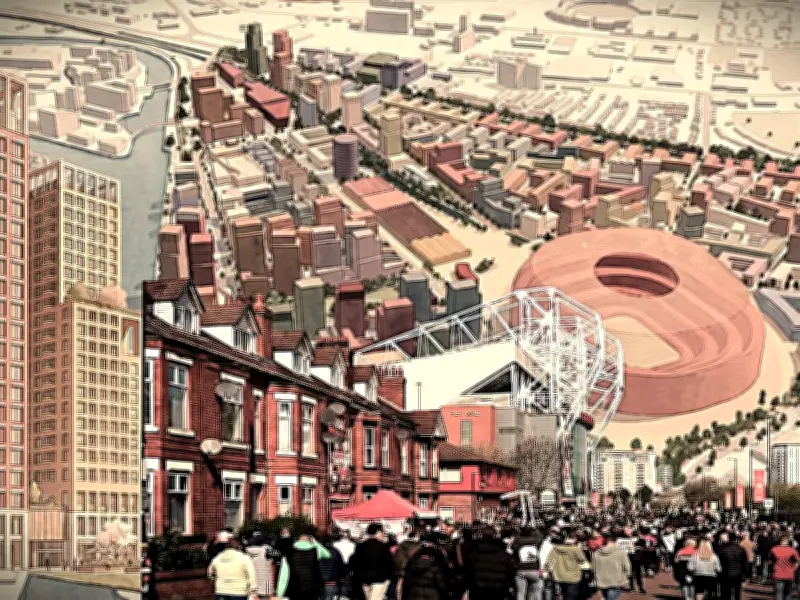
Manchester United has unveiled ambitious plans for a new 100,000-seat stadium, dismissing any notion that the project is a 'vanity project' and instead describing it as 'the biggest sports-led regeneration scheme since London 2012'. The proposed move, announced in a draft strategic masterplan on July 9, would mark one of the most significant milestones in the club's storied history, transforming both the future of the world-famous football team and the surrounding corner of Trafford.
The club has confirmed it has moved away from earlier plans to build the new stadium on the footprint of its current home, Old Trafford, where it has played since 1910. Instead, it intends to construct the new 'Theatre of Dreams' on recently acquired land just 350 metres to the north-west of the current ground, on the north side of the Bridgewater Canal. United says it has acquired the 'majority' of the land needed from industrial space firm Indurent, allowing the team to continue playing at Old Trafford while the new stadium is built.
Regeneration Vision for Trafford Wharfside
The masterplan, named Trafford Wharfside, outlines a bold vision for a 150-hectare area that includes a 'procession route' modelled on Wembley Way, a new three-hectare park provisionally called 'Central Midfield', a new road bridge, a potential new railway station and transport interchange, and up to 15,000 new homes, including high-rise apartments and houses. The stadium is intended to be the 'centrepiece', 'focal point', and 'catalyst' for a multi-billion pound regeneration of the wider Trafford area, creating a 'cultural mile' connecting the new stadium to the Imperial War Museum North, The Lowry, and Old Trafford cricket ground.
Economists estimate that the entire scheme could create 92,000 new jobs, around 48,000 of them local, and provide a £7.3 billion annual boost to the region's economy. The current Old Trafford already attracts over 2.3 million visitors each year, generating £358 million in visitor spending. According to economic estimates provided to the council, a new stadium could increase that number by 1.76 million, with over 710,000 (40 percent) of them being 'high-spending international visitors' who have 'nearly three times the economic impact of domestic visitors.'
Stadium as 'Wembley of the North'
United bosses have previously stated their desire for the new stadium to become a 'Wembley of the North', complemented by a 'surrounding high-quality leisure and entertainment district' that will serve as a 'major international visitor destination'. The masterplan includes proposals for a tree-lined 'processional route' approaching the new stadium from the direction of the current ground, which will connect to Sir Matt Busby Way and provide a 'concentration of sport, commercial leisure and entertainment facilities and attractions' aimed at extending fans' 'dwell time' around the stadium. This route 'draws inspiration' from Olympic Way, better known as Wembley Way, that famously approaches the national stadium in London.
There is also space earmarked for a 'fan zone' on the north bank of the Bridgewater Canal, and the stadium is expected to be 'encircled by commercial and leisure uses geared towards serving event and non-event day visitors.' Up to 500 homes could be built in the area immediately surrounding the stadium, but the council says that only mid-rise apartments would be permitted near the stadium to avoid obstructing views.
Planning and Funding
Initial estimates suggest the stadium could cost £2 billion, and it has been confirmed that no public money will be contributed to the stadium project. However, the masterplan has been compiled by a team of architects, engineers, and consultants overseen by senior officers from Trafford Council and the project director from the Old Trafford Mayoral Development Corporation (MDC). The MDC, formed in January 2024 and chaired by Lord Seb Coe, follows the successful Stockport model, which has attracted more than £600 million in private investment.
Planning permission for the stadium and surrounding area is expected to be decided within the next five years, and if granted, construction is anticipated to be completed between 2031 and 2035. Many elements of the wider regeneration may not be delivered until well into the 2040s.
Future of Old Trafford
The masterplan is coy on the future of United's current stadium. Reds CEO Collette Roche, who is leading the stadium project for the club, said they had not yet made up their mind on the issue. 'We just don't know, and that is the genuine question,' she said. 'I think today is part of the consultation, so, you know, the clue's in the title. We can't say we're consulting and then say 'by the way, we've already decided', because we haven't.' She added that the focus at the moment is on getting the new stadium built and ensuring the surrounding facilities and transport networks are in place, with decisions on the old stadium to follow later.
Transport and Infrastructure
The masterplan acknowledges that public transport in the area 'will need to improve' but notes that 'major roads and proximity to a network of public transport hubs provide good levels of accessibility.' Proposals include a potential new railway station and transport interchange near Sir Matt Busby Way, though this is not expected to be delivered until between 2036 and 2040. Trafford Wharf Road, Wharfside Way, Europa Way, the White City roundabout, and Village Circle roundabout would be transformed from 'car and lorry-dominated routes' into 'walkable, green streets.'
There are also plans for a new road bridge over the railway line connecting the area to Avondale Road in Gorse Hill, as well as connections across Chester Road and to the planned new Clippers Quay foot and cycle bridge. Improvements to nearby Metrolink stops and bus services, the walkway along the ship canal, and the potential for water taxis to operate on the ship canal and Bridgewater Canal are also included. Surface car parking 'dominates' the area and must be 'consolidated and removed to make best use of available land.'
Community and Business Concerns
The masterplan says that talks with landowners showed that some established businesses were 'seeking to remain' in the area 'due to substantial operational investments.' The council and MDC hope that 'all land and interests needed' can be acquired 'by agreement and through negotiation,' but they would consider using powers such as compulsory purchase orders (CPOs) 'where necessary and appropriate.'
A 'limited amount' of community engagement has already taken place, with concerns raised over the future of existing businesses on Sir Matt Busby Way and Chester Road, as well as worries about anti-social behaviour, rubbish, traffic, and parking that a new stadium could bring. Fears have also been raised over 'stretched' local services. The masterplan promises 'detailed discussions' to secure investment for 'the necessary community facilities including school spaces and health facilities' as more detailed plans come forward.
The masterplan will go before Trafford Council's Executive Committee on July 20, with a public consultation beginning on July 28 and lasting until September 22.




