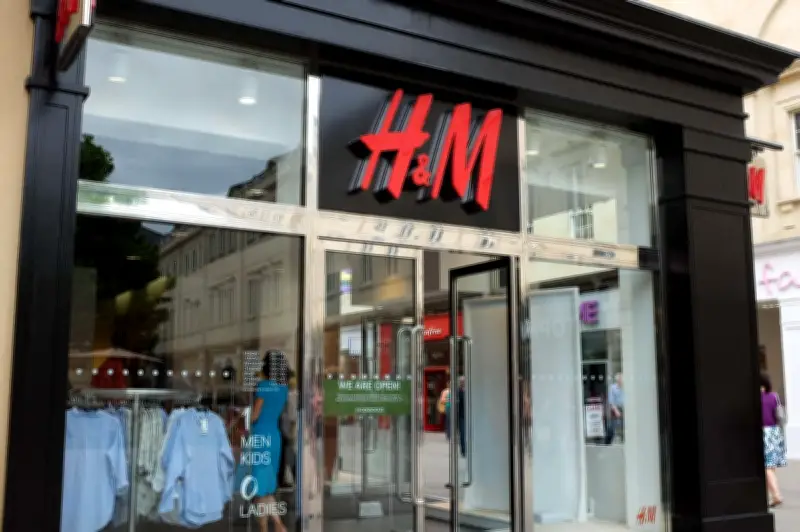
H&M has reported sluggish sales in recent months as efforts to tighten stock left some stores unable to meet shopper demand. The Swedish fashion giant nonetheless said its work to modernise and improve shops was going to boost profitability in the long run.
Sales Decline in Key Markets
It reported net sales of 104.4 billion Swedish krona (£8.1 billion) for the first half of its financial year, between December and May, which was 3% lower than the same period a year before. Sales in Western Europe – where H&M makes the most money – were down by 5% year-on-year.
The H&M group has a roster of fashion and homeware brands including Cos, Weekday, & Other Stories and Arket. It closed all Monki stores last year, instead choosing to integrate the brand with Weekday.
CEO Cites Inventory Challenges
Chief executive Daniel Erver said sales in the latest quarter were “somewhat lower than planned”. He said the company had been taking steps to reduce the complexity of the organisation and improve the productivity of its stock inventory. He added: “The tighter inventory management has, however, in some cases affected our ability to fully meet demand. Our assessment is that there is potential to further increase precision in order to create a better balance between availability and demand.”
“We operate in a world that continues to be characterised by uncertainty and rapid change,” Mr Erver said. “The improvements we have made in recent years have strengthened profitability, simplified operations and increased our ability to act closer to the customer.”
Profit Rise Despite Slowdown
H&M’s operating profit was 7.4 billion Swedish krona (£580 million) for the half-year, up from 7.1 billion krona (£550 million) the prior year. The group had 4,038 shops around the world at the end of May, 128 fewer than at the same time in 2025.
However, experts said that investors were likely to have questions about H&M’s turnaround plan following the update. Russ Mould, investment director at AJ Bell, said: “Demand is depressed in an environment where households are reining in their spending, and this has been exacerbated by stock and inventory controls which meant H&M was unable to meet some of the demand that did exist. In trying to increase its operational discipline H&M has fallen on this front and that will be a source of frustration for shareholders.”