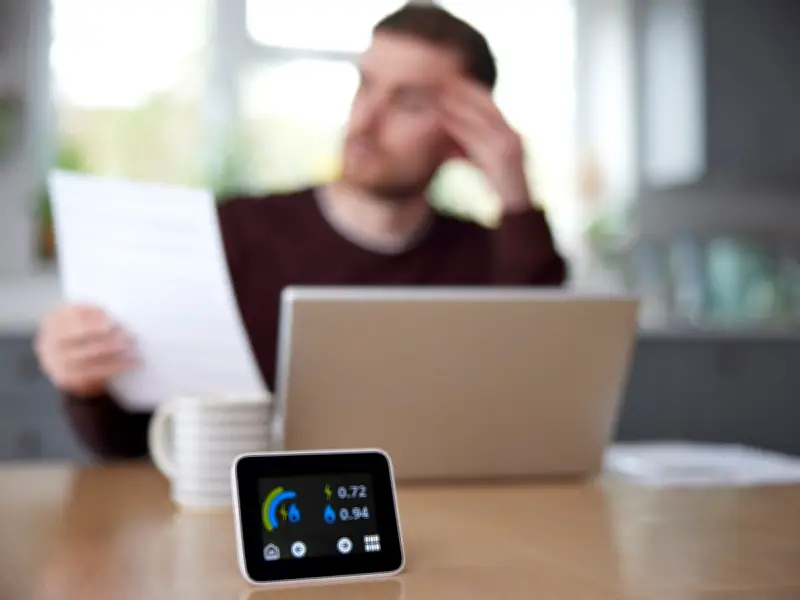
Millions of UK households are being urged to take a meter reading and a photograph of it before 1 July, when the latest Ofgem energy price cap increase takes effect. From that date, households on standard variable tariffs will pay more per unit of gas and electricity.
Why a Photo Matters
Justin Nielsen, an energy consultant at Wolf River Electric, warned that relying on estimated readings could lead to overcharging. He said: "The one thing I would tell every household to do before 1 July is take a clear meter reading and keep a photo of it. It takes less than five minutes, but it gives you a record of exactly where your usage stood before the new rates came in."
Nielsen explained that the price cap does not cap total bills but caps the unit rate and standing charge. Accurate readings ensure that consumption before the change is charged at the lower rate, while usage after is charged at the higher rate.
Who Needs to Submit a Reading
Households with working smart meters should have readings transmitted automatically. However, those with traditional meters, faulty smart meters, or accounts relying on estimated readings need to submit a manual reading. Nielsen said: "If your supplier does not have an up-to-date reading, they may estimate how much energy you used before the price change and how much came after it. That estimate might be reasonable, but it is still a guess."
The risk is that some cheaper pre-July usage could be pushed into the more expensive period. Nielsen added: "Even if the difference is not huge for every household, nobody wants to pay more than they should because of an avoidable estimate."
How to Take and Submit the Reading
Households should take readings for both gas and electricity meters, unless the property is all-electric. For standard meters, read from left to right, ignoring red numbers or digits after the decimal point. Digital meter users should press the display button until the reading appears. Prepayment meter users should check their supplier's instructions.
Nielsen emphasised: "Do not just scribble the number on a piece of paper and lose it. Take a photo, submit the reading through your supplier's app or website, and keep a note of the confirmation if you get one." He advised taking the reading as close to 1 July as possible, ideally the evening before or the morning of the change.
Importance for Households That Reduced Usage
The advice is particularly relevant for households that have reduced energy use in June. Nielsen said: "If you have been using less heating, drying clothes outside, cooking differently, or trying to keep costs low, you want that lower usage recorded accurately before the higher rates begin."
He also warned that estimated bills can catch people out: "Estimated bills can catch people out because they often do not notice until weeks later. By then, it is harder to remember what your usage looked like at the time."
Nielsen urged households to take control: "If your bills regularly say 'estimated', you should not wait until the next statement lands. Take control of the reading yourself."