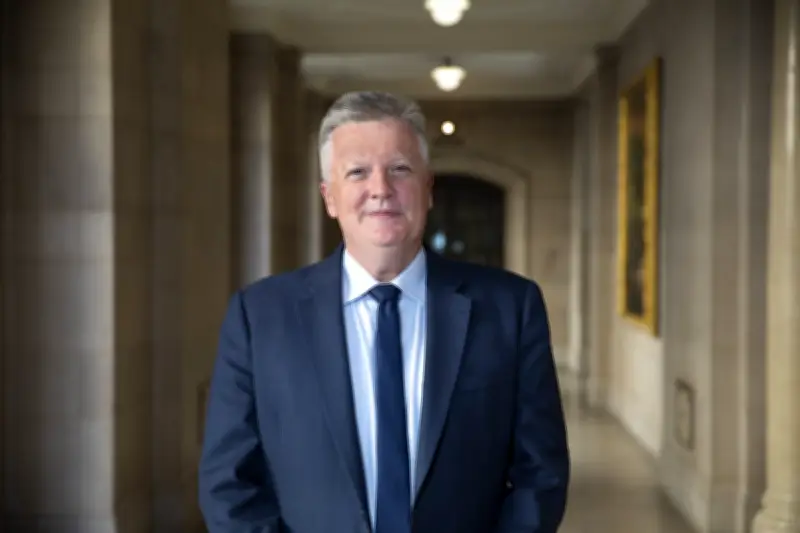
Bank of England Chief Economist Huw Pill has cautioned his fellow policymakers against becoming "complacent" about the cost of living, defending his recent calls to increase interest rates. Pill, a member of the Monetary Policy Committee (MPC), has voted to raise rates to 4% at the last two meetings, driven by concerns that inflation remains above the central bank's 2% target.
Pill's Lone Dissent and Growing Support
In April, Pill was the sole member of the nine-person committee to vote for a rate hike. By June, he was joined by Megan Greene, bringing the total to two dissenting votes. Pill told the Press Association that policymakers "should not be complacent" about the current rate of Consumer Prices Index (CPI) inflation, which stood at 2.8% in April, unchanged from March. He warned that surging oil and gas prices amid the US-Israeli conflict with Iran could push inflation higher.
"In the past, inflation running one percentage point above target would have been seen as 'problematic,'" Pill said. "I think it should be seen as problematic, because our mandate is very clear; inflation at 2% at all times. I do fear a little bit that, because we saw inflation go to 11%, policy discussion becomes, 'oh inflation at 3% is not so bad'."
Personal Cost of Dissent
Pill emphasized that his dissenting votes were not motivated by a desire for attention. "I would emphasise that I'm not dissenting because I want to get my name in the papers, or I want to be a troublemaker on the committee," he said. "Over my time on the MPC, I've probably, if anything, erred on the side of supporting the institutional view, even when I had some scepticism about it. It's not an easy choice for me to dissent at a personal level."
Underlying Inflation Dynamics and Rate Cuts
Economists and the Bank itself expect the cost of living to rise throughout 2026 as higher energy prices pass through the economy, though not as severely as initially feared. Pill warned that consumer-facing businesses would likely respond to increased costs by raising prices. He also highlighted "underlying inflation dynamics" in the UK economy, arguing that monetary policy decisions may have "fuelled some of this strength and momentum."
"I think probably, on balance, it hasn't been restrictive enough over the last few years," Pill said, indicating that rates may have been cut too quickly. Interest rates have gradually declined from a peak of 5.25% in summer 2024 but have remained at 3.75% for six months, primarily due to the outbreak of the Iran war in late February, which halted further cuts.
Governor Bailey's Stance and Market Expectations
Bank of England Governor Andrew Bailey was among the majority on the MPC preferring to keep rates unchanged earlier in June. He noted after the meeting that "higher energy prices of the past four months mean there's already some inflationary pressure in the pipeline," even after a peace deal between the US and Iran sent oil prices back towards pre-conflict levels. Many economists now expect interest rates to remain unchanged for the rest of the year, though some traders still anticipate a rate hike before the end of 2026.
"The world is becoming more uncertain and becoming more complex," Pill concluded. "What we can guarantee is that monetary policy is not adding to uncertainty, and I think that is where we should keep the focus."