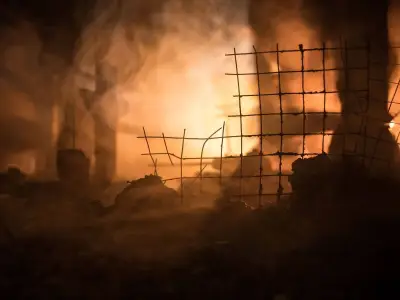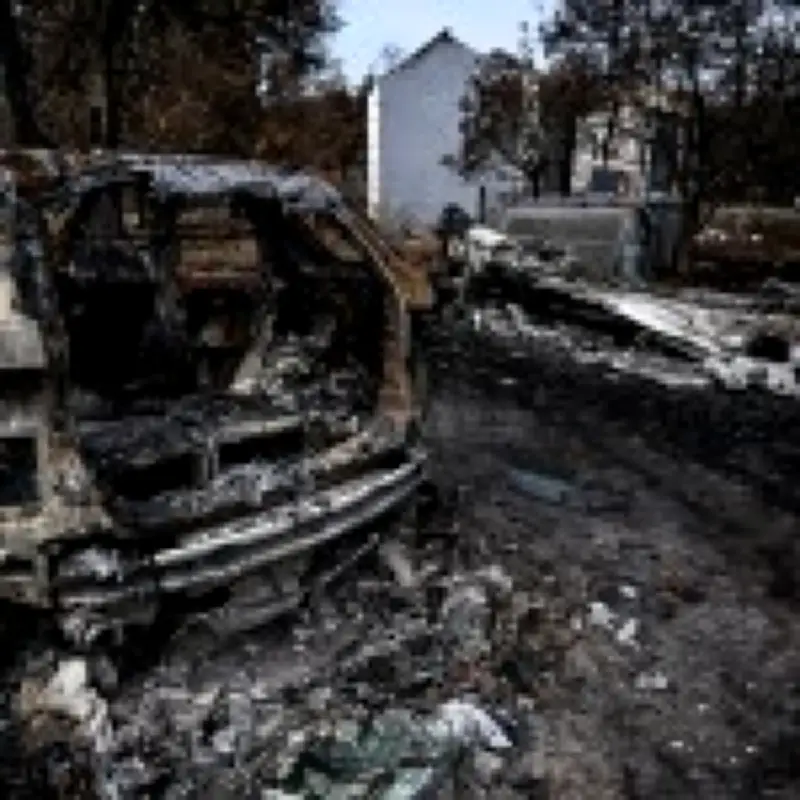
More than 100 explosions were heard as wildfires in southern France detonated hidden World War Two shells, destroying over 180 homes in the village of Le Porge, Gironde region.
Residents thought gas cylinders caused blasts
At first, residents believed the sounds were from gas cylinders caught in the blaze. But Mayor Martial Zaninetti revealed that intense heat ignited buried wartime explosives that had been hidden underground for decades.
Speaking to French news outlet France Info, Zaninetti said the explosions sounded 'like war'. 'There were ammunition depots buried in land within our municipality, but we didn't know it, and they exploded,' he said. He added that shells were flying 'to the right, to the left' and one even crashed through a house.
Specialist teams move in
Following the discovery, specialist bomb disposal teams moved into the area before residents could safely return home. Despite most evacuation orders now being lifted, parts of Le Porge remain off limits, including access to the coast, a nearby campsite and the village of La Jenny.
Cache included German and French munitions
The cache is said to have included both German and French munitions, including mortar rounds and anti-tank shells dating back to World War Two.
Wildfire contained after 10 days
The discovery comes after France's vast wildfires near Bordeaux remained contained on Sunday, August 2, despite still burning. In total, the Gironde wildfire burned for around 10 days before finally being brought under control, scorching roughly 42,000 hectares of land in south-west France, an area four times the size of Paris.
Across France and neighbouring Spain, more than 330,000 people were forced to flee as wildfires swept through towns and countryside. In England, meanwhile, a huge wildfire ripped through an area of grassland the size of 20 football pitches, leaving streets up to a mile away covered in ash. Huge plumes of smoke were seen for miles across north London as fire engines tackled a grass fire near Waltham Abbey in Essex on Sunday.