Summer 2026 has been marked by scorching temperatures, hosepipe bans, and little relief from the heat, but for some older people it might feel familiar. Exactly 50 years ago, in summer 1976, the UK experienced similar issues as the nation endured days of red-hot weather.
Persistence vs Spikes: Different Heatwave Patterns
In 1976, the theme was "persistence," says the Met Office, as high temperatures built gradually then remained high for weeks. Data from the time showed 15 consecutive days during which somewhere in the UK exceeded 32°C, which, together with an unusually dry period from May 1975, saw one of the most severe droughts in UK history.
However, in summer 2026 this has been different. Rather than one long spell of heatwave temperatures, there have been a series of spikes which have far exceeded those of 50 years ago. On Thursday, the UK experienced its hottest day of the year and fifth hottest on record, peaking at 38.1°C in Kew Gardens, London. This week's hot weather marks the UK's fifth heatwave this year, with the Met Office warning this summer is on course to be the UK's hottest since records began.
Defining a Heatwave and Longest Spells
To count as a heatwave in 2026, the heat has to persist for at least three consecutive days. The thresholds were originally based on the 1981–2010 climate averaging period but were updated ahead of summer 2022 to reflect the more recent 1991–2020 climate period. This update was made as the UK continued to see the influence of a warming climate, with eight counties seeing threshold changes and some moving from 27°C to 28°C, 26°C to 27°C, or 25°C to 26°C.
Met Office's UK data from 1900 to 2026 shows the longest recorded UK heatwave spell (where at least one station in the UK met or exceeded its heatwave threshold) is from July 18 to August 25 1995, lasting 39 days. The second longest is the recent 2026 spell from June 30 to August 5, lasting 37 days, followed by 26-day spells in 1947 and 1990.
The Met Office says: "Other notable long-running events include 1916, with a 24-day heatwave, and several 23-day spells, including 1976, 1983, 2013 and 2018. These figures show that prolonged heat is not new to the UK, but recent years continue to feature prominently in the records."
Temperature Comparison: 1976 vs 2026
In 1976, there were two separate peaks in heat - one running from the end of June into early July then a second during the middle part of August. There were 15 consecutive days, from June 23 to July 7, where somewhere in the UK recorded a temperature of 32.2°C or higher.
London Heathrow had 16 consecutive days of 30°C. During that time, Cheltenham in Gloucestershire recorded the hottest day of the summer on July 3 with a temperature of 35.9°C.
Meanwhile, in 2026, the mercury has far exceeded that of 50 years ago. Thursday's record of being the hottest day of 2026 so far at 38.1°C is the second time this year the country has seen temperatures reach 38°C.
The intense heat has made 2026 the first year on record to see three separate days where temperatures reached the 37°C threshold, as well as the first year with four days at 36°C or above, and extends 2026's record-breaking run of days above 35°C.
Nighttime temperatures have differed as well. In 1976, just three nights across the whole period had temperatures above 22°C - there were four alone in June 2026 with many more to follow.
Droughts and Hosepipe Bans
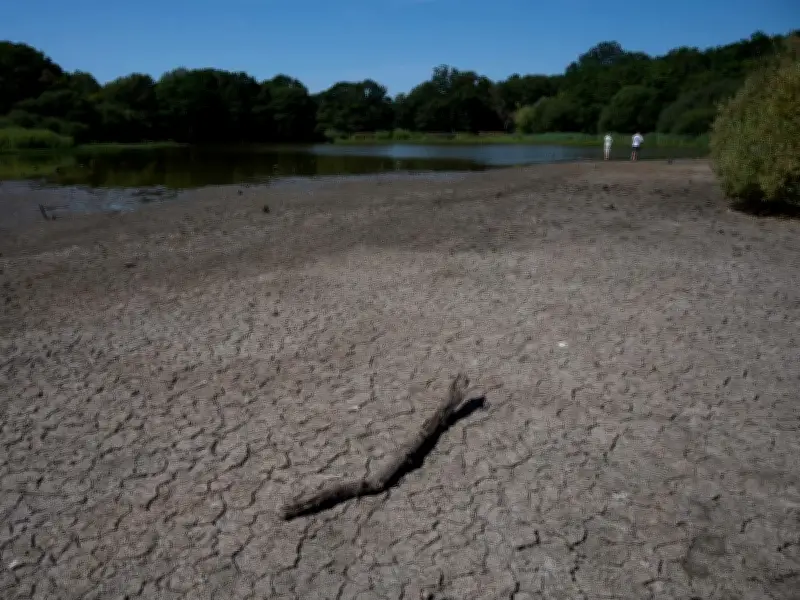
Both 1976 and 2026 have seen hosepipe bans brought in across huge parts of the UK. Fifty years ago, it was the driest summer since 1772 with the lack of rainfall starting in September 1975, after an already dry summer. At the time, it was the driest 16-month period in more than 250 years.
A minister for drought was appointed as reservoirs and even some streams dried out. Bans then were enforced by officers who patrolled the streets. Many homes in some parts of the country had their water supply replaced by shared standpipes while others were left without tap water for much of the day.
So far in 2026, a drought has been declared across more than two-thirds of England, along with the whole of Wales. Nowhere in England is currently classed as "normal" with Yorkshire and north-east England in "prolonged dry weather" status, which is the stage before drought.
Water companies set their own rules on measures to control supply and many have activated Temporary Use Bans - hosepipe bans - as a result of the dry weather. While Northumbria Water currently has no restrictions in place, elsewhere is different, including Thames Water, South West Water, Anglian Water, Southern Water, and South East Water.
While the rules can be different between areas, this can mean a ban on using mains-fed hosepipes to water gardens, lawns, or plants; wash cars, vans, or trailers; fill paddling pools, swimming pools, or hot tubs; and clean patios, paths, or windows.