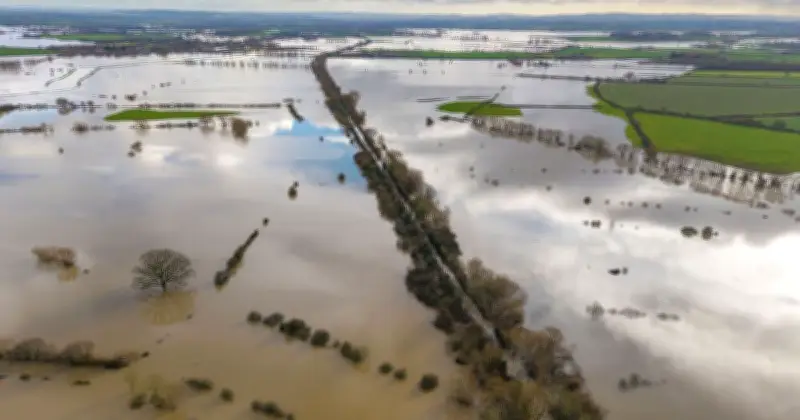
Somerset is spending £300,000 to carry out river maintenance work that has been dropped from the Environment Agency's programme, with officials warning the funding may not be enough to reach every site identified for clearance.
Work began on 10 August across the Somerset Levels and Moors, where 18 stretches of rivers, drains and rhynes covering 67.8km have been identified for possible maintenance.
Reason for the programme
The programme follows a reduction in the amount of maintenance the Environment Agency can carry out because of increased costs and reduced funding.

The Somerset Rivers Authority (SRA) set aside the £300,000 from its own budget in February, following flooding across the county earlier this year. The work is being delivered by the Parrett and Axe Brue Internal Drainage Boards using local contractors.
However, the SRA has warned that not all 18 stretches are guaranteed to receive work. Ground conditions, weather and the unpredictable cost of individual jobs could affect how much maintenance can be completed within the £300,000 budget.
Background to the cuts
The situation dates back to last summer, when the Environment Agency announced it would stop maintaining a significant proportion of Somerset's waterways after receiving only 60 per cent of the funding it had requested from the Treasury.
As a result, some stretches that had previously formed part of the Environment Agency's main river maintenance programme were no longer due to receive the work.
The SRA subsequently agreed to fund selected sites itself, focusing on waterways considered important for flooding, drainage and water quality and quantity.
Impact on local areas
The authority's intervention comes after significant flooding earlier this year and ahead of the autumn and winter months, when maintaining clear waterways is particularly important for moving water through the Levels and Moors.
The same network is also important during periods of dry weather, helping to carry water into ditches and rhynes used by livestock and environmentally important sites.
Among the stretches identified for work are several around Glastonbury. Division Rhyne, north of the town, has 6.3km on the list, while 3.4km of Hartlake Rhyne is also included. Redlake Rhyne accounts for a further 4.2km, while 5km of the Whitelake River is identified for possible clearance. Together, those four waterways account for 18.9km of the published programme around Glastonbury.
Other areas included in the programme are 7.5km of Panborough Drain south of Wedmore, 5.7km of the Lox Yeo west of Sidcot and 1.2km of Landcourse Rhyne north of Cheddar.
On the Parrett side of the Levels, 8.6km of the River Cary between Somerton and Henley and 8.2km of Eighteen Feet Rhyne west of Compton Dundon are among the larger stretches listed. A further 2.9km of King's Sedgemoor Drain upstream of Greylake is included, with additional work proposed around Langport and Muchelney.
The published programme does not identify waterways in Wells or Shepton Mallet themselves, although the wider drainage network being maintained stretches across the Levels below the Mendips.
Nature of the work
The work will primarily involve vegetation clearance and weed cutting rather than major engineering projects.
A spokesperson for the Somerset Rivers Authority said: “Our aim is to help ensure that clear and effective routes are available for conveying and evacuating water from the lower Somerset Levels and Moors. The floods of early-2026 were a major reminder of the importance of this principle.”
The spokesperson also highlighted the importance of the waterways during drought conditions, when they can feed water into ditches and rhynes so livestock can drink and be kept in by “wet fences”, while helping preserve sites of natural and historical importance.
The authority said the work was being targeted at sites because of their potential impact on flooding, drainage and water quality and quantity. But it stressed that the 18 stretches represent locations where the drainage boards are hoping to carry out work, rather than a guarantee that every site will be completed.

If the £300,000 is exhausted before all the work can be carried out, the SRA has not identified which sites would be left unfinished or announced a replacement programme for them. No timetable has been given for when any stretches not reached during the current programme would next receive maintenance.