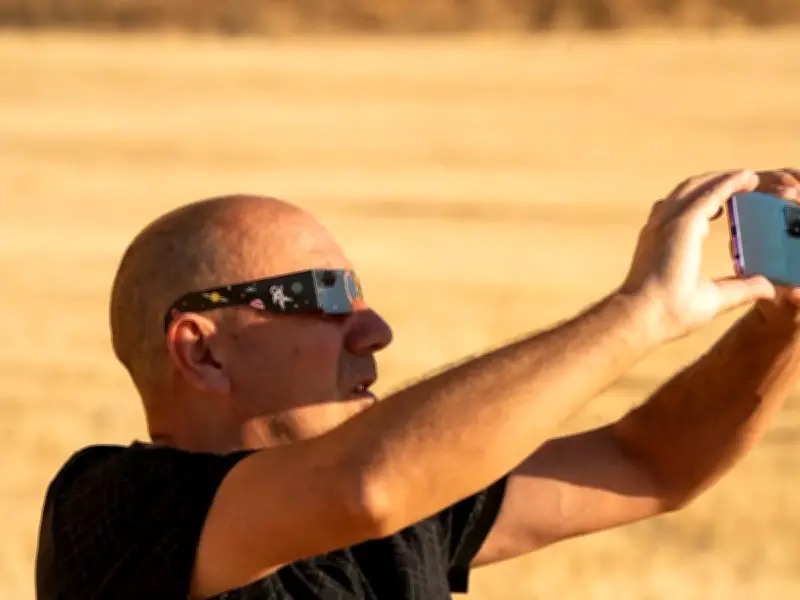
Pointing an unprotected phone camera at the sun during tonight's partial solar eclipse could permanently damage your device, according to research by Uswitch.com. More than 38 million Britons remain unaware that prolonged exposure can harm their phones.
Wales to witness rare partial eclipse
For the first time in almost 30 years, Wales is set to witness a partial solar eclipse, marking the most spectacular such event visible across the UK and Ireland since 1999. Tonight, Wednesday, August 12, the moon will block between 90% and 96% of the sun, depending on your location, causing a noticeable dimming of the sky. With the next comparable partial eclipse not due until 2050, this is a once-in-a-generation spectacle.
In Wales, the partial solar eclipse will be visible between 6.13pm and 8.06pm on Wednesday, as the moon begins to pass across the face of the sun before retreating just ahead of sunset. The exact timing and extent of coverage will vary according to your whereabouts. Cardiff is anticipated to experience around 93% coverage, commencing at 6.16pm.
Camera lens risks permanent damage
As it remains a partial eclipse rather than a total one, no moment during the phenomenon makes it safe to aim an unprotected lens at the sun, whether that is your eyes or mobile devices. During the previous UK eclipse of this magnitude, it was recommended that it was observed through cereal box pinhole viewers and paper glasses shared amongst crowds.
Much like their eyes, Uswitch is encouraging households to safeguard their phone's camera before Wednesday's eclipse. Mobiles expert at Uswitch.com, Jez Samuel says: "Your phone screen is safe to look at throughout Wednesday's eclipse – it's the camera lens that needs protecting. Point an unfiltered lens at the sun, and you risk burning out the sensor, just as looking with the naked eye risks your vision."
Protection and preparation tips
A phone camera lens focuses sunlight into an intense point on the sensor behind it, and enough unfiltered exposure will kill pixels permanently. "From then on, every shot carries the same dark marks. Repairs typically range from around £49 for a camera glass replacement to over £250 for a full module swap, depending on the phone."
The fix is simple, as long as you don't zoom in: hold your eclipse glasses in front of the camera lens. Zooming concentrates sunlight the same way a telescope does, and that can burn straight through glasses never designed for it. For zoomed shots, use a dedicated clip-on solar filter instead. If you're planning to photograph or film Wednesday's eclipse, it's also worth making sure your phone has enough battery and storage, so you're not caught out halfway through.