Skywatchers across Scotland are being urged to set their alarms this week, with a partial lunar eclipse set to light up the early morning sky.
The spectacle will take place in the early hours of Friday 28 August, and will be visible across the whole of the UK, although the Moon's position will vary depending on where you are in the country.
Unlike the solar eclipse that happened earlier this month, this event will see the Earth pass between the Sun and Moon, casting its shadow across the lunar surface.

93 per cent of the Moon in shadow
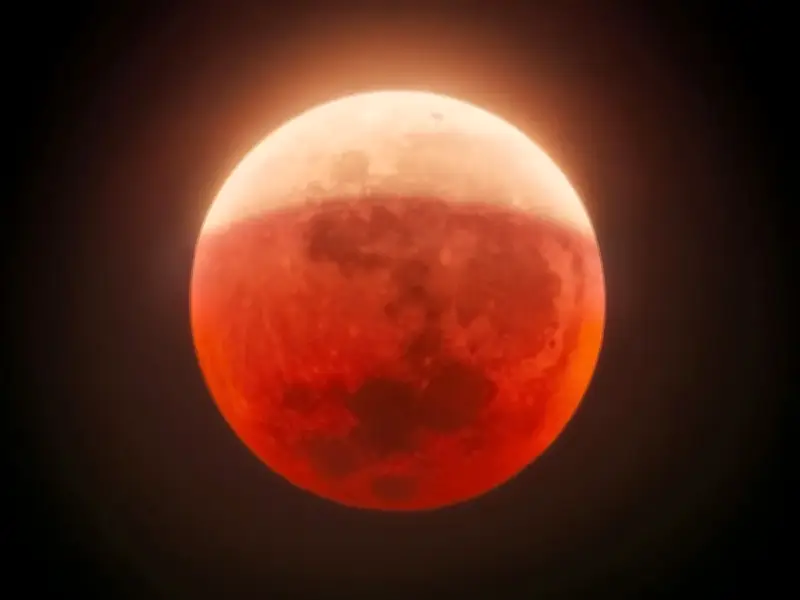
At its peak, around 93 per cent of the Moon will sit within the darkest part of Earth's shadow, creating a striking reddish or coppery glow. This is sometimes referred to as a "blood moon" due to the deep red colour that glares from the Moon.
The Royal Museums Greenwich explained that the reddish colour happens because sunlight passing through Earth's atmosphere is scattered and refracted towards the Moon.
Timings for Friday morning
The eclipse will begin at around 2.23am on Friday, when the Moon enters the penumbra - the lighter, outer part of Earth's shadow. The darkening will initially be subtle, before the partial phase begins at 3.33am as the Moon starts moving into the umbra, the darkest part of the shadow.
The eclipse will reach its maximum at around 5.12am, when roughly 93 per cent of the Moon's visible surface will be within the umbra. The partial phase will end at around 6.51am, although the Moon will have set below the horizon in many parts of the UK before then. Exact timings and visibility will vary depending on your location.
Royal Museums Greenwich recommends finding a high point with a clear view towards the south west for the best chance of seeing the spectacle.
Lunar versus solar eclipse
The good news for anyone hoping to watch is that, unlike a solar eclipse, no special glasses are needed. Looking at a lunar eclipse is as safe as looking at the full Moon.
There is also an important difference between the two types of eclipse. A solar eclipse occurs when the Moon passes between the Earth and the Sun, blocking some or all of the Sun's light from reaching Earth. Meanwhile a lunar eclipse happens when the Earth moves between the Sun and Moon, causing Earth's shadow to fall across the Moon.
Solar eclipses can therefore look very different depending on where you are, while the whole of the UK will see the same percentage of the Moon in shadow during this lunar eclipse.
The last lunar eclipse visible from the UK took place on September 7, 2025. It was a total lunar eclipse, although the Moon was very low on the horizon during the peak, making the total phase difficult to see from some locations. Lunar eclipses happen between two and five times a year, while total lunar eclipses occur at least twice every three years.
For Scots willing to sacrifice a few hours of sleep, Friday morning could offer one of the month's most impressive sights in the night sky.