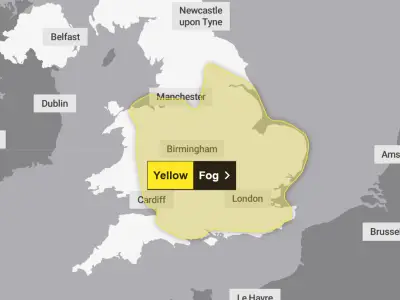
The Met Office has issued a yellow weather warning for ice covering large parts of Scotland, with conditions expected to become increasingly hazardous from tonight (Saturday, November 15). The warning comes into force at 6pm this evening and will remain in place until 10am on Monday, November 16, with drivers and pedestrians urged to take extra care.
The yellow alert covers an area stretching from the border up to the northernmost parts of the Scottish mainland. Most of eastern, central, and northern Scotland are included, with only a section on the west of the country not covered.
Subzero Temperatures and Icy Surfaces
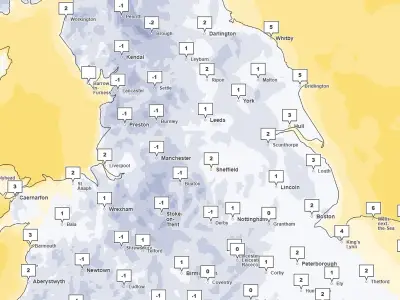
Forecasters have warned that temperatures are expected to drop below freezing overnight, increasing the risk of icy patches developing on untreated roads, pavements and cycle paths. The weather warning also includes the possibility of further wintry showers, particularly across northern Scotland, where some snow could fall to lower levels.
In its latest update, the Met Office said: "An area of rain and hill snow (snow mainly above 200m but not expected to be impactful) will clear to the southeast tonight with skies then at least partially clearing. This will result in temperatures falling below freezing and some icy stretches developing on untreated surfaces. This is likely to lead to difficult driving conditions."
Snowfall and Travel Advice
The update continued: "Across northern Scotland, icy conditions are likely to be exacerbated by some wintry showers, with snow falling to low levels for a time before becoming mainly confined to higher ground late in the night." The forecaster added that between 1-2cm of snow could settle at lower levels, while higher ground could see up to 4 to 5cm of snow during the duration of the weather warning.
The conditions could make travelling more difficult, with the Met Office warning of possible injuries caused by slips and falls on icy surfaces. People are also being warned to watch out for slippery patches on untreated roads, pavements and cycle paths. Those planning to head out have been advised to leave at least five minutes earlier than usual to avoid rushing and reduce the risk of accidents.
Affected Regions and Precautions
Anyone travelling on foot is being encouraged to stick to pavements along main roads, which are more likely to be less slippery. Cyclists are also advised to use main roads where possible, as these are more likely to have been treated. Drivers should check road conditions before setting off, while those relying on public transport are being urged to check bus and train timetables in case of delays.
The Met Office has also advised people to keep up to date with the latest forecasts, as weather warnings can change. The affected regions include Central, Tayside & Fife (Angus, Clackmannanshire, Dundee, Falkirk, Fife, Perth and Kinross, Stirling), Grampian (Aberdeen, Aberdeenshire, Moray), Highlands & Eilean Siar (Highland), Strathclyde (East Ayrshire, North Lanarkshire, South Lanarkshire), and SW Scotland, Lothian Borders (Dumfries and Galloway, East Lothian, Edinburgh, Midlothian Council, Scottish Borders, West Lothian).