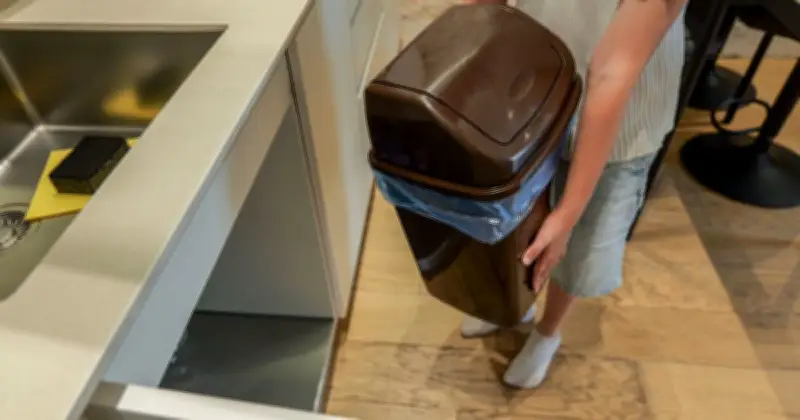
Households have been advised to rub vinegar on their kitchen bins this week as temperatures rise across the UK. The country has experienced a hot summer, with multiple records broken and droughts declared in parts of England and Wales. Warm conditions, especially in homes that are difficult to cool down, cause food to rot faster, which can attract flies.
Why flies are a problem in hot weather
James Copley, chief executive officer at Copley Pest Solutions, told Good Housekeeping that flies are attracted to rotting food in bins, and females may lay eggs there, leading to maggots when bins are taken out.
"The heat encourages faster fly life cycles – it makes flies more energetic and shortens the time between maturity from egg to adult fly. Secondly, the warmer the weather, the faster the food you put in the bin will decay and smell," he said. "Flies find food by using their sense of smell, so a warm, windy day could bring them straight to your bin."
Vinegar as a solution
When it comes to preventing the issue, Copley said vinegar is the solution. "Distilled white vinegar has a strong smell that disrupts a fly’s ability to find food, so using it to clean residue left behind by food will make the area less appealing to flies," he said.
He warned that not all vinegars work the same way. "Sweet and fermented smells attract flies and a lot of other pests, so if you use apple cider vinegar or red wine vinegar, you’ll find yourself with more flies."
Copley suggested cleaning the whole bin with white vinegar. "Use a cloth and the mixture to clean inside, outside, all around the lid and underneath the bin. Take notice of any spills or residue and address them immediately; even the smallest bits could attract a fly," he advised.
If you don't want to use vinegar, other solutions such as essential oils can have a similar effect on a fly's sense of smell.