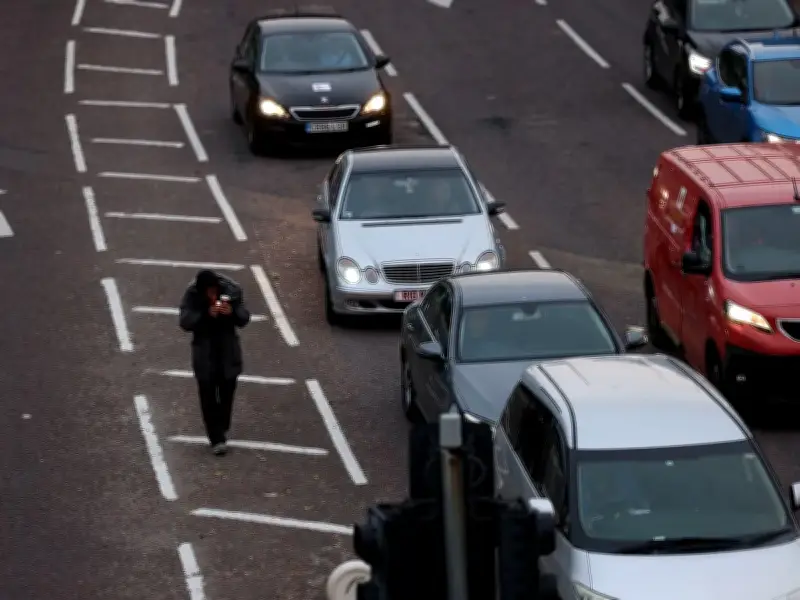
Begging at some of Greater Manchester's busiest junctions has become more common in recent months, across more of the region's roads. People are regularly seen walking past queues of traffic asking for money, or sitting at traffic islands between hectic crossroads.
Those involved are often putting themselves at risk. The activity comes at a time when the government is pushing to eradicate rough sleeping.
Police link rise to Vagrancy Act repeal
Police who work supporting vulnerable people in Greater Manchester believe the increase is partly down to the repeal of the historic Vagrancy Act - which dated back to 1824 - in June this year. That move officially decriminalised begging and rough sleeping in England and Wales.
There is also an understanding that begging on major roads, while drivers often face long queues of traffic, is believed to be more lucrative than in other places. Effectively, people in tough situations are willing to take the risk to their personal safety.
Councillor and charity note 'incremental increase'
Long-serving Manchester councillor Pat Karney told the Manchester Evening News it's an activity that has 'always been there' - but he has noticed an 'incremental increase' in the number of people doing it recently. "Obviously they are taking their lives into their hands, the amount of traffic that's going past," he said.
Hendrix Lancaster, co-founder of homelessness charity Coffee4Craig, has also noticed a recent increase in the number of people begging for change at major traffic lights. He added: "It seems to be quite a new thing. We've not come across anyone who we know or who uses our services."
Public concerns and police response
The increased prevalence of the activity was recently discussed in a Manchester Reddit thread. One person wrote: "It definitely wasn’t nice to see, some of the roads are so busy and when the lights change I was worried one would get hit."
Social media users have questioned whether there was an organised criminal element to the activity. But Greater Manchester Police told the M.E.N. it was not currently aware of any link between organised crime gangs and begging at junctions.
Bolton and other hotspots
One of the most notable locations for begging at traffic lights in recent years has been at Topp Way and St Peter's Way, in Bolton. There, vulnerable people are often undeterred by the 12 lanes of converging traffic, where cars travelling from Manchester reach the town centre.
Police in Bolton have tried to support those in the area, while last year Bolton council placed signs urging people not to beg at the hectic junction - and drivers not to hand money over. "Roadside begging can be distracting for drivers and puts people at risk of road accidents," the council's executive member for stronger communities, Coun Hamid Khurram, said at the time.
"Giving money to people who are begging does not address underlying issues like addiction or poor mental health. A better way to help is to give to charities that provide a wide range of long-term support to move people away from begging and living on the streets."
But it's not just in Bolton where this activity has been taking place. Hectic junctions around Manchester's inner ring road, on Alan Turing Way near the Etihad Campus, and close to the M60 on Chadderton's Broadway are all regular targets for the activity.
Partnership approach in Hulme and Moss Side
Inspector Helen Hallworth is part of Greater Manchester Police's Greenheys Neighbourhood Team, which works closely with the council to address concerns around people begging at major junctions in Hulme and Moss Side. She said: "Since the repeal of the Vagrancy Act in 2026, begging itself is not an offence.
"However, where behaviour causes nuisance, obstruction or danger, partners can take appropriate action. A joint partnership approach is in place, combining enforcement with support for vulnerable individuals. Regular engagement events are taking place across Hulme and Moss Side, and partners have so far engaged with around 60 people, offering access to housing, support and other services.
"Community feedback gathered through local 'Nibbles and Natter' (formerly PACT) meetings is helping shape our response. Where necessary, Community Protection Warnings and Community Protection Notices may be considered for individuals whose behaviour continues to have a negative impact on the community.
"We encourage members of the public to report concerns to GMP, as this information helps us build a picture of the issues affecting the area and take appropriate action alongside our partners. We would also encourage anyone wishing to help people experiencing homelessness to consider supporting recognised homelessness charities and services, helping ensure assistance reaches those most in need."
A Manchester council spokesperson added: "The council and its partners are aware of a number of sites across the city where this type of activity occurs. First and foremost, if a person is begging, our priority is to engage with them and offer support.
"Anyone we engage with would be encouraged to attend our Street Engagement Hub which has a number of partner agencies present to help people, be it in relation to drug or alcohol addiction, homelessness, health concerns or access to benefits and support.
"Where we receive complaints regarding conduct that may cause people to feel harassed, alarmed or distressed (for example), then we can also look at enforcement steps to discourage the behaviour and protect victims. However, this will always run alongside the offer of support."
Government funding to tackle rough sleeping
In August, Andy Burnham's government announced a £442 million package to help rough sleepers off the streets in time for Christmas, with £121 million being paid in the first round, as part of a 'mission to end rough sleeping'. It has since been announced that £6.1 million is going to Greater Manchester in the first round of funding.
The cash is designed to help local areas provide immediate accommodation and practical support for people on the streets this winter. In Greater Manchester, A Bed Every Night has provided shelter for rough sleepers since 2018.
Florence Eshalomi, minister for homelessness, said: "I know what it’s like to face uncertainty about where you’ll be able to rest your head, and we’re determined that nobody has to face that this Christmas. That is why we are providing more than £6.1 million to support people sleeping rough across Greater Manchester, giving local services the resources they need to help people off the streets and into safe accommodation this winter.
"This is a major step forward in our mission to end rough sleeping - combining urgent help before Christmas with the long-term, wraparound support people need to rebuild their lives and have a safe place to call home."
Anyone looking to support homeless people in Greater Manchester can donate to Real Change MCR, which is a fund that supports homelessness charities and organisations across the region.