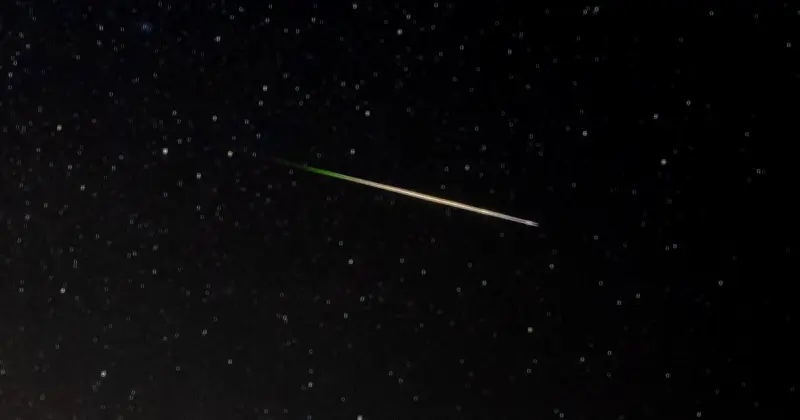
The Perseid meteor shower reaches its peak on Thursday, with up to 100 shooting stars visible per hour. The peak comes just hours after a solar eclipse, which took place on Wednesday evening (August 12).
First coincidence of eclipse and meteor shower peak
Alfredo Carpineti, space and physics editor at IFL Science and author of the book Invisible Rainbows, said: "It's so exciting to have these two events happening on the same day."
He added: "I've gone through 5,000 years' worth of eclipse data from NASA, and it looks like Wednesday will be the first time there's an eclipse happening on the same day as the peak of a major meteor shower."
Best time to watch
The Perseid meteor shower has been ongoing for weeks, but its peak starts a few hours after the eclipse. The two-day peak is on Wednesday and Thursday night. On Wednesday, meteors will be most visible from around midnight until dawn on Thursday. Scientists say the peak of activity will be around 3am on Thursday morning (August 13), when around 100 shooting stars can be seen per hour.
Where and how to watch
Even if you missed the peak, the meteor shower is expected to last until August 24, and scientists say the Perseids are one of the more reliable meteor showers. The best places to see a meteor shower are in dark countryside or coastal locations, with little light pollution. Star-gazers should look at a 60-degree angle to the sky, wrap up warm, and bring a chair so they don't injure their neck by holding their head back for long periods of time.
It can take up to 40 minutes for human eyes to adjust to low light, so patience is required — as is vigilance not to check a phone.
Why shooting stars occur
Shooting stars occur when pieces of a comet break up as it nears the sun and heats up. The debris ends up in the path of Earth's orbit. The pieces of the comet are moving through space at the same time Earth is, and when they hit the Earth's atmosphere, smaller pieces are vapourised - leaving bright trails of light we call shooting stars - and larger meteors explode in fireballs, according to the Royal Greenwich Museum. Those pieces 'slam into our atmosphere at speeds of between 7–45 miles per second', the Museum says, and 'the average speed for a Perseid meteor is 36 miles per second', or a staggering 129,600mph.