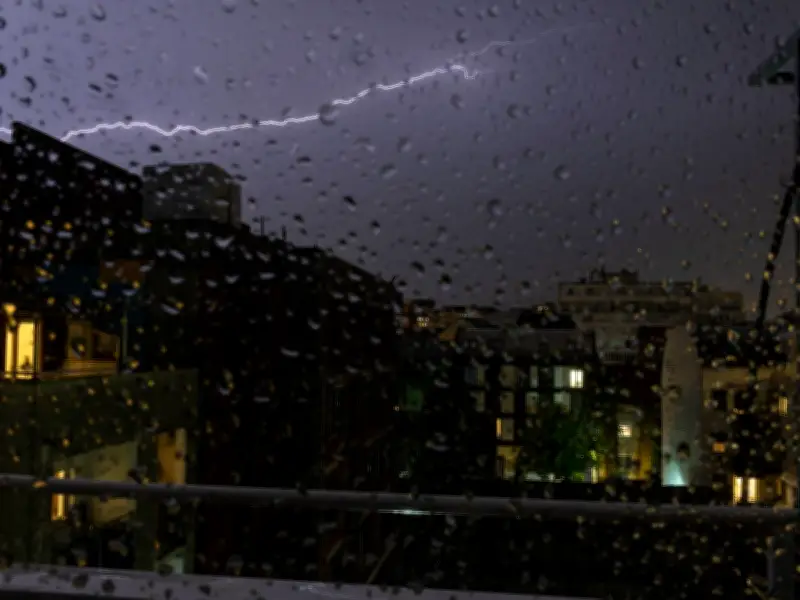
The Met Office has issued a new yellow weather warning for thunderstorms across six regions of the UK. Forecasters warn that heavy rainfall and frequent lightning strikes could cause significant disruption on Thursday evening, between 6pm and 11:59pm.
Although many areas are likely to escape the worst of the conditions, the Met Office warned that some locations could see fierce thunderstorms develop after days of hot weather, bringing the threat of travel delays, flooding and power cuts. Driving conditions could turn treacherous due to spray, standing water and hail, potentially resulting in longer journey times for both motorists and bus passengers.
Regions affected by the thunderstorm warning
The yellow warning covers six areas: South West England, Cornwall, Devon, Dorset, Plymouth, Somerset, and Torbay. Strong winds accompanying the storms could inflict damage on buildings and temporary structures, while lightning strikes may cause harm to a small number of properties and other structures. The Met Office warned that some homes and businesses could even face short-term power outages and disruption to other services as the storms sweep through affected areas.
Safety advice during a thunderstorm
The Met Office's official website states that people should seek shelter in a safe enclosed shelter, such as a car. The warning adds: "Do not shelter under or near trees, or other structures which may be struck by lightning. If you are on an elevated area move to lower ground."
Why thunderstorms occur during a heatwave
Thunderstorms form when warm air shoots rapidly upwards into the atmosphere, a phenomenon that frequently occurs following lengthy spells of hot weather or during a heatwave. As the sun beats down on the ground, the air above it heats up and starts to rise. As this warm air climbs higher, it cools and the moisture contained within it condenses into tiny water droplets, creating clouds. These droplets continue to circulate within the cloud and, if conditions higher up in the atmosphere are sufficiently cold, they can be pushed even further skyward. This process generates an unstable atmosphere, allowing vast thunderstorm clouds, known as cumulonimbus clouds, to develop. These are the only clouds capable of producing hail, thunder and lightning.