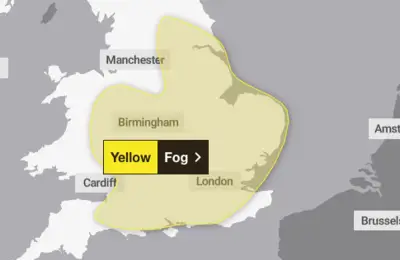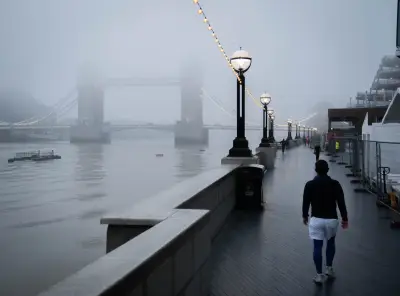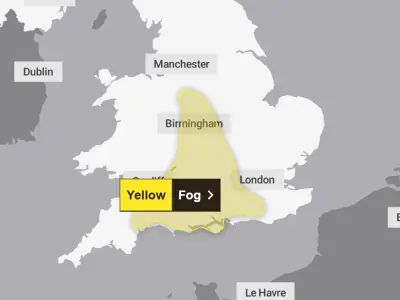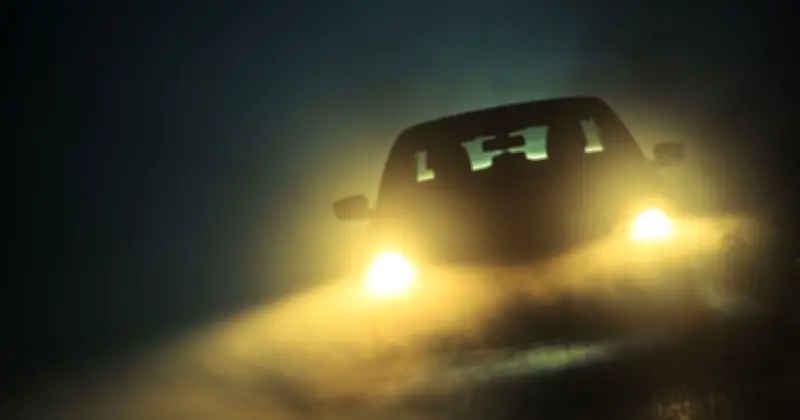
The Met Office has issued a yellow warning for fog across parts of England on Sunday, November 8, prompting the RAC to remind drivers of the "football pitch rule" for using fog lights.
The warning is in force from 12am until 10am and covers the East Midlands, London and the South East, the South West, and the West Midlands. The forecaster is warning of travel delays due to thick fog on Sunday morning and is urging motorists to check road conditions before setting off and ensure they have plenty of time for their journey.
What is the 'football pitch rule'?
The RAC has issued a reminder of what to do when driving in fog. Its "football pitch rule" states that you should only switch your fog lights on when visibility drops below 100 metres (328 feet), which is roughly the length of a standard football pitch.
The advice is based directly on Rule 226 of the Highway Code. The RAC states that if you can see further than a football pitch ahead of you, your fog lights must remain turned off to avoid dazzling other drivers.
Fines and insurance risks
According to the Highway Code, you can be issued a £50 roadside fine for misusing your fog lights in clear, rainy, or misty conditions. A severe misuse can result in a fine of up to £1,000 and three points on your licence.
Equally, if you are involved in a crash during fog and failed to turn your fog lights on, your car insurance policy may be invalidated. You should also avoid using full-beam headlights as the thick fog reflects the bright light back into your eyes and reduces your visibility.
RAC advice for drivers
The RAC states: "Fog lights need to be used at the right times to combat reduced visibility, otherwise you could be a danger to yourself and other drivers. Using them at the right time should aid safe winter driving but using fog lights at the wrong time could mean you are breaking the law and endangering other drivers."
It adds: "Fog lights should only be used in the fog, when visibility drops below 100 metres (328 feet) which is roughly the length of a football pitch, this is stated by the Highway Code (rule 226). Not using your fog lights when appropriate could impact upon the safety of yourself and those around you when driving."
"If while driving in fog your car is involved in an accident and you weren't using your fog lights, it could invalidate your car insurance. Use your common sense. If the fog is so severe that you’re struggling to see other vehicles, switch on your fog lights."
"But don’t keep switching them off and on again, as this can confuse other drivers. Remember, fog lights should only be used when visibility is seriously reduced and must be switched off when visibility improves."
Fog warning details
The Met Office has issued a fog warning from 12am until 10am on Sunday. The forecaster is warning of travel disruption with some areas set to see dense fog. They said: "Patchy, dense fog is expected to develop during Saturday night with the visibility falling to less than 50 metres in places. Fog is expected to become increasingly widespread within this area during the second half of the night before only slowly clearing during Sunday morning; slowest across parts of the West Country and central southern England."
They added: "Give yourself the best chance of avoiding delays by checking road conditions if driving, leaving extra journey time, or amending plans if necessary. Make sure you know how to switch on your fog lights, and check they are working before setting off on your journey. Bus and train services, as well as flights and ferry travel may also be affected; check for updates from your travel company and follow their advice."
The warning covers Derbyshire, Leicestershire, Northamptonshire, and areas including Bracknell Forest, Buckinghamshire, East Sussex, Hampshire, Isle of Wight, Oxfordshire, Portsmouth, Reading, Southampton, Surrey, West Berkshire, West Sussex, Windsor and Maidenhead, and Wokingham, as well as Bath and North East Somerset, Bournemouth Christchurch and Poole, Bristol, Devon, Dorset, Gloucestershire, North Somerset, Somerset, South Gloucestershire, Swindon, and Wiltshire, plus Staffordshire, Stoke-on-Trent, Warwickshire, West Midlands Conurbation, and Worcestershire.