A three-day walk along Cumbria’s rugged, often overlooked coast reveals great views, rich nature and a striking new hotel on Whitehaven’s historic waterfront. The route, part of the England Coast Path (ECP), runs from Maryport to St Bees, passing through Workington and Whitehaven, and offers a quieter alternative to the crowded Lake District.
A coast shaped by history and nature
The north Cumbrian coast, hemmed in by the Lake District fells on one side and the Solway Firth and Irish Sea on the other, has battled nature, weather, geology and geography throughout its history. Coastal erosion is part of the challenge, and while planners and builders of the ECP have done sterling work plotting a viable footpath, some sections remain compromised and even impassable.
The walk begins at Maryport, where the Cumbrian Coast Line meets the seashore. The Romans, who called it Alauna, built a fort here, and the Senhouse museum boasts Britain’s largest collection of Roman altars and inscriptions found at a single site. An LS Lowry trail takes in places he painted, with information panels celebrating local painters Sheila Fell and Percy Kelly.

Wildlife and industrial heritage
Out on the coast path, there were few walkers on the empty strand. At Flimby, the path was just a line of kelp on a pebble beach, bordered by flowering sea kale. West Cumbria is the only area where small blue butterflies can be found in northern England, and a pair of sandwich terns – an “amber” status bird on the RSPB website – were spotted.
Workington welcomed the walker after seven miles. Decades of industry have made the people steely and friendly. The night was spent above town at the Hunday Manor hotel, which has superb views over the coast and back to the fells.
Whitehaven’s layered history
The next day’s walk to Whitehaven was the longest at about 12 miles. From the Howe, a hill originally created from industrial slag, there were views of Scafell Pike to the south-east and Scotland to the north. A path beneath dramatic sandstone cliffs guided the walker into Whitehaven, one of northern England’s loveliest towns.
Whitehaven used to be an industrial powerhouse, shipping tobacco, coal, ceramics, iron ore, limestone and textiles, and it was the fifth most active British port involved in the transatlantic slave trade. Victorian-era lighthouses and a chimney known as the Candlestick are unmissable landmarks. The town’s history is explored at The Beacon museum, with the Howling Wolf Bakery and cafe underneath serving delicious cakes, toasties and coffee.
A new base for coastal activities
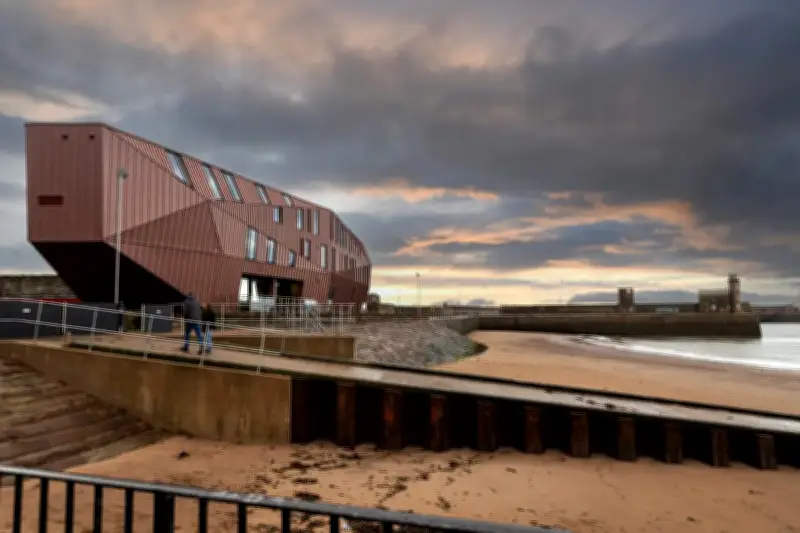
The Edge hotel, which opened last October, will bolster Whitehaven’s ambitions to compete with the Lake District. Created as a base for coastal activities, it has 16 ensuite rooms looking out over the marina. Its irregular polyhedral shape is striking and apt, with air-source underfloor heating and solar panels in keeping with a region famed for renewable energy.
An alternative route was in place for the final leg, with erosion on the footpath forcing the walk inland. The coast walk, 23 miles direct but considerably more with walks around towns, culminated at St Bees Head with views of spectacular coves, secret beaches and sheer cliffs. The only company was fulmars, cormorants, herring gulls, ravens and kestrels, and a little colony of kittiwakes nesting on tiny ledges.
The trip was supported by Cumbria Tourism, Avanti, Northern and Stagecoach buses. Stagecoach has DayRider and 3-day Explorer passes. Doubles at The Edge from £117 B&B and at Hunday Manor Country House hotel from £125 B&B.