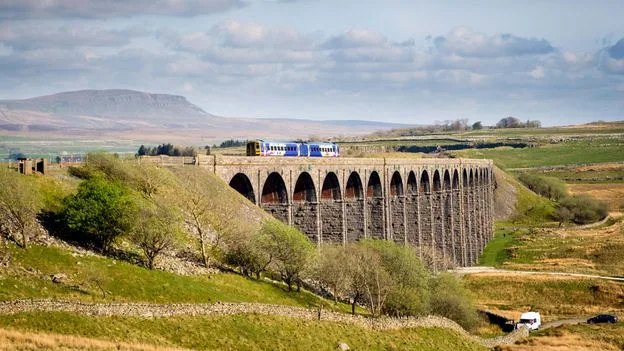
The Settle-Carlisle railway line, often described as the UK's most remote train journey, is a 73-mile stretch through the Yorkshire Dales and Cumbria. Built in the 1870s, it was a feat of engineering driven by corporate rivalry rather than necessity. The line runs from the market town of Settle to Carlisle, near the Scottish border, traversing some of England's most rugged terrain.
The Midland Railway Company was forced to construct the line after being denied access to existing north-south routes by competitors. Despite initially securing a deal to share a rival's track, Parliament refused to release the company from its obligation to build the line. This led to the employment of 6,000 men, at least 72 of whom died during construction due to accidents and disease outbreaks in unsanitary work camps.
The journey includes 14 tunnels and 21 viaducts, with the 1.5-mile Blea Moor Tunnel carved through solid rock using handpicks and dynamite. Today, passengers can enjoy the scenic route while purchasing local beer from the onboard trolley. The line faced closure threats in the 1960s and 1980s but remains operational, offering a unique glimpse into Victorian engineering and the wild beauty of the Pennines.