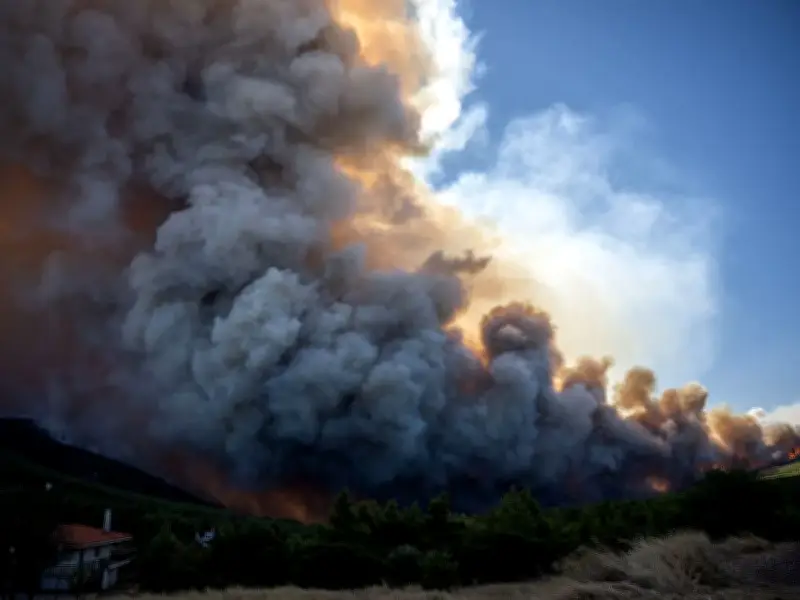
Wildfires across several European countries have devastated local environments, forcing evacuations, closures and major transport disruptions. Popular tourist destinations have been directly affected, and over the weekend Mount Etna on Sicily erupted, sending ash clouds into nearby airspace and preventing flights from Catania Airport from landing or taking off on Monday, August 10.
Experts Warn Travellers to Act Quickly
Experts have warned that travellers facing disruptions due to wildfires and other natural disasters may need to act quickly. It is not just flights that can be affected; the knock-on effect can quickly rack up unexpected costs for travellers. Manuela Savoca, travel expert at Transfeero, urged travellers to follow six steps after receiving a flight cancellation or delay notification.
Six Steps to Follow
First, check more than just your flight. If your flight is affected by wildfires, local roads, rail services and other transport around the airport may also be impacted, often long before your flight is changed. Savoca recommended: “Before travelling, check local authority updates, airport announcements and transport providers to make sure you can actually reach the airport safely.”
Second, rebook quickly but don’t rush. While many passengers scramble for the next available plane, Savoca warned against taking the first seat without weighing options. She added: “Compare nearby airports, different airlines and alternative arrival cities. Sometimes flying into another destination and arranging a transfer or train journey can get you there much sooner than waiting another day for the next direct flight.”
Third, keep every receipt. During delays or cancellations, travellers should record all expenses, including food, accommodation or replacement transport, as this can make it easier to claim through the airline or travel insurance.
Fourth, protect the rest of your holiday. A disrupted outbound flight can affect airport transfers, hotels, cruises and excursions. Contact all operators as soon as possible with your new expected arrival.
Fifth, know exactly what support is available. Airlines can provide various assistance depending on why your flight was delayed or cancelled. Understand what is available early rather than paying out of pocket and hoping to claim it back later.
Sixth, prepare for limited connectivity. When flights are cancelled, airports become crowded, and charging points and mobile networks can be overwhelmed. Savoca recommended: “Carry a fully charged power bank, download offline boarding passes, hotel confirmations and maps before travelling, and keep important phone numbers easily accessible in case your internet connection becomes unreliable.”